NOCs to Binance, HTX not ‘blanket approvals’ but first step under supervised entry framework: Bilal bin Saqib
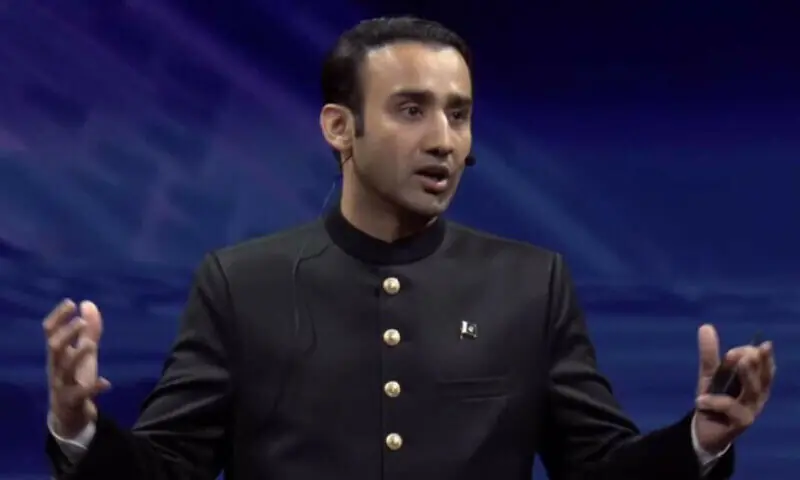


Chairman of the Pakistan Virtual Assets Regulatory Authority (PVARA) Bilal Bin Saqib has said that the no-objection certificates (NOCs) issued to global cryptocurrency exchanges Binance and HTX were not a “blanket approval” but the “first step under a risk-mitigated, phased, supervised entry framework”.
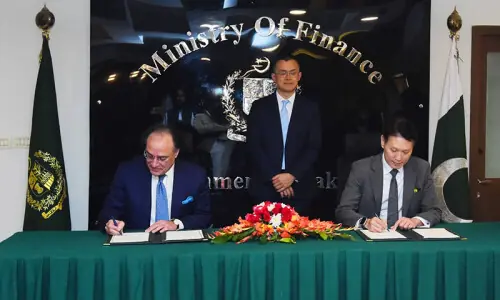
Saqib’s video statement, televised on Sunday, comes after Pakistan gave initial clearance for Binance and HTX on Friday to register with regulators to set up local subsidiaries and begin preparations for full exchange licence applications.
The clearances allow the exchanges to register on the Anti-Money Laundering system, set up local units and prepare full applications.
Speaking about the development, Saqib said the issuance of the NOCs to Binance and HTX was the “first practical step” that reflected a “new mindset”.
He further said that the step was based on the “Pakistan-first” approach.
Saqib detailed that by working under a supervised entry framework, authorities had been able to establish “control” in three areas, namely money laundering and terrorism financing; transparency of ownership and fitness and propreitary checks; and paving the way for licensing through the enforcement of timelines.
“It is mandatory for every platform to register on the AML [system] and have direct linkages with the financial monitoring unit,” he said, further asserting that no platform would be allowed entry in the country without “disclosures and verification”.
Moreover, he said, the process of licensing would be initiated for entities after they would “move forward in line with Pakistan’s law and with its oversight”.
Saqib said this model was not unique to Pakistan and the world’s leading financial centres had been approaching new industries in a phased manner.
Reiterating that a “Pakistan-first approach” was being employed in the crypto sector, he said, “We will first control this industry and then scale it.”
He said Pakistan ranked among the world’s top three “crypto-adoption countries”, adding that it was estimated that there were 30 to 40 million crypto users in the country.
“They have adopted this industry without any regulatory framework, classroom and education,” he said. “The good thing here is that this shows that our youth is world class. But are our systems world class? Are our regulations world class?”
Saqib further questioned whether it would be wise for the state to stay out of a sector in which people were involved on an extensive scale.
“You cannot ignore innovation,” he said, stressing that not introducing the “right policies will weaken the country and make people unsafe”.
Keeping this in view, he continued, “our country’s leadership has tried to narrow this gap”.
Stressing the need for regulation, he said countries that would take an early initiative in this regard would be able to attract capital.
“Few countries have the opportunity that Pakistan has,” he said, adding, “We are not trying to promote crypto but to regulate it as people here have already adopted it.
“Our country is the fifth-most populous country with tech-savvy youth and where digital adoption is growing fast. But, the [country will be able to] benefit from this talent when they have a legal, structured path [to follow]. When they will have a framework. Otherwise, they will leave.”
He said it was the responsibility of the state to create an enabling environment for emerging technologies. “There needs to be smart regulation here so that capital from [around the world] flows into the country.”
He said that through the framework devised for the crypto sector, the government aimed to prepare for the “industries of 2035 and 2025”.
“We do not want the Pakistani youth to be just consumers but evolve into builders and global experts.”
Saqib emphasised that the country needed to prepare for the future and be globally trusted. “So that we are able to strengthen our sovereignty and economy through technology.”
He said his message to the international community was that Pakistan was open to business and welcoming innovation in the area of digital assets, but only from those entities who would follow the country’s rules, create opportunities for the youth here and operate in line with a “Pakistan-first approach”.
Coming back to the NOCs for Binance and HTX, he said while addressing the youth, “This is not our destination. This is the foundation of a building that you have to construct.”
“Pakistan’s future should not be imports. It should be built here, by your hands. Pakistan should emerge as a global case study in the area of global assets.”