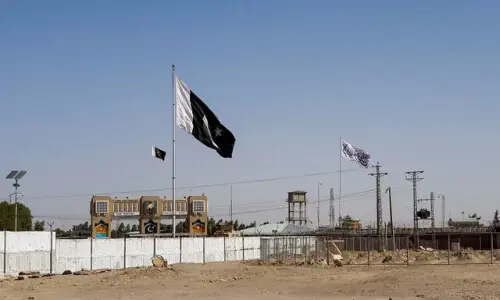
THE ceasefire between Pakistan and Afghanistan remains ‘fragile’, as Prime Minister Shehbaz Sharif has described it.
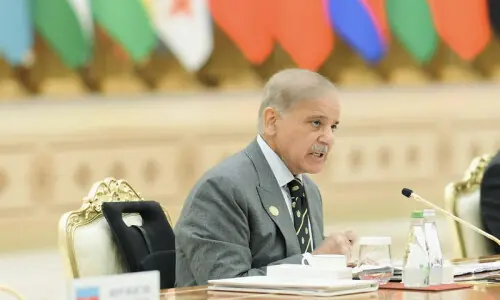
Mr Sharif, who was speaking at a multilateral forum in Ashgabat, Turkmenistan on Friday, also observed that the international community should press the Afghan Taliban to fulfil their commitments vis-à-vis preventing terrorists from using their soil to attack others. At the same forum, Turkish President Recep Erdogan again offered his good offices to maintain an “extended ceasefire” between Islamabad and Kabul.
Meanwhile, a recent resolution adopted by around 1,000 Afghan clerics at a gathering in Kabul, calling for prohibition of cross-border movement of fighters, is a step in the right direction.
Yet the effectiveness of this decree will only be proved if there is a visible drop in the number of terrorist attacks targeting Pakistan carried out by Afghanistan-based militants.
According to reports, the clerics pledged that Afghan soil would not be used against other countries, while calling for “necessary measures” towards those who violate the edict. They also observed that Afghan Taliban Supreme Leader Mullah Hibatullah Akhundzada had prohibited Afghan nationals from participating in military activity abroad.
The resolution is most likely referring to Mullah Akhundzada’s 2023 decree in which the Taliban head declared cross-border attacks, including those targeting Pakistan, as “haram”. Yet the Taliban chief’s prohibition has not been heeded by terrorists, who continue their bloody campaign against Pakistan.
The resolution seems to be an attempt by the Afghan side to rebuild trust with Pakistan, and prevent bilateral ties from deteriorating further. The call was issued by independent clerics, not by the Taliban authorities, though as an Afghan participant of the Kabul conclave told this paper, Mullah Akhundzada “does not want a neighbour to have problems because of us”.
The number of Afghans participating in cross-border attacks has risen, so perhaps the resolution is also an attempt to quell this trend. But the question remains: what about Pakistani terrorists based in Afghanistan who are involved in cross-border attacks? Will the Taliban regime take concrete action against them?
If the realisation has dawned in Kabul and Kandahar that giving free rein to terrorist groups such as the TTP to attack Pakistan and other neighbours will further isolate Afghanistan regionally and globally, then it would be a case of ‘better late than never’.
We hope these are not mere words, and that there is a sincere will on the Afghan side to address the issue of terrorism.
The Foreign Office has cautiously welcomed the resolution.
Continued bilateral tension and conflict is in the interest of neither state. Therefore, the mediation efforts of friendly states must continue. Once the terrorism issue is resolved, both states can start work on building a fruitful relationship.
Published in Dawn, December 14th, 2025