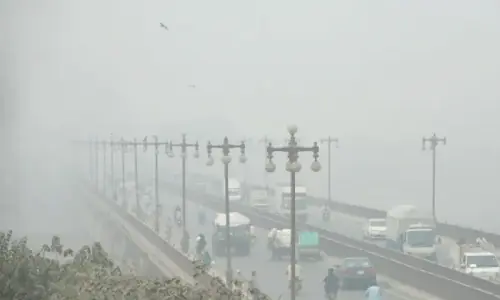
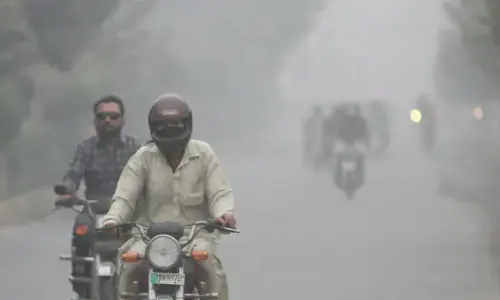
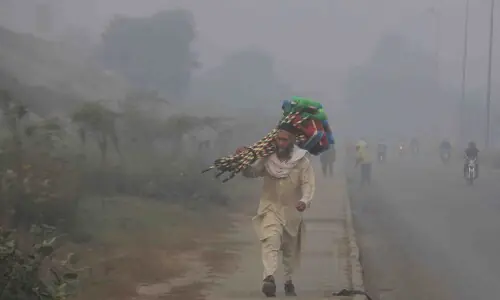
Lahore sees significant reprieve from extreme smog
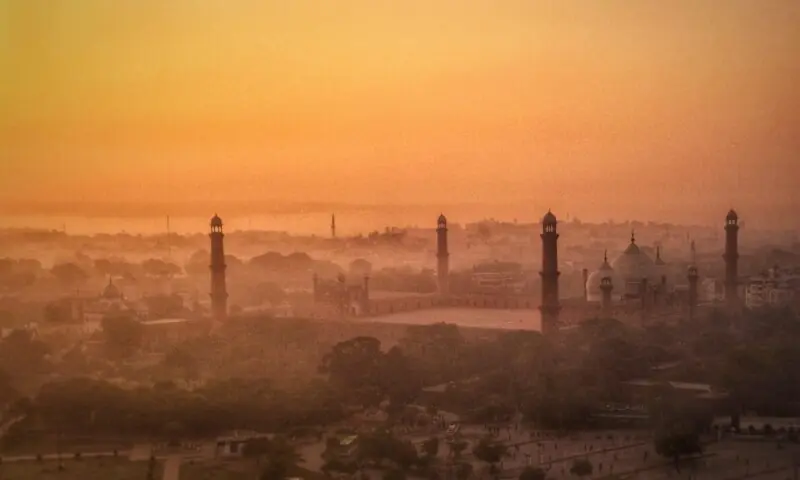

LAHORE: Lahore experienced a significant reprieve from extreme smog conditions this November compared to the hazardous emergency of 2024, according to a new analysis by the Pakistan Air Quality Initiative (PAQI).
The Pakistan Air Quality Initiative (PAQI) is a non-profit citizen-led platform dedicated to monitoring, visualising, and advocating for clean air across the country through data-driven research and public awareness campaigns.
Data for November 2025 confirms a dramatic 56 per cent reduction in daily peak pollution intensity. The maximum daily PM2.5 concentration plummeted to 237 micrograms per cubic metre (µg/m³), a stark contrast to the severe peak of 539 µg/m³ recorded on Nov 14, 2024.
Crucially, the city recorded zero days with an Air Quality Index (AQI) above 300 — the “Hazardous” category that plagued the previous November.
The monthly baseline pollution also improved, showing a 37pc reduction. The average PM2.5 concentration for November 2025 was 181 µg/m³, down from 2024’s levels.
“Data confirms that Lahore avoided the extreme accumulation events of last year,” the PAQI analysis states.
“This shift successfully spared the city from the consecutive ‘Hazardous’ streak that characterised November 2024.”
The November improvement aligns with a positive shift seen in year-to-date data. The average PM2.5 concentration for 2025 has dropped by 15.6pc to 83.7 µg/m³, compared to 99.2 µg/m³ for the same period in 2024.
The year began with cleaner air, and the typical intense winter smog surge was less pronounced this November.
PAQI attributes the reduction in peak smog episodes primarily to “favourable meteorology,” such as wind and rainfall patterns that prevented the dangerous accumulation of pollutants seen last year.
The verdict highlights a persistent, underlying problem: Despite the improvements, air quality in November 2025 remained “very unhealthy” and exceeded Pakistan’s Environmental Quality Standards (PEQS) every single day. The 181 µg/m³ monthly average is still far above safe limits.
“The reduction of peak episodes is likely due to favourable meteorology,” the analysis concludes.
“However, structural emissions remain a key area for continued focus to bring pollution levels closer to WHO and PEQS guidelines.”
The report underscores that without sustained efforts to tackle the root causes of pollution from industrial and vehicular emissions to crop burning, Lahore remains vulnerable to returning to emergency-level smog whenever weather conditions are less dispersive.
The Punjab Environment Protection Department (EPA) claims to have intensified its environmental enforcement operations with a sharp surge in demolitions, FIRs, inspections, anti-smog interventions and rapid-response actions across the province.
According to data issued by EPA, 2,575 illegal polluting units were demolished, more than 2,500 premises sealed and over 4,000 FIRs registered against violators.
Industrial pollution fines have surpassed Rs711 million. On the ground, anti-smog guns have misted nearly 55,000 kilometres of Lahore’s roads, hundreds of mist sprinklers have been installed, and rapid-response teams have worked to extinguish crop-burning fires.
Environment DG Imran Hāmid Sheikh stated that the department has adopted a “zero-tolerance approach” against industrial, vehicular and agricultural emissions.
He said that to address water pollution, 2,160 recyclers have been installed across service stations in Punjab, with non-compliant stations facing immediate sealing.
He said 168 bird-hazard surveillance operations were conducted, mainly around aviation zones to prevent risks to aircraft.
In the sand-trolley monitoring campaign, 5,847 inspections were conducted, 128 cages removed, and 109 trolleys rejected for non-compliance with SOPs.
Published in Dawn, December 4th, 2025