Lebanon, Israel hold first direct talks in decades

JERUSALEM: Lebanese and Israeli civilian representatives held their first direct talks in decades on Wednesday, Israeli Prime Minister Benjamin Netanyahu’s office said, under a year-old ceasefire monitoring mechanism in the war with Hezbollah.
The two sides met at the UN peacekeeping force’s headquarters in Lebanon’s Naqura near the border with Israel, as part of a mechanism to oversee the ceasefire that took hold in November 2024.
Until now, Israel and Lebanon, which have no formal diplomatic relations, have insisted on keeping military officers in the role.
“Today’s meeting in Lebanon is an initial attempt to establish a basis for a relationship and economic cooperation between Israel and Lebanon. This is a historic development,” Shosh Bedrosian, a spokeswoman for Netanyahu, said.
“This is the first step to paving a path with Lebanon, and it’s clear the Lebanese recognise the economic challenges they are facing,” she told reporters.
The US embassy in Beirut said in a statement that Morgan Ortagus, the US special envoy for Lebanon, also attended Wednesday’s meeting.
The United States has been piling pressure on Lebanon to rapidly disarm Hezbollah.
Washington’s embassy welcomed the inclusion of civilian representatives — former Lebanese ambassador to the US Simon Karam and Israeli National Security Council official Uri Resnick — in the talks as part of the ceasefire monitoring mechanism.
“Their inclusion reflects the Mechanism’s commitment to facilitating political and military discussions to achieve security, stability, and a durable peace for all communities affected by the conflict,” it said.
Abraham Accords
Ortagus was in Jerusalem a day earlier, where she met with Netanyahu and Israeli Foreign Minister Gideon Saar.
The United States has pushed for direct talks between the two neighbours in a bid to stabilise the region and further weaken Iran-backed Hezbollah.
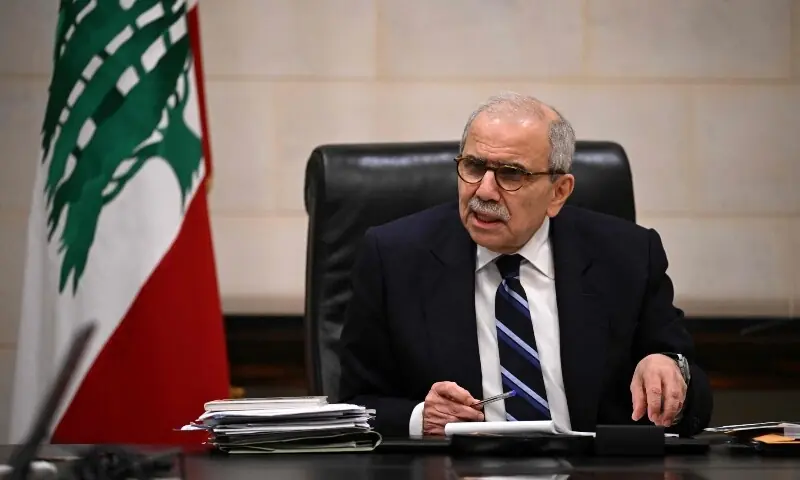
Lebanese President Joseph Aoun’s office said earlier Wednesday his delegation would be led by Karam, and it had been informed that Israel would include “a non-military member in its delegation.” Lebanon has declared itself ready for negotiations with its southern neighbour.
Israeli Prime Minister Netanyahu has repeatedly said Lebanon should join the Abraham Accords, under which a handful of Arab and Muslim countries have normalised ties with Israel. In 1983, after Israel invaded Lebanon, the two countries held direct talks, resulting in the signing of an agreement that would have established relations. It was never ratified.
Published in Dawn, December 4th, 2025