After UNSC vote on Gaza plan, Netanyahu calls for Hamas’s expulsion from the region


 0
0

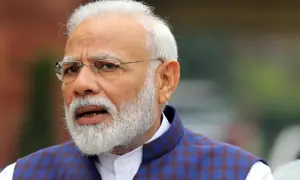
Israeli Prime Minister Benjamin Netanyahu on Tuesday called for Hamas to be expelled from the region, a day after the United Nations Security Council (UNSC) endorsed United States President Donald Trump’s Gaza plan that offers the Palestinian group amnesty.
Netanyahu publicly endorsed the plan during a White House visit in late September. However, his latest remarks appear to show that there are differences with the US on the path forward. Hamas has also objected to parts of the plan.
Diplomats say privately that entrenched positions on both the Israeli and Hamas sides have made it difficult to advance the plan, which lacks specific timelines or enforcement mechanisms. Still, it has received strong international backing, including from the Arab and Muslim countries that worked on it.
Netanyahu on Tuesday published a series of posts on X in response to the UN vote. In one post, he applauded Trump and in another wrote the Israeli government believes the plan would lead to peace and prosperity because it calls for the “full demilitarisation, disarmament, and deradicalisation of Gaza”.
“Israel extends its hand in peace and prosperity to all of our neighbours” and calls on neighbouring countries to “join us in expelling Hamas and its supporters from the region”, he said.
Asked what the prime minister had meant by expelling Hamas, a spokesperson said that it would mean “ensuring there is no Hamas in Gaza as outlined in the 20-point plan, and Hamas has no ability to govern the Palestinian people inside the Gaza Strip”.
Plan does not call for Hamas’s expulsion
Trump’s 20-point plan includes a clause saying that Hamas members “who commit to peaceful coexistence and to decommission their weapons will be given amnesty”, and members who wish to leave will be given safe passage to third countries.
Another clause says Hamas will agree to not having any role in Gaza’s governance.
There is no clause that explicitly calls for the resistance group to disband or to leave Gaza.
The plan says reforms to the Palestinian Authority may ultimately allow conditions “for a credible pathway to Palestinian self-determination and statehood”.
Ahead of the UN vote, Netanyahu said on Sunday that Israel remained opposed to Palestinian statehood after protests by far-right coalition allies over a US-backed statement indicating support for a pathway to Palestinian independence.
Netanyahu also opposes any Palestinian Authority involvement in Gaza.
European and Arab states have said that Gaza must be governed by the Palestinian Authority and that there must be a clear pathway to Palestinian independence.
First step towards peace: Palestinian Authority
The Palestinian Authority, based in Ramallah in the occupied West Bank, earlier welcomed the vote and has said it is ready to take part in Trump’s plan, which doesn’t outline a clear role for the authority.
Palestinian Foreign Minister Varsen Aghabekian Shahin termed the UNSC resolution the “first step in a long road towards peace”.
“That step was needed because we could not embark on anything else before we had a ceasefire,” Shahin told reporters in Manila during a visit to the Philippines.
Shahin said there were still other issues that needed to be addressed, including Palestinian self-determination and eventual Palestinian independence, and that the process for implementing Trump’s plan must be governed by international law.
She said that although Trump’s plan alludes to possible Palestinian statehood only after the Palestinian Authority carries out reforms, that issue could be taken up later. “As long as these elements are in there, we’re happy with this first step,” Shahin said.
Multinational force for post-war Gaza
The UNSC resolution authorised a multinational force that Trump’s plan says will be temporarily deployed to Gaza to stabilise the territory.
The resolution’s text also says member states could join a “Board of Peace” that would oversee reconstruction and economic recovery inside Gaza.
Hamas has criticised the resolution as failing to “live up to the demands and political and humanitarian rights” of the Palestinian people, who it said rejected an international guardianship mechanism of Gaza.
Any international force must only be deployed along Gaza’s borders to monitor the ceasefire and under UN supervision, Hamas said in a statement, warning that such a force would lose its neutrality if it tried to disarm the group.
Reham Owda, a Palestinian political analyst from Gaza, said the Hamas statement should be viewed as an objection, rather than complete rejection, in an attempt to negotiate mechanisms for the international force and the role of the board of peace.
A ceasefire between Israel and Hamas came into effect on October 10 as part of Trump’s multi-phased plan to end Israel’s two-year relentless bombardment.
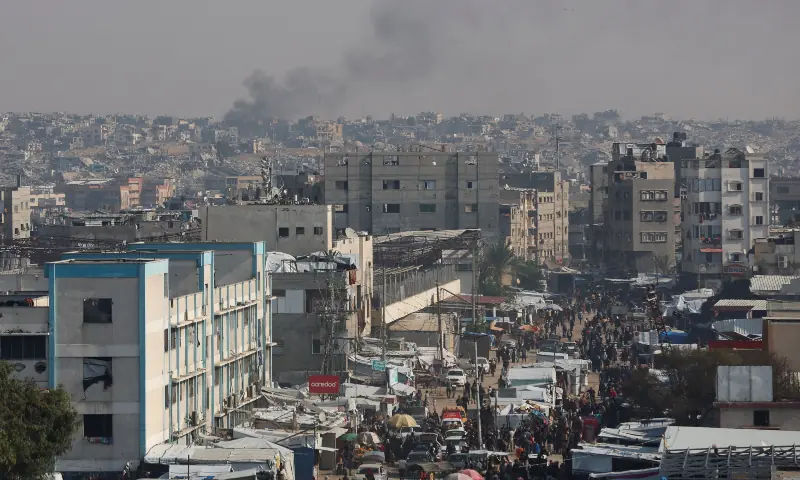
Israel has partially withdrawn its forces but still controls 53 per cent of Gaza and the sides have accused each other of violations.
Abu Abdallah, a businessman displaced in central Gaza, said Palestinians would support the deployment of international forces if it meant that Israel would fully withdraw its forces.
“Hamas can’t decide our fate alone, but we also don’t want to get rid of one occupation, Israel, and get another international occupation,” he said by phone.
Water provider suspends services after Hamas detains staff member
Separately, a Gaza company that operates water desalination plants serving nearly half of the enclave’s population has stopped operations to protest the detention by Hamas of one of its staff.
Youssef Yassin, a board member of the Abdul Salam Yassin Company, said the move would affect more than 1 million people who normally receive water from the company.

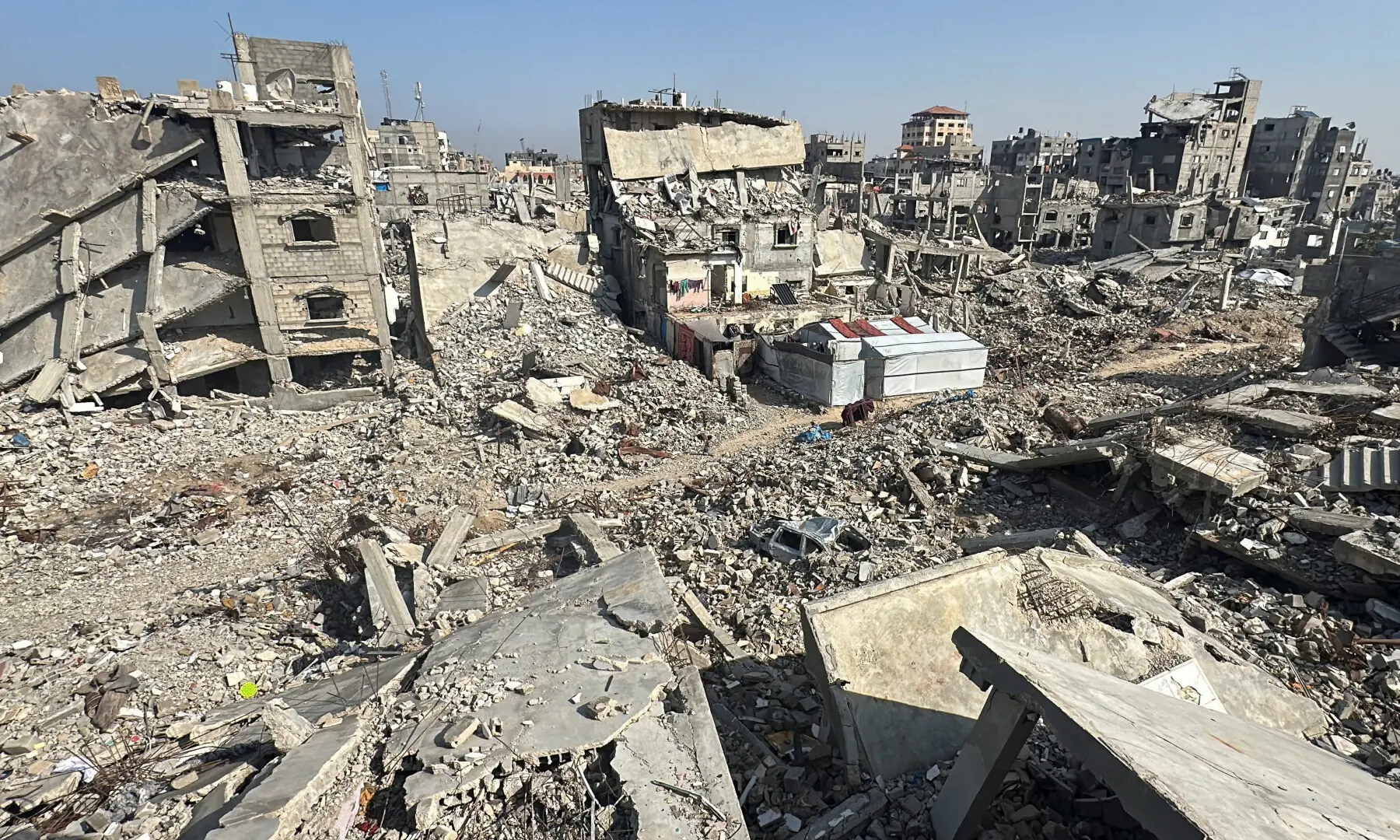
Over 70 trucks that carry water containers across the enclave have also stopped operations, he added, risking further supply disruption after the pipeline network was badly damaged due to Israel’s bombing.
“I know it is catastrophic but protecting our employees is a sacred issue,” Yassin told Reuters.
Yassin said Hamas had given no reason for the arrest late on Monday. Hamas had no immediate comment when contacted by Reuters on Tuesday.
Hamas has been gradually reasserting control in areas of Gaza that Israel has withdrawn from as post-war talks over its future grind on. Foreign powers demand the group disarm and leave government but have yet to agree who will replace them.
Israel continues to control around half the Gaza Strip.
The move is a rare show of dissent against Hamas, which has run the Palestinian enclave since 2007.
Demonstrations briefly erupted in March and April, demanding an end to the war and that Hamas give up power, but fizzled out after a warning that public disorder would not be tolerated.
If the protest by the company persists, it could exacerbate the chronic water crisis in the enclave, which was worsened further by two years of Israel’s siege. Israel stopped all water and electricity supply to Gaza early in the offensive, resuming only a trickle of supplies later.