Pakistan calls for ending occupation of Palestine after UNSC adopts resolution on Gaza peace plan
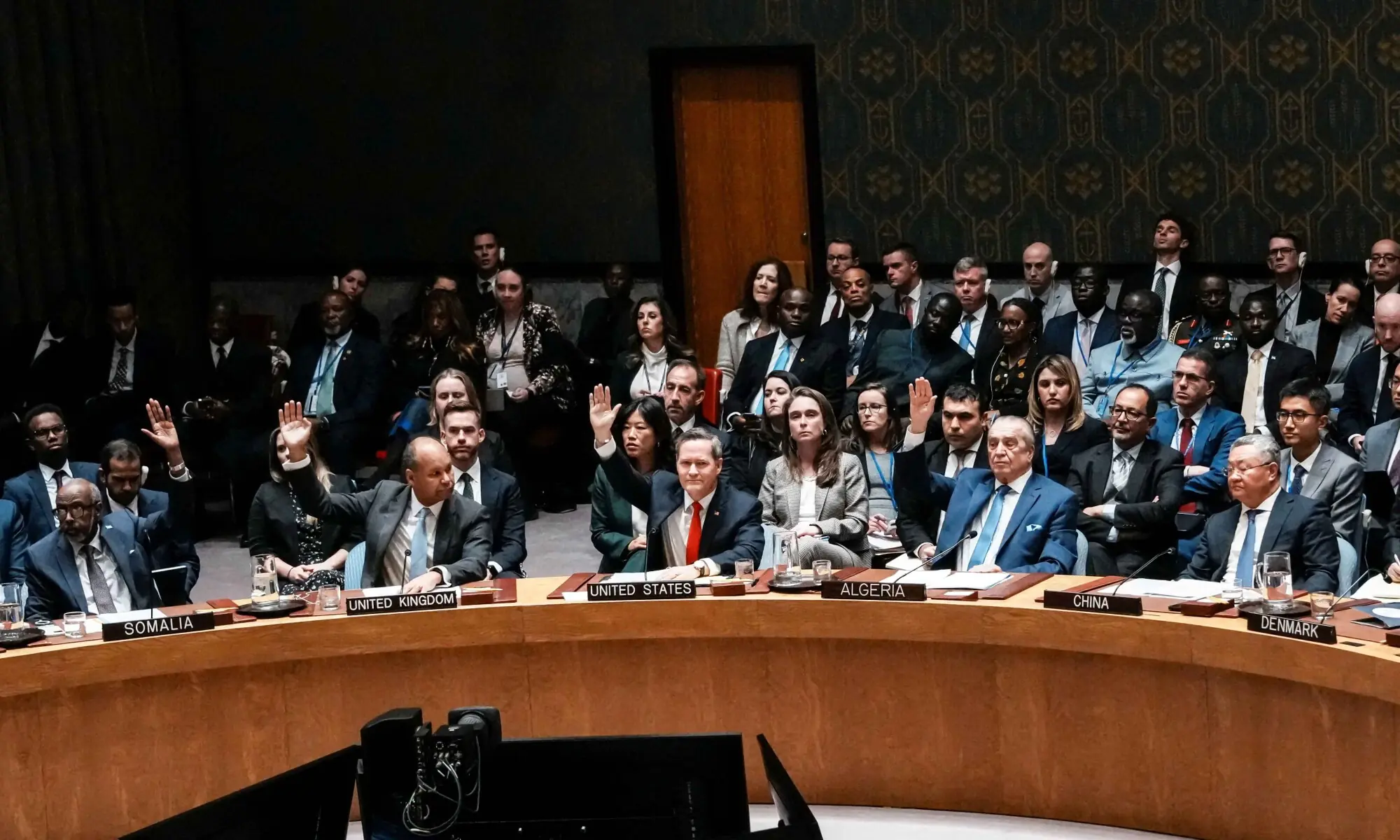
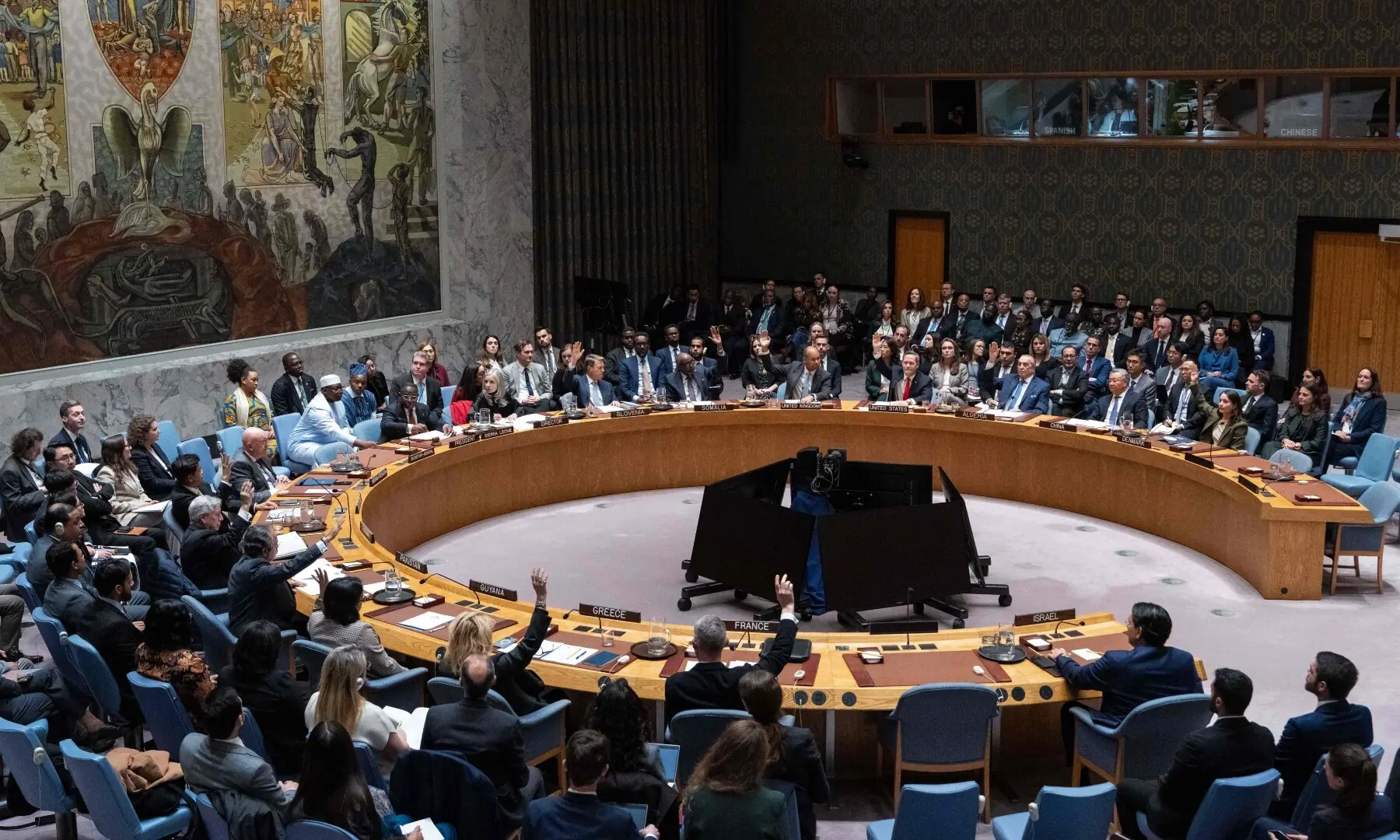
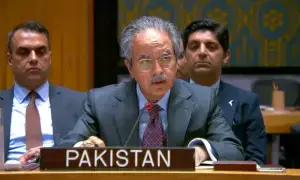
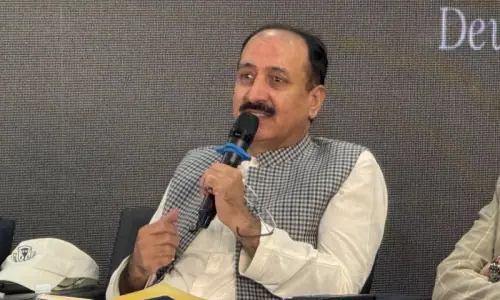
Pakistan’s Permanent Representative to the UN Ambassador Asim Iftikhar Ahmad stressed on Monday the need for ending the occupation of Palestinian territories and paving the way for Palestinian statehood through a credible political process.
“We believe that in order to break the cycle of violence, it is absolutely necessary to end the occupation, and to have a political horizon, open the pathway to the Palestinian State through a credible, time-bound political process firmly anchored in the relevant UN resolutions,” he said while speaking at the UN Security Council (UNSC) after it adopt a US-drafted resolution endorsing President Donald Trump’s plan to end the war in Gaza.
The plan also authorises an International Stabilisation Force (ISF) for the Palestinian enclave.
Thirteen UNSC members, including Pakistan, voted in favour of the resolution, while Russia and China abstained — notable given earlier signals that Moscow might veto the text.
Israel and Hamas agreed last month to the first phase of Trump’s 20-point plan for Gaza — a ceasefire in their two-year war and a hostage-release deal — but the UN resolution approved by the Security Council is seen as vital to legitimising a transitional governance body and reassuring countries that are considering sending troops to Gaza.
Pakistan said it voted in favour of the resolution in order to halt the fighting, protect civilians, and reinforce a ceasefire that could open the way to humanitarian relief, reconstruction, and a full Israeli withdrawal from the enclave.
Ambassador Ahmad explained that Islamabad backed the plan with one overriding purpose: “To stop the bloodshed, to save the lives of innocent Palestinians, including women and children, to maintain the ceasefire, and to secure the full withdrawal of Israeli forces from Gaza.”
He said Pakistan’s vote was guided by the position of the Palestinians, the Arab Group, and the eight-nation Arab-Islamic grouping — Saudi Arabia, Qatar, the UAE, Egypt, Jordan, Indonesia, and Türkiye — which endorsed Trump’s initiative earlier this year.
“Our vote has been guided by the position of Palestine and the Arab Group,” he said, adding that the joint engagement was aimed at ending the conflict, ensuring humanitarian access, preventing displacement, and supporting “a credible pathway to Palestinian self-determination and statehood”.
The ambassador noted that Pakistan worked actively during negotiations, supporting Arab amendments and proposing its own changes to ensure the text aligned with “international legitimacy” on the Palestinian question.
He welcomed the inclusion of some proposals, such as the explicit call for maintaining the ceasefire and the requirement for regular reporting to the UNSC, but said several critical issues remained unaddressed.
“A clear political path to Palestinian self-determination and statehood, the central role of the Palestinian Authority in governance and reconstruction, and enhanced involvement of the UN … are crucial aspects,” he said.
“We earnestly hope that further details in coming weeks will provide the much-needed clarity,” he added.
Ambassador Ahmad reaffirmed Pakistan’s consistent policy that any peace initiative must lead to a sovereign, independent and contiguous Palestinian state based on pre-1967 borders with Al-Quds Al-Sharif as its capital.
He underscored that existing UNSC resolutions “remain fully valid,” cautioning that the new resolution should not “alter or diminish” the body of established international law on the conflict.
He stressed that the right to self-determination is “inherent and unconditional … and cannot be subjected to any conditions”.
The ambassador said the proposed Board of Peace must remain a temporary oversight mechanism whose mandate expires in 2027 unless renewed.
“Executive and administrative authority in Gaza must remain with the Palestinians through a Palestinian Committee,” he added.
He insisted that the Palestinian Authority must play a central role in governance and reconstruction.
“Peace cannot be achieved by bypassing the Palestinians. There must be an end to policies that undermine and weaken the Palestinian Authority,“ he said.
Talking about the ISF, Ahmad said it could be stabilising only if it operated under a clear UN-consistent mandate. Disarmament, he said, must be carried out through a negotiated political process under a unified Palestinian National Authority.
He warned that unilateral violations of the ceasefire could “threaten and thwart the entire process”, and emphasised that the ISF’s mandate would only be effective “once there is complete Israeli withdrawal”.
Referring to the scale of devastation in Gaza, the ambassador said more than 69,000 Palestinians had been killed over the past two years.
A “ray of hope,” he said, had emerged with the summit in Sharm-el-Sheikh in October — where Egypt, Qatar, Türkiye and the United States signed the peace agreement that underpins the current plan.
The UN envoy urged the international community to uphold its responsibilities and support a credible, time-bound process towards Palestinian statehood. He stressed that there must be “no annexation and no forced displacement” and that the territorial contiguity of the West Bank and Gaza was essential for a viable state.
Looking ahead, he said the UN, the Palestinian Authority, and the Palestinian people must play central roles in governance, reconstruction and institution-building.
At the close of his address, the ambassador reaffirmed Pakistan’s solidarity with the Palestinian people.
“Their suffering is our anguish; their resilience is our pride; their aspirations our cause,“ he said, adding that Pakistan’s support for their right to self-determination would remain “unwavering” until its full realisation.
In a post on X afterwards, Ambassador Ahmad noted: “Looking ahead, the central roles of the United Nations, the Palestinian Authority, and the Palestinian people are vital in ensuring legitimate governance, reconstruction, and institution building in Gaza.
“The international community must stand with them steadfastly and firmly.”
Adoption of the resolution
The text of the resolution says member states can take part in the Board of Peace, envisioned as a transitional authority that would oversee the reconstruction and economic recovery of Gaza.
It also authorises the ISF, which would ensure a process of demilitarising Gaza, including by decommissioning weapons and destroying military infrastructure.
Trump’s 20-point plan is included as an annexe to the resolution.
Russia, which holds a veto on the UNSC, earlier signalled potential opposition to the resolution but abstained from the vote, allowing the resolution to pass.
After the vote, US Ambassador Mike Waltz thanked UNSC members, calling the decision a “historic and constructive resolution” that sets a new direction for the region.
“Thank you for joining us in charting a new course in the Middle East for Israelis and Palestinians and all the people of the region alike,” he said, adding that the adoption of the resolution represents “another significant step” toward a stable and prosperous Gaza and an environment in which Israel could live securely.
He emphasised that the ISF and the new investment mechanisms would work in tandem: “The former will support a region free from Hamas’ grip, and the latter Gaza’s reconstruction and development.”
Hamas rejects resolution
Hamas, however, rejected the resolution, saying it failed to meet Palestinians’ rights and demands and seeks to impose an international trusteeship on the enclave that Palestinians and resistance factions oppose.
“Assigning the international force with tasks and roles inside the Gaza Strip, including disarming the resistance, strips it of its neutrality, and turns it into a party to the conflict in favour of the occupation,” the group added.
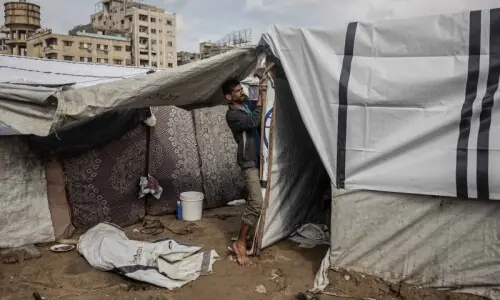
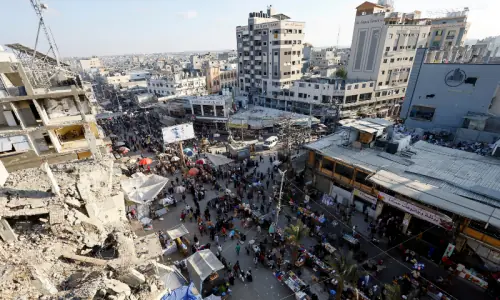
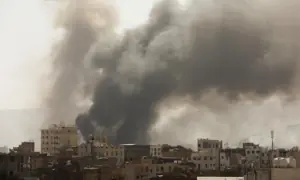
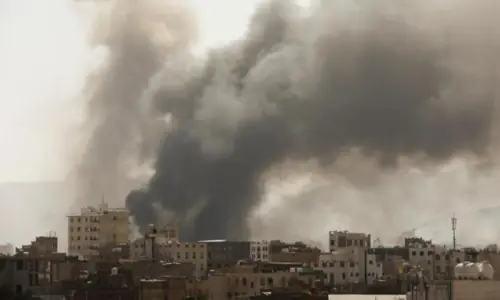
The Gaza Strip has been largely reduced to rubble after two years of Israel’s onslaught, sparked by Hamas’s attack on Israel on Oct 7, 2023.
The resolution’s text also says that “conditions may finally be in place for a credible pathway to Palestinian self-determination and statehood” once the Palestinian Authority has carried out a reform programme and Gaza’s redevelopment has advanced.
That eventuality has already been firmly rejected by Israel.
“Our opposition to a Palestinian state on any territory has not changed,” Netanyahu said at a cabinet meeting on Sunday.