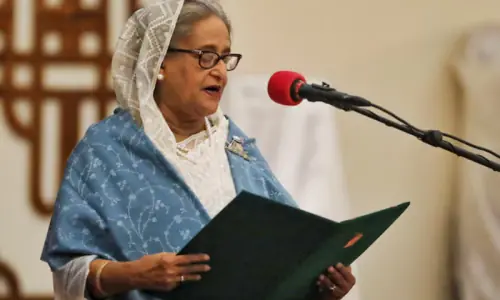
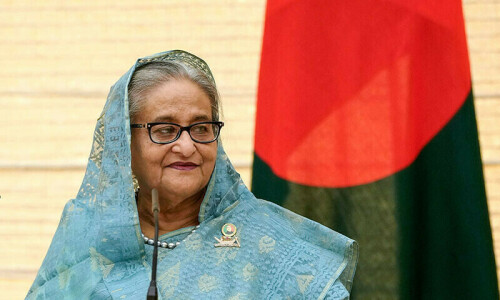
FORMER prime minister Sheikh Hasina Wajed, who once ruled Bangladesh with an iron fist, has been sentenced to death for crimes against humanity allegedly committed by her administration during last year’s popular revolt in that country.
Sheikh Hasina, who has been living in India after fleeing her homeland in August 2024, has termed the verdict “biased” and delivered by a “rigged tribunal”. Ironically, the court that convicted her — the International Crimes Tribunal — was set up by Sheikh Hasina herself. During her rule, it sent several of her opponents, mostly from the Bangladesh chapter of Jamaat-i-Islami and the opposition BNP, to the gallows for their supposed role in the 1971 violence. Many people rightly described those trials as unfair. Today, Sheikh Hasina appears to have become a victim of the very institutions she had created to eliminate her opponents.
While the fairness of the trial and the hasty manner in which it was conducted can be questioned, there can be little argument that Sheikh Hasina’s dispensation had become increasingly autocratic over the years. Cronies were enriched, while opponents were hounded. Democratic principles were eschewed in favour of a cult of personality surrounding Sheikh Hasina, her father Sheikh Mujeeb and her party the Awami League.
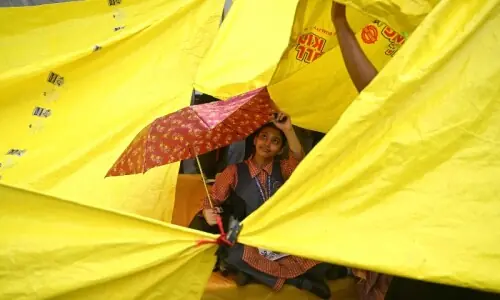
Sheikh Hasina’s repressive methods culminated in an explosion of popular rage last year, which eventually led to the toppling of her government, and her self-exile in India — a close ally for decades. It is clear that Sheikh Hasina’s government unleashed excesses on protesters during the 2024 unrest; she herself admitted that “we lost control of the situation”. Earlier this year, her party was banned, while her late father, once revered as ‘Bangabandhu’, also became a target of the protesters’ ire.
Over five decades since East Pakistan became Bangladesh, political stability still eludes that country. Whatever economic progress Bangladesh had made during Sheikh Hasina’s rule was overtaken by her repression of dissent, and relentless assaults on the opposition. Today, Bangladesh stands at a crucial juncture. Elections are scheduled for next year, and the interim authorities must ensure that full democratic rule is restored at the earliest. For elections to be credible, the Awami League must be allowed to contest.
It should be remembered that the 2024 elections — boycotted by the opposition — that returned Sheikh Hasina to power were not considered fair, which was a major factor behind the downfall of her regime. That is why all political parties must be allowed to contest the next polls to establish the credibility of the process. Those officials guilty of crimes must face justice. But if the process is coloured by vengeance including extreme punishments like the death penalty — which this paper opposes — it will only perpetuate instability. Mature states balance demands for justice with the need for reconciliation.
Published in Dawn, November 18th, 2025