Iran, Russia FMs call for ‘continued dialogue’ between Pakistan, Afghanistan
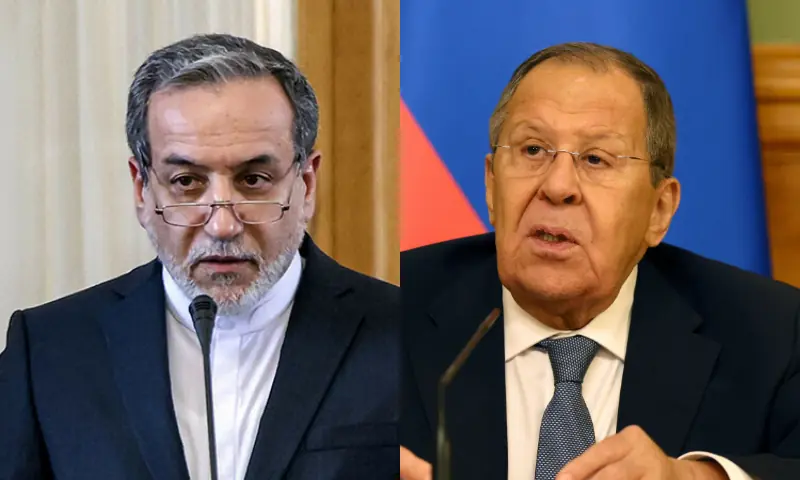
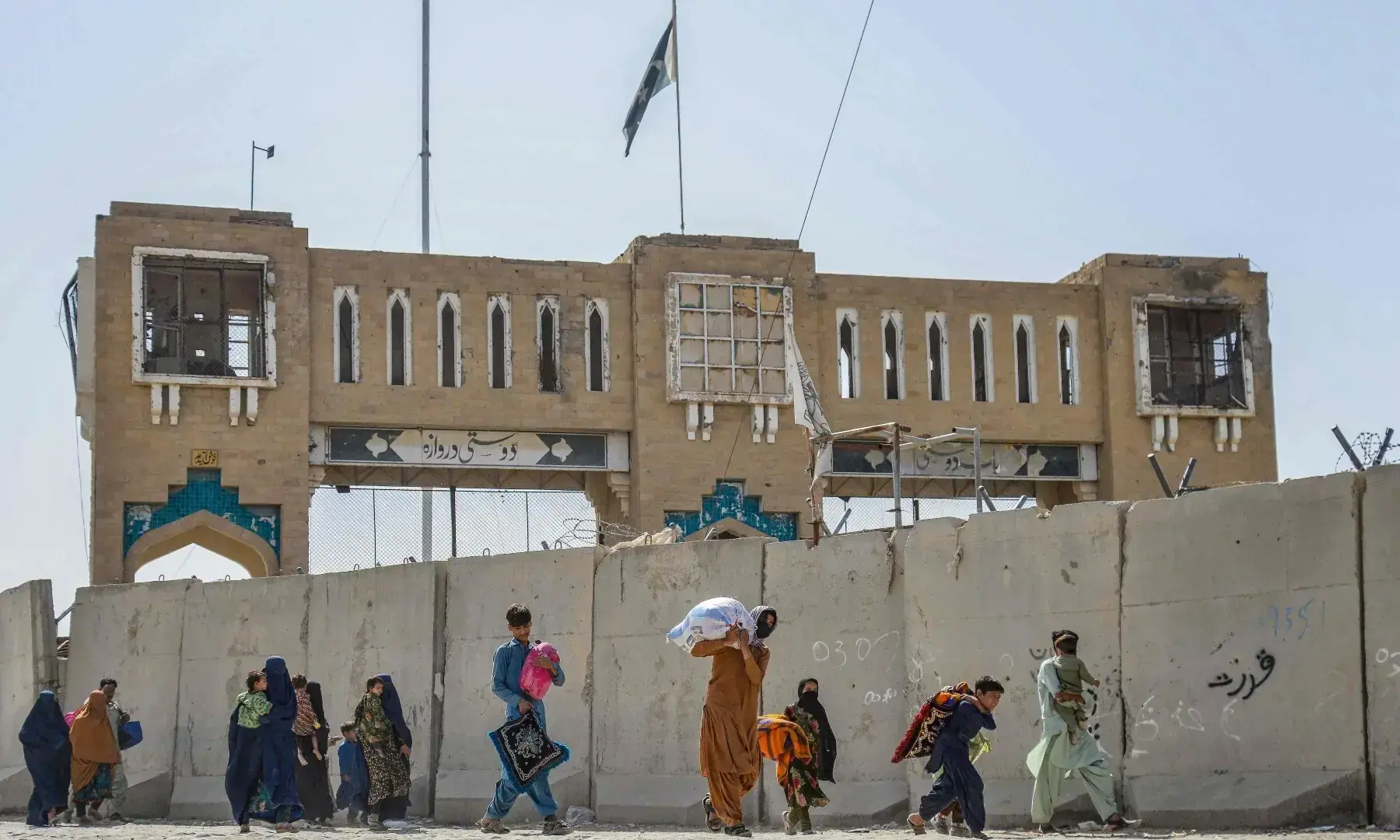

The foreign ministers of Iran and Russia have called for continued dialogue between Pakistan and Afghanistan to resolve their ongoing disputes on cross-border terrorism.
Last week, a third round of talks between Islamabad and Kabul, which were taking place in Istanbul in the presence of mediators, broke down without any agreement, as negotiators failed to bridge deep differences over how to prevent cross-border terrorism. The talks had followed deadly border clashes between the two neighbours in October.
Russia’s Foreign Minister Sergey Lavrov and his Iranian counterpart Abbas Araghchi spoke on the telephone on Wednesday, during which the two sides exchanged views on the latest bilateral and regional developments.
In its statement on Telegram, the Russian foreign ministry said the two ministers “welcomed the agreement reached between Kabul and Islamabad, mediated by the authorities of Qatar and Türkiye, on a mutual ceasefire and an end to cross-border shootings along the Afghan-Pakistani frontier”.
“The sides called for continued dialogue between the two friendly states (Afghanistan and Pakistan) to resolve differences by political and diplomatic means, in the interests of ensuring regional stability and security,” the ministry added.
Meanwhile, the Iranian foreign ministry’s statement said Araghchi “expressed concern over the recent clashes between Afghanistan and Pakistan”.
“He stressed the importance of constructive regional efforts to safeguard peace and stability, and called for enhanced dialogue and cooperation among regional countries in this regard.”
After a spate of terror attacks in the country this week, Prime Minister Shehbaz Sharif yesterday accused Afghanistan and India of involvement in recent terrorism, and vowed a “befitting response” to the nation’s enemies.
One of the terror incidents was Tuesday’s rare suicide attack in Islamabad, which killed 12 people and injured 36 others. This occurred the same day a bomb attack targeted a security forces’ convoy in Khyber Pakhtunkhwa’s Dera Ismail Khan district, injuring at least 14 personnel.
Another was an attack on the Cadet College in South Waziristan’s Wana, from where students and teachers were safely rescued, but three individuals were martyred during the clearance operation.
Today, Interior Minister Mohsin Naqvi said the main suspects in both the Islamabad blast and the Wana college infiltration were from Afghanistan.
Following the Islamabad blast, Defence Minister Khawaja Asif had said Pakistan was in a “state of war”, adding that it was futile to hope for any positive outcome of talks with Kabul after the incident.
Araghchi slams US draft resolution on Gaza force
The two dignitaries also discussed international matters, especially those in the Middle East.
FM Araghchi mentioned the recent moves by the United States and certain European countries at the United Nations Security Council (UNSC) “regarding Palestine, including a draft resolution that would impose an international trusteeship over Gaza and Palestine”.
Araghchi warned that such initiatives contradict the Palestinian people’s right to self-determination and are doomed to fail.
Lavrov, as per the Iranian ministry, stressed the importance of strengthening cooperation among “regional countries to maintain collective security”. He reaffirmed Moscow’s readiness to continue bilateral and regional consultations toward this goal.
The two foreign ministers also pointed to the upcoming meeting of the International Atomic Energy Agency’s (IAEA) Board of Governors, exchanging views on Iran’s cooperation with the UN’s nuclear watchdog.
Last month, Iran said it was no longer bound by restrictions on its nuclear programme, which Tehran says is for civilian purposes, as a landmark 10-year deal between it and world powers expired.
“Araghchi and Lavrov underlined the need to maintain coordination and cooperation among Tehran, Moscow, and Beijing in this regard,” the Iranian ministry said. Russia accused France, the United Kingdom and Germany of “attempting to initiate an anti-Iranian campaign” at the IAEA meeting.
Iran, Russia ‘determined’ to expand cooperation in all avenues
Araghchi and Lavrov also discussed the state of Iran and Russia’s bilateral relations, reaffirming the “firm determination of their countries to expand cooperation in all areas of mutual interest”, the Iranian ministry said.
Araghchi underscored the need for continued talks between Iran and Russia, as well as with other regional partners, to “explore ways of preserving peace and stability”.
According to the Russian foreign ministry, the two leaders reaffirmed their “mutual commitment to the unconditional implementation of the Treaty on Comprehensive Strategic Partnership between Russia and Iran, which entered into force on October 2”.