Study warns of dangerous heat at 2026 World Cup as climate risks grow

Football’s global players’ union renewed concerns on Thursday about heat at the 2026 World Cup after scientists warned that the likelihood of dangerous temperatures for players and fans has sharply increased.
An analysis by climate research group World Weather Attribution found that roughly a quarter of the 104 matches at the expanded tournament across the United States, Mexico and Canada are likely to be played in conditions exceeding safety limits recommended by FIFPRO, almost twice the risk seen at the 1994 World Cup in the US.
Around five matches could take place in conditions considered unsafe, where postponement would be advised, the researchers said.
Scientists assessed the risk using kickoff times and the Wet Bulb Globe Temperature (WBGT) index, which measures how effectively the body can cool itself.

“The calculations to estimate the likelihood of 2026 FIFA World Cup games being played in high WBGT conditions are in line with FIFPRO’s calculations published in 2023,” said FIFPRO’s medical director, Vincent Gouttebarge.
“These estimations justify the need for —and implementation of — a series of mitigation strategies with a view to better protecting players’ health and performance when they are exposed to hot conditions.”
FIFPRO recommends cooling measures when WBGT rises above 26 degrees Celsius and says matches should be postponed if it exceeds 28°C, which is equivalent to roughly 38°C in dry heat or 30°C in high humidity.
FIFA told Reuters that it has carried out heat-risk planning, with measures including three-minute hydration breaks in each half of games, cooling infrastructure for fans and players, adapted work-rest cycles, and enhanced medical readiness that scale according to real-time conditions.
“FIFA is committed to protecting the health and safety of players, referees, fans, volunteers and staff,” the global governing body said in a statement.
‘More conservative football’
Chris Mullington, consultant anaesthetist at Imperial College London NHS Trust and clinical senior lecturer at Imperial College London, said extreme heat is more likely to influence how games are played than trigger widespread medical emergencies among players.
“It will be more of a performance issue than a health issue,” he said. “These players are elite athletes and acclimatised. You’ll see players self-pacing. That behavioural thermoregulation is very difficult to override.
“So you may end up with more conservative football.”
Cooling systems are expected to reduce some of the risk at three of the 16 host venues, according to the analysis.
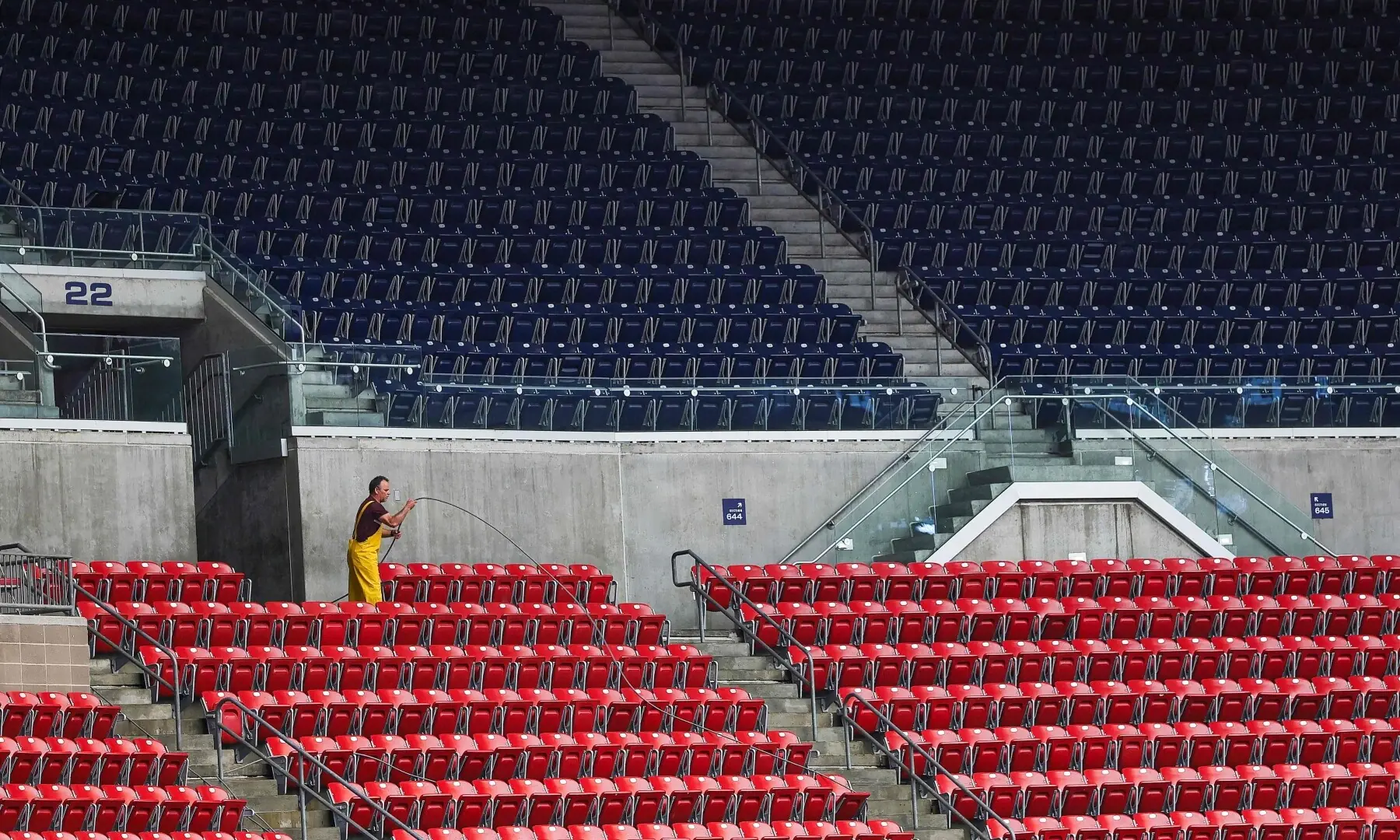
However, more than a third of games with at least a 10 per cent chance of exceeding 26°C WBGT are scheduled at stadiums without air conditioning, including Miami, Kansas City, New York and Philadelphia.
That includes the final at MetLife Stadium in East Rutherford, New Jersey, which now faces a one-in-eight chance of exceeding the 26°C threshold and a roughly 3pc risk of reaching the more dangerous level —about double the risk it would have carried in 1994, the analysis said.
Friederike Otto, professor of climate science at Imperial College London, said the findings highlighted the need for FIFA to reconsider when future World Cups are scheduled, particularly in regions vulnerable to extreme summer heat.

“From a health point of view, it would be advisable to have these (World Cups) either earlier or later in the year, so you can have a football party rather than something that is a massive health risk for the whole city,” said Otto.
FIFPRO also warned that while air-conditioned stadiums in cities such as Dallas and Houston may help protect players, fans attending matches and outdoor fan festivals could remain exposed to prolonged periods of dangerous heat.