0
0

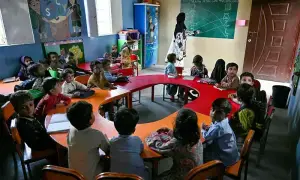
FORWARD-looking nations do not just celebrate their advantages; they turn them into tangible gains. They also prepare for times when those very advantages could become a liability. Pakistan’s experience suggests the opposite trajectory, however. It has long celebrated its youthful population as a future economic asset but has failed to develop policies to turn it into tangible gains. It is therefore no surprise that this asset is rapidly turning into a liability. In this context, the warning from the planning minister deserves attention because the country is running out of time to take advantage of the so-called demographic dividend, or prepare itself to meet the challenge of a very high birth rate and an increasing aging population. The projections suggest that unless governance, education and employment systems improve as fast as population, the demographic dividend will trigger social instability.
Pakistan’s population could approach 390m by 2050 even under relatively moderate assumptions. More significantly, nearly 100m people will fall within the youth bracket of 15 to 29 years. Theoretically, this should create a powerful labour force capable of driving growth, innovation and consumption. But demographics do not automatically transform into gains. A large young population is an advantage only when nations can educate, train and absorb them productively. Pakistan is a different story though. That is why the minister’s description of unchecked population growth as a potential “social bomb” merits attention. Countries with persistent youth unemployment often experience rising crime, political volatility, urban unrest and, in several instances, increased susceptibility to extremism. Besides, population pressures also intensify demands on the economy in terms of housing, healthcare, energy and food systems — areas where Pakistan lags far behind its peers. There are several examples where countries with large populations have transformed their demographic expansion into economic prosperity by investing heavily in human capital. Regrettably, Pakistan has done the opposite by excluding the population from economic planning. The proposal to link some part of NFC allocations with efforts to reduce the population control rate is a good one. But it should be extended to incentivising provincial expenditure on human capital development. Preparing a young population to participate meaningfully in productive economic activity is as important as controlling birth rates.
Published in Dawn, May 14th, 2026