The inflation trap
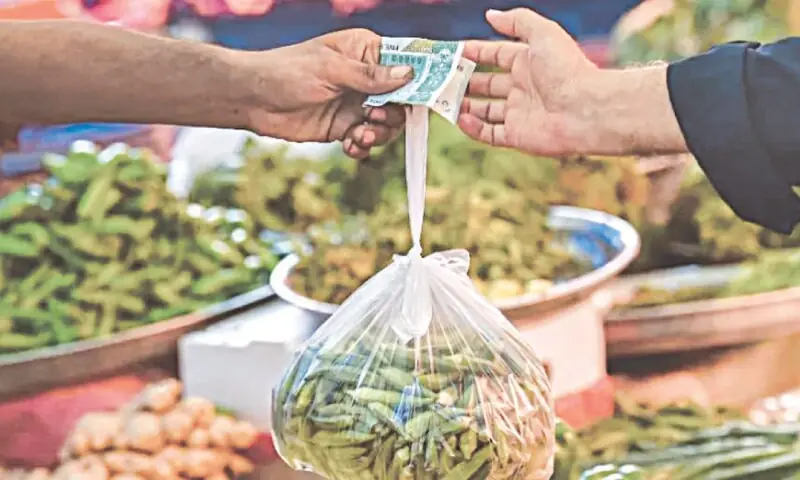

On Nov 1, the government announced another painful increase in fuel prices: petrol rose by Rs2.43 per litre to Rs265.45 and high-speed diesel by Rs3.02 to Rs278.44.
On paper, these may appear as routine adjustments; for millions of Pakistanis already grappling with a relentless cost-of-living crisis, they represent another seismic shock to their budgets.
Each fuel price hike does not exist in a vacuum; it sends inflationary tremors through the entire economy, rippling across transport fares, food markets, electricity bills, and industrial costs. This chain reaction ensures inflation lingers long after the headlines fade, embedded in daily life.
Pakistan’s persistent inflationary pressure is a complex crisis born of three interlocking pillars: domestic supply shocks, internal policy contradictions, and import vulnerabilities.
Persistent inflation distorts behaviour; businesses delay expansion, and families compromise on nutrition and healthcare, meanwhile, the state borrows more to fund relief, igniting the next round of inflation
Agriculture, once the bedrock of stability, has lost its resilience. A toxic mix of climate volatility, soaring input costs, and post-harvest losses has curbed output. This directly fuels food inflation, which remains stubbornly elevated.
According to the Pakistan Bureau of Statistics, headline inflation climbed to 6.2 per cent year-on-year in October 2025, its highest level in 12 months, driven largely by surging food prices after the monsoon floods and supply chain disruptions after the war with Afghanistan. The State Bank of Pakistan (SBP) is trying to keep inflation in the range of 5–7pc for this fiscal year and that is why it’s kept the policy rate at 11pc.
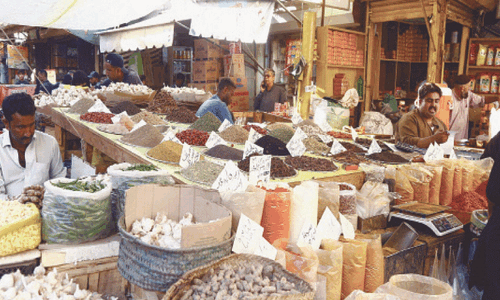
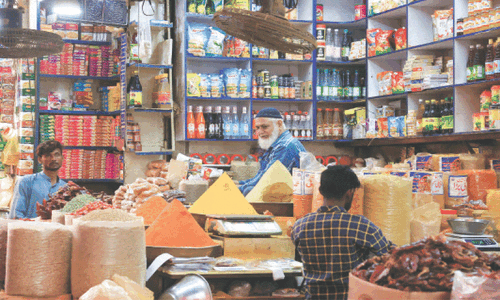
Food prices continue to rise not just because of post-flood shortages and transportation issues but also because Pakistan, despite being a largely agrarian economy, depends on imported wheat, pulses, cooking oil and tea. Each shipment of wheat, edible oil and pulses ties local prices to global commodity swings and the rupee’s exchange value vis-a-vis the greenback.
Though the rupee is currently stable, external sector vulnerabilities and delays in the International Monetary Fund loan tranche fuel market perception of a weaker rupee in coming months, which they factor into food and non-food prices alike. Similarly, when diesel — the lifeblood of logistics — becomes dearer, the cost of moving food from farms to markets skyrockets, and city prices follow suit.
A deeper contradiction lies in policy. The SBP keeps its policy rate at 11pc to suppress demand, yet the government borrows heavily from commercial banks to finance fiscal deficits. This paradox injects liquidity into the banking system even as productive credit dries up. SBP’s practice of encouraging government borrowing through massive open-market liquidity injections continues unchecked.
As of June 2025, the stock of broad money had climbed near Rs40.8 trillion, while currency in circulation crossed Rs10.6tr, roughly 26pc of total money supply — a record high. Little wonder then that reserve money that affects inflation more directly (and includes currency in circulation) grew about 11.7pc in FY25, the central bank’s data reveal.
Simultaneously, the SBP continued pumping trillions of rupees into the banking system throughout FY25 via reverse-repo operations to ensure settlement liquidity. These measures, while stabilising short-term flows, have also expanded monetary aggregates faster than real economic output, fuelling inflationary pressure across sectors.
The fiscal side mirrors this imbalance. Pakistan’s circular debt in the power sector reached Rs1.7tr by end-September 2025, rising by nearly Rs79 billion in the July–September quarter alone. This persistent fiscal leakage strains energy tariffs, and each delayed adjustment compounds future inflationary costs.
Businesses, squeezed by high borrowing costs and soft demand, pass on their costs to consumers. Untargeted subsidies and delayed energy-price adjustments further entrench inflation.
On that note, inflation is not experienced uniformly. Food inflation is visceral — it defines daily survival. The poorest households spend over half their income on food, leaving little for rent, education, or medicine. Food inflation thus acts as a regressive tax on the poor.
In contrast, non-food inflation — covering housing, transport, utilities, and healthcare — rises more gradually, hitting the urban middle class hardest. The latest fuel price hike will push up electricity tariffs and construction costs. Cement, steel, and logistics firms will pass the burden along. A mere two-rupee rise in petrol, when multiplied across freight networks and daily commutes, morphs into an economy-wide shockwave.
Another corrosive effect of inflation is how it shapes expectations. When people anticipate that prices will keep rising, they buy and hoard, accelerating inflation itself.
For salaried workers, wages rarely keep pace. In September 2025, inflation stood at 5.6 per cent year-on-year, already straining real incomes before October’s spike. The silent erosion of savings and purchasing power breeds frustration and insecurity. Investment retreats from industry toward speculative havens like real estate and foreign currency.
In rural Pakistan, the paradox runs deeper: farmers who produce food are crushed by the cost of diesel for irrigation and transport. They are both victims and conduits of inflation.
Persistent inflation distorts behaviour; businesses delay expansion, and families compromise on nutrition and healthcare. Meanwhile, the state borrows more to fund relief, but those borrowings inflate the money supply, thereby igniting the next round of inflation.
With nearly half of broad money now held as physical cash outside banks, the transmission of monetary tightening has weakened — making inflation less responsive to rate hikes and more resistant to reversal.
Breaking this vicious cycle demands a credible, coordinated framework. The government must curb non-essential spending, rationalise subsidies, and broaden the tax base — particularly in under-taxed retail, real estate, and agriculture sectors.
Ultimately, inflation is more than an economic indicator; it is a moral test of governance.
Published in Dawn, The Business and Finance Weekly, November 10th, 2025