Inflation jumps to 6.24pc in October


• Rural areas hit hardest as tomatoes, sugar and wheat lead price hikes
• Floods, border tensions fuel pressures
ISLAMABAD: Food items and energy spiked the inflation, measured by Consumer Price Index (CPI), to 6.24 per cent in October against 5.6pc in September, the Pakistan Bureau of Statistics (PBS) reported on Monday.
As a result, average inflation (CPI) in the first four months (July-October) of FY26 also moved up to 4.73pc when compared to the same period of last fiscal year. A month-on-month increase in CPI was reported at 1.83pc in October over September. Rural areas suffered the most due to rising prices as rural CPI was reported to have increased by 2.26pc in October while their urban compatriots faced 1.54pc increase in inflation.
The PBS said the 6.24pc increase for October was caused by an across-the-board rise in prices, except recreation and culture, which dropped by 3.7pc.
On the other hand, national prices of food and beverages (non-alcoholic) increased by 5.6pc, clothing and footwear by 8.07pc, housing, water, fuels and energy by 4.24pc, health 9.7pc, transport 6.7pc, education 10.6pc and other goods and services by 18.2pc.
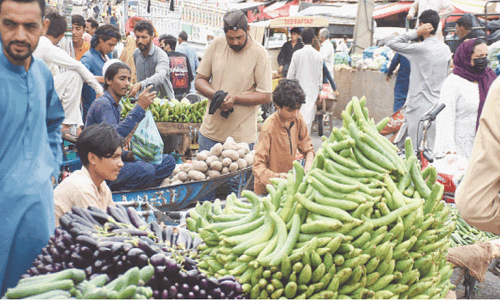
Major food items that impacted the household expenses included 127pc increase in the prices of tomatoes, sugar (345pc), butter (30pc), wheat (23pc), honey (18pc), wheat flour (15.7pc), vegetable ghee (12.50pc) and pulse moong (12pc). The prices of non-food items which went up included gas charges (23pc), electrical appliances for personal use (13.59pc), footwear (12.67pc), newspapers (11.93pc), woollen ready-made garments (11.66pc), transport services (11pc), solid fuel (10.63pc) and education (10.41pc).
On the other hand, the prices of onions were down in October over October of last year by 33.82pc, chicken (29.08pc), pulse gram (27.28pc), besan (22.27pc), pulse mash (21.80pc), tea (17.75pc), gram whole (17.49pc), potatoes (17.12pc), pulse masoor (5.41pc), beans (4.88pc) and fresh vegetables (2.13pc). Also, the electricity rates were down 15.59pc in October when compared to the same month last year followed by textbooks (10.61pc) and liquefied hydrocarbons (1.72pc).
Major food items driving the price index in October over September included tomatoes (58.64pc), onions (18.71pc), fresh vegetables (12.22pc), wheat (10.51pc), wheat flour (5.49pc), eggs (4.22pc), fish (3.83pc), wheat products (2.61pc), fresh fruits (2.44pc), butter (2.21pc), vegetable ghee (1.91pc) and cooking oil (1.02pc). These kitchen items are major part of the household budgets. Food items have almost 35pc share in overall national price index.
On top of this, some non-food items contributing to the monthly price hike included electricity charges which went up by 8.78pc, postal services (6.1pc), transport services (2.93pc), house rent (1.46pc), dental services (1.19pc) and tailoring (1.14pc).
On the other hand, the key kitchen items whose prices eased in October compared to September included chicken (21.52pc), potatoes (2.36pc), beans (1.93pc), Besan (1.81pc), pulse gram (1.74pc), gram whole (0.78pc) and pulse masoor and moog down by 0.32pc and 0.20pc, respectively.
Floods, border tensions fuel prices
According to Reuters, the government last week forecast inflation in the 5 to 6 per cent range for October, noting that flood-related supply pressures and border closures with Afghanistan had pushed up prices of some essential goods. Floods in August swamped farmland and industrial hubs in Punjab, killing more than 1,000 people, displacing 2.5 million and damaging crops and factories, tightening food supplies across the country. The pressure was compounded by border clashes with Afghanistan that shut major crossings used for food and fuel trade. The two countries later agreed to extend a ceasefire, but crossings remained restricted after October 11, disrupting commerce and deepening shortages in Pakistan’s northwestern regions.
The central bank said the overall economic outlook had improved, with better-than-expected crop yields, stronger industrial activity and a rebound in high-frequency indicators, though risks from global commodity volatility and domestic energy prices remain.
A private survey, meanwhile, showed manufacturing activity contracted for a second straight month in October, though the pace of decline slowed.
The HBL Pakistan Manufacturing PMI rose to 49.6 from 48.0 in September, with firms citing weak demand, higher taxes and power outages as key drags, even as business confidence remained cautiously optimistic. A reading below 50 indicates a contraction.
Published in Dawn, November 4th, 2025