Commodities head for six-year low


ISLAMABAD: Global commodity prices are projected to fall to their lowest level in six years in 2026, marking the fourth consecutive year of decline, according to the ‘Commodity Markets Outlook’ published by the World Bank.
Prices are forecast to drop by seven per cent in both 2025 and 2026, driven by weak global economic growth, a growing oil surplus, and persistent policy uncertainty.
Falling energy prices are helping to ease global inflation, while lower rice and wheat prices have helped make food more affordable in some developing countries. Despite the recent declines, however, commodity prices remain above pre-pandemic levels, with prices in 2025 and 2026 projected to be 23pc and 14pc higher, respectively, than in 2019.
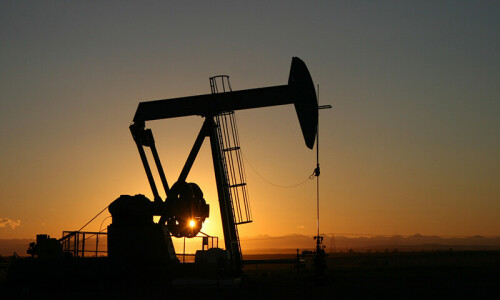
The global oil glut has expanded significantly in 2025 and is expected to rise next year to 65pc above the most recent high, in 2020. Oil demand is growing more slowly as demand for electric and hybrid vehicles grows and oil consumption stagnates in China.
Brent crude oil prices are forecast to fall from an average of $68 in 2025 to $60 in 2026 — a five-year low. Overall, energy prices are forecast to fall by 12pc in 2025 and a further 10pc in 2026.
World Bank sees prices falling 7pc in 2025 and 2026 as weak growth and oil surplus drag markets
Food prices are also easing, with declines of 6.1pc projected in 2025 and 0.3pc in 2026 soybean prices are falling in 2025 because of record production and trade tensions but are expected to stabilise over the next two years. Meanwhile, coffee and cocoa prices are forecast to fall in 2026 as supply conditions improve.
However, fertiliser prices are projected to surge 21pc in 2025, reflecting higher input costs and trade restrictions, before easing 5pc in 2026. These increases are likely to further erode farmers’ profit margins and raise concerns about future crop yields.
Precious metals have reached record highs in 2025, fuelled by demand for safe-haven assets and continued central bank purchases. The price of gold — widely viewed as a safe haven during times of economic uncertainty — is expected to increase by 42pc in 2025.
It is projected to increase by a further 5pc next year, leaving gold prices at nearly double their 2015-2019 average. Silver prices are also expected to hit a record annual average in 2025, rising by 34pc and further 8pc in 2026.
Commodity prices could fall more than expected during the forecast horizon if global growth remains sluggish amid prolonged trade tensions and policy uncertainty. Greater-than-expected oil output from the Organisation of the Petroleum Exporting Countries (Opec) could deepen the oil glut and exert additional downward pressure on energy prices. Electric-vehicle sales, which are expected to increase sharply by 2030, could further depress oil demand.
Conversely, geopolitical tensions and conflicts could push oil prices higher and boost demand for safe-haven commodities such as gold and silver. In the case of oil, the market impact of additional sanctions could also lift prices above the baseline forecast.
Extreme weather from a stronger-than-expected La Nina cycle could disrupt agricultural output and increase electricity demand for heating and cooling, adding further pressure to food and energy prices. Meanwhile, the rapid expansion of artificial intelligence (AI) and growing electricity demand to power data centers could raise prices for energy and for base metals like aluminum and copper, which are essential for AI infrastructure.
Instead of using price-control schemes, the report recommends that countries foster more diverse and efficient production, invest in technology and innovation, improve data transparency, and promote market-based pricing to build long-term resilience to price volatility.
Published in Dawn, November 2nd, 2025