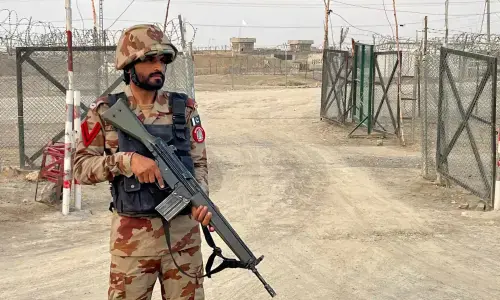


SINCE the Soviet invasion of Afghanistan, militants have been changing strategies and targets. Pakistan’s complex terrorism landscape has been significantly shaped by geopolitical shifts, foreign fighters’ arrival, foreign forces’ exit from Afghanistan, peace pacts, kinetic operations, political instability and changing militant tactics. Before the US left Afghanistan, kinetic operations weakened militant networks. Our terrorism landscape, resurging in tribal border areas, is multifaceted, transnational and an evolving threat. Despite earlier kinetic gains against them, militants have adopted new strategies, alliances and operational capacities.
Global Terrorism Index 2025 listed Pakistan as the second-most terrorism-affected state — 490 attacks in 2023 and 1,099 in 2024 (mainly by TTP and Baloch militant groups). TTP factions impact parts of the north, south and KP’s merged districts, with IS-K trying to assert its presence in places. BLA and other militants are active in parts of Balochistan’s Baloch belt.
Cross-border linkages reinforce local militants, as seen in the Jaffar Express hijacking and Mastung bus bombing. These must be severed and cross-border sanctuaries eliminated via all options, including diplomatic. The criminal-terrorist nexus benefits militants. Challenges include stopping infiltration from Afghanistan and persuading Kabul to fulfil CT commitments and reduce support to militants. Better border security and intel-sharing need joint efforts. Pakistan must invest more in counter-radicalisation and education reform and keep telling Afghanistan to act against militants on its soil.
Changed tactics include ambushes on security convoys and LEA posts. Militants prolong attacks, testing LEAs’ patience. Reduced suicide and increased IED attacks show they want suicide bombers in their stock. LEA killings aim to demoralise LEAs and erode public confidence. Greater online radicalisation makes militants’ task easier. Increased threats enhance foreign-funded connectivity projects’ vulnerability, with provinces creating special security units.
CT action only in Pakistan may not work.
Handling sympathisers needs counter-narratives and community engagement. Of the total 82 banned groups, some 21 are sectarian and 21 ethnic-based violent ones needing non-kinetic efforts. Tackling urban sleeper cells needs technology, legal instruments, administrative steps and effective LGs. Due to cross-border havens and attacks, CT action only in Pakistan may not work; Afghanistan must take action, too, against those using its soil to attack Pakistan. Does it have the will and capacity for this? Coordination gaps in the criminal justice system help militants. To improve conviction rates and swiftly dispose of cases, military courts were created through the 21st and 23rd amendments. But the ATC reform aim wasn’t fulfilled. NAP’s point 20 and the revised NAP’s point 12 prioritise CJS reform — political manifestation, consensus, finances, curriculum changes in CJS training, community engagement and technology.
There were 20 and 26 attacks in 2023 and 2024, during polio vaccination drives, reflecting militants’ aim to show low community acceptance of the vaccine, especially in tribal areas. Militants exploit anti-vaccine sentiments bolstered by some clerics to justify attacks. In KP, with better community outreach and improved security, there was no loss of vaccinators or LEAs in three drives this year. The dark web deepens extremist mindsets. Militants use social media and encrypted messaging apps to recruit, radicalise and communicate, and use AI for propaganda. Provincial LEAs must police cyberspace and be given the legal mandate.
In summer, militants move easily, regroup and attack rural and tribal areas. Winter reduces this activity in high-altitude areas, so they shift to warmer lowlands, increasing urban terrorism risks like extortion and kidnapping. Factoring the weather in CT action, LEAs can ensure better use of resources and effective responses.
Use of the latest arms and drones shows foreign support for militants. Countering this requires legal, administrative steps, training and latest gadgets for LEAs. The current resurgence must be met with a multidimensional strategy to refute extremist ideas, improve intel, police capacity, border control and synchronise external and internal policies, besides regional cooperation, political consensus and military and ideological strategies.
During the ongoing phase, clarity of policy on responding to cross-border terrorism, offensive strategy against militants in the merged areas, and dealing with sectarian violence and disorder can hopefully yield dividends. A charter of peace by all political parties based on provincial action plans, with federal CT agencies taking the lead, is needed.
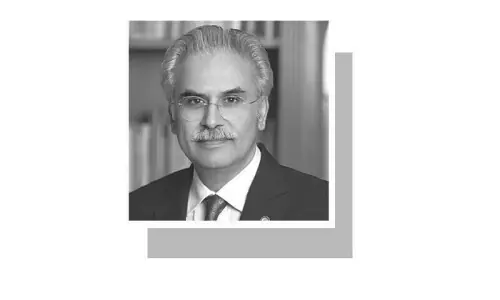
The writer is the author of Pakistan: In Between Extremism and Peace.
alibabakhel@hotmail.com
Published in Dawn, October 30th, 2025