Export-led growth necessary for economic stability: state minister


 2
2
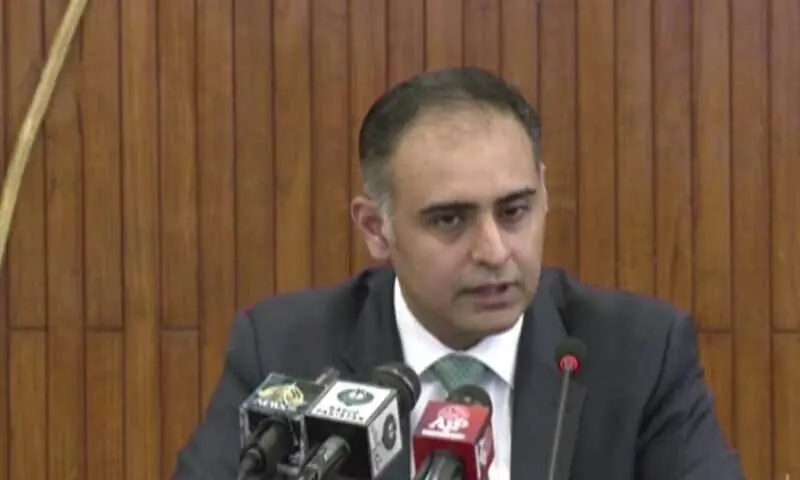

Minister of State for Finance Bilal Azhar Kayani said on Monday that export-led growth was essential to stabilise the economy, as he presented a screenshot of the country’s improving financial situation achieved through the efforts of the government.
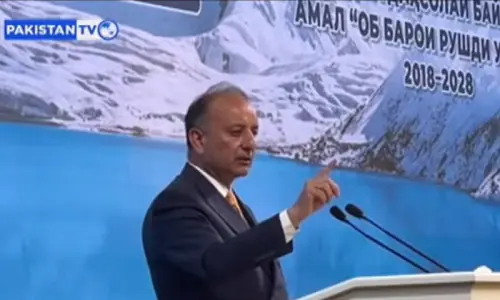
During a media talk in Islamabad, Kayani expounded on the improvement in Pakistan’s economy over the last 1.5 years, highlighting that the target of primary balance had been achieved.
He said the country saw a 26 per cent increase in tax collection during the last fiscal year despite modest gross domestic product (GDP) growth and a low inflation rate.
“We also increased the Federal Bureau of Revenue (FBR’s) tax-to-GDP ratio and decreased the inflation from 33pc to 4.5pc,” Kayani mentioned. The ratio, he specified, saw a 1.4pc increase, going from 8.8pc to around 10.2 to 10.3pc.
“We posted the first current account surplus in 14 years, which is also the largest current account surplus in 22 years,” he said, adding that foreign exchange reserves were one of the most important parts of the economy.
“When the current account is in surplus, our foreign exchange reserves are stabilised,” Kayani explained, pointing out that the policy rate had been halved, going from 22pc to 11pc, as a result of controlling inflation.
The minister said the target of the primary balance had been achieved despite no mini budget last year.
Acknowledging the privatisation of First Women Bank Ltd (FWBL) earlier this month, Kayani said progress in the privatisation of Pakistan International Airlines (PIA) was expected soon.
On October 18, FWBL was acquired by Abu Dhabi-based International Holding Company, which Prime Minister Shehbaz Sharif hailed as a milestone in Pakistan-UAE economic ties, saying the deal would pave the way for more joint ventures and partnerships across diverse sectors.
Moreover, the government has also been making efforts to sell the struggling national flag carrier PIA, which has accumulated over $2.5 billion in losses in roughly a decade. In June, it received expressions of interest from five parties, including business groups and a military-owned firm.
State minister Kayani said PM Shehbaz also believed the country needed private sector-led growth, adding that the government had to play its role with respect to policy-making and facilitation.
Pakistan faced a prolonged economic crisis over the last few years, marked by critically low foreign exchange reserves, an acute balance-of-payment crisis, and the looming risk of default in 2023. The crisis was averted after the International Monetary Fund (IMF) released a crucial loan tranche, while support from friendly countries, including China, the United Arab Emirates, and Saudi Arabia, also played a key role.
After averting default, Pakistan undertook tough IMF-prescribed reforms to stabilise its economy and bolster macroeconomic indicators. This year, global credit rating agencies like Fitch, Moody’s, and S&P Global raised Pakistan’s sovereign credit rating.
Last week, Finance Minister Muhammad Aurangzeb said he was hopeful Pakistan could manage to achieve GDP growth of close to 3.5pc during the ongoing fiscal year despite the impact of recent floods.
Aurangzeb also stated that the country’s foreign exchange reserves were presently sufficient to cover approximately two and a half months of imports, with projections indicating this could increase to three months by the close of the current fiscal year.
Earlier this month, Pakistan repaid its $500 million Eurobond on schedule, with the government saying the timely servicing reflects fiscal discipline, stronger reserves, improved ratings, and a more sustainable debt profile.