Kundi seeks PM’s intervention against ‘unconstitutional’ restrictions on inter-provincial movement of wheat
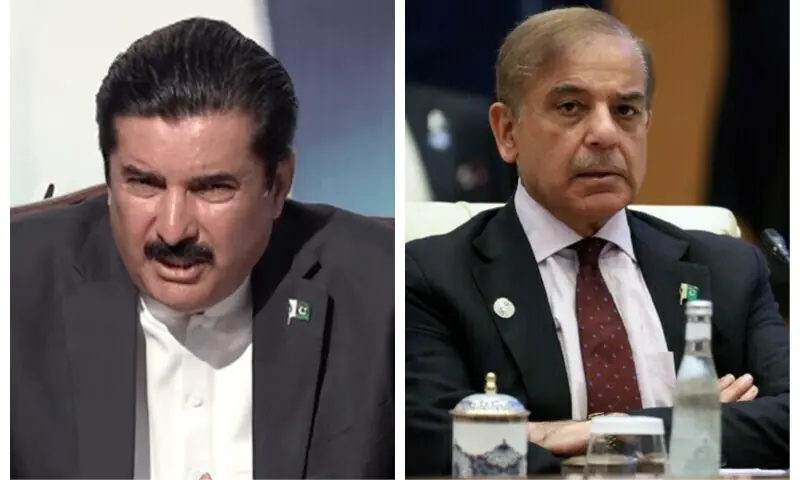


Khyber Pakhtunkhwa Governor Faisal Karim Kundi on Monday sought the intervention of Prime Minister Shehbaz Sharif against “unconstitutional restrictions” on the inter-provincial movement of wheat to the province.
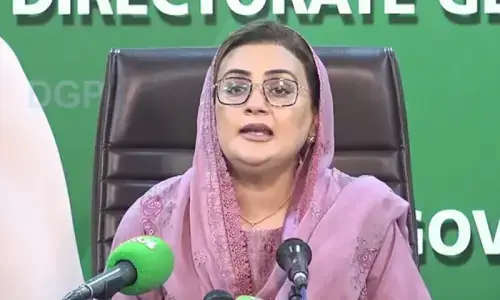
The development comes as the Punjab government has faced criticism by the KP and Sindh governments for choking wheat flow to the two provinces. However, a day earlier, Punjab Information Minister Azma Bokhari insisted that there was no ban on the inter-provincial movement of wheat, terming the “ongoing propaganda in this regard baseless and contrary to facts”.
In a post on social media platform X today, the KP governor said he had written to the premier, urging his “immediate intervention to lift the unconstitutional restrictions” on the inter-provincial movement of wheat to the province.
“Such limitations not only affect the province’s food security but also go against the spirit of cooperative federalism enshrined in our Constitution,” he said.
He expressed his confidence that the matter would be resolved promptly “under the prime minister’s leadership”.
The letter, which Kundi also posted on X, termed the restrictions a “serious concern”, pointing out that KP was a “wheat-deficient province and depends substantially on inter-provincial inflows to meet its essential food requirements”.
It said that the restrictions were against Article 151 of the Constitution, which guaranteed freedom of trade, commerce and intercourse among the provinces.
“Any disruption in supply risks creating artificial shortages, price escalation and public hardship,” he said.
“It has further been observed that these limitations are unintentionally encouraging illegal and informal transportation of wheat through alternate means and routes, which is resulting in uncontrollable supply distortions in the open market. This diversion is causing [a] rapid escalation in wheat and flour prices, directly burdening the general public and potentially triggering unwarranted public resentment,” he said.
Kundi requested PM Shehbaz’s “kind and immediate intervention in this matter and direction to the concerned authorities” to withdraw the restrictions in order to ensure the “uninterrupted and legally protected movement of wheat” into KP.
“I remain confident that, under your leadership, the constitutional rights of the people of KP will be safeguarded effectively and without delay,” he said.
Kundi seeks restoration of daily int’l flights from Peshawar
Separately, the KP governor wrote to Defence Minister Khawaja Asif requesting him to restore daily flights between Peshawar and Karachi, as well as international ones, “particularly to the Gulf and Middle Eastern countries”.
“The suspension of these (international) flights has caused considerable hardship for overseas Pakistanis, entrepreneurs and their families,” Kundi said in a later post on X, noting that a “large expatriate population” from KP was employed in the Middle East.
Kundi further said a “single private airline is operating with absolute monopoly” on the route between Peshawar and Karachi, inconveniencing people and traders due to exorbitant fares and limited seat availability.
The governor requested Asif to issue directions to restore the flight services, adding, “I also earnestly hope and pray that our National Flag Bearer airline will once again ascend to command the skies of the world as it gloriously did during the golden decades of the 1960s and 1970s.”
KP’s grievances
In the aftermath of the recent floods, the Punjab government had begun tightening controls on the inter-provincial movement of wheat and flour through a permit regime to curb price hikes within the province — a move that has particularly been denounced by KP amid soaring prices and wheat shortage.
The restrictions have also drawn sharp criticism from flour millers who argue that it violates constitutional rights and a recent deregulation agreement.
While Punjab officials have denied a formal ban, they acknowledged establishing checkpoints to curb what they termed “unusual” wheat movement.
On Sept 7, Kundi had regretted the reports that Punjab had banned the movement of wheat to other provinces. He had issued another condemnation of the reported ban the very next day in a post on social media platform X.
“The arbitrary ban imposed on August 31, 2025, by the Government of Punjab on the supply of wheat and flour to Khyber Pakhtunkhwa is a blatant violation of Article 151 of the Constitution and a serious breach of national unity,” Kundi had said on X.
The Constitution’s Article 151 states that “trade, commerce and intercourse throughout Pakistan shall be free”, but empowers the parliament to “impose such restrictions on the freedom of trade, commerce or intercourse between one province and another or within any part of Pakistan as may be required in the public interest”.
The KP governor had further said: “As a result, the price of a 20kg bag of flour has soared to approximately Rs 1,200 in Punjab and up to Rs 2,800 in KP — an unbearable burden on families already struggling with inflation.
“On behalf of the people of KP, I strongly condemn this discriminatory act and urge Chief Minister Punjab [Maryam Nawaz] to not only condemn but also immediately withdraw this verbal ban.”
Meanwhile, on Sept 7, the KP Assembly had unanimously passed a resolution, denouncing the Punjab government’s “restrictions” on wheat supply amid claims about a 68 per cent hike in flour prices across the province.
Subsequently, the government had approved a national wheat policy earlier this month. According to a statement issued by the Prime Minister’s Office, stakeholders were told during a briefing about the policy that there would be no restriction on the inter-provincial movement of wheat.
Then, in a letter dated October 23, the KP government had asked Punjab to withdraw restrictions on the inter-provincial movement of wheat and flour, warning that the curbs were disrupting supply chains, increasing prices and threatening food security in the province.
KP’s food secretary, in a letter to his Punjab counterpart, said that lifting the ban was critical to restoring a smooth supply chain, stabilising market prices, and safeguarding his province’s food security.
The letter said KP, a wheat-deficient province, depended on inter-provincial supplies from Punjab to meet its requirements — roughly 14,500 tonnes per day.
“The prevailing restrictions have severely disrupted the flow of wheat and flour into the province, thereby threatening food availability and destabilising market prices,” it read.
While KP acknowledged Punjab’s recent permit-based allocation of 2,000 tonnes of flour for transport to KP, it termed the quota “insufficient” relative to actual requirements.
KP lamented that despite repeated communications from its chief secretary, food secretary and director of food to Punjab, the ban continued to remain in force.
“This situation is inconsistent with the provisions of Article 151(1) of the Constitution of the Islamic Republic of Pakistan, which guarantees freedom of inter-provincial trade and movement of goods across the country,” the letter said.
The letter added that the issue was raised at a high-level meeting, chaired by PM Shehbaz, on October 17 regarding the Interim Wheat Policy 2025.
“The KP Flour Mills Association has repeatedly conveyed grave concerns over the rapidly depleting wheat stocks, cautioning that the non-availability of wheat and flour may arise in the coming days if the restrictions persist,” it said.
Meanwhile, the PPP leadership in Sindh also lashed out at the Punjab government, accusing it of restricting the supply of wheat seed.
Last week, KP Chief Minister Sohail Afridi had again condemned Punjab’s “ban” on wheat and flour transport to the province, calling it a violation of the Constitution and “an attack on the rights” of the people of the province.
Chairing a meeting, he directed the food department’s high-ups to write a letter to the Punjab government demanding immediate removal of all restrictions to ensure free movement of wheat and its flour across the provincial borders, according to a statement from the chief minister’s secretariat. Afridi said that hiding behind political differences to deprive citizens of necessities was unacceptable.
Officials told the meeting that KP consumes about 5.3 million tonnes of wheat and flour annually, of which only 1.5m tonnes are produced locally, while the remainder is sourced from Punjab and other provinces.