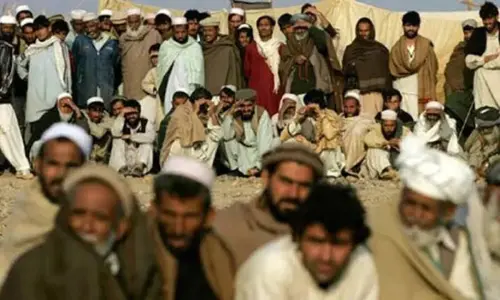
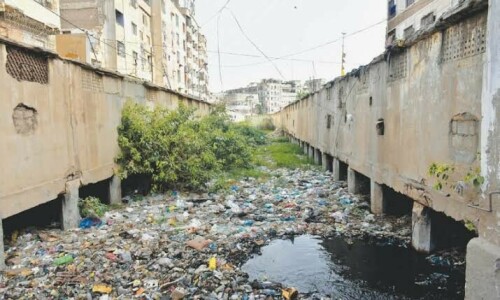
THE latest ILO report estimates that around 3.3m jobs may have been affected by the 2025 floods — significantly more than the number of new job-seekers entering the labour market each year — in Punjab and KP. This is a grim reminder of how recurring climate disasters are eroding livelihoods of already vulnerable communities. The finding that nine out of the 14 worst-hit districts are in Punjab indicates that residents of even relatively developed regions are not protected from climate risks. The report reveals that agriculture, the backbone of rural employment, has borne the brunt of the damage, with spill-over effects rippling through rural services and industry. That nearly 78pc of employment losses occurred in the rural areas highlights the fragility of rural economies, where livelihoods and jobs remain overwhelmingly dependent on climate-vulnerable agriculture and related services.
Provincial compensation might provide short-term relief, but as the ILO points out, they are limited in scope. Cash handouts, though critical in the aftermath of disaster, do little to restore livelihoods and income-generating activities or rebuild productive capacity in the longer run. The challenge lies in drafting policies that focus on transition from relief to resettlement and recovery, something successive governments have struggled with after every disaster. The ILO’s proposed steps — cash-for-work programmes, skills training and subsidised credit — to help affected households restart small-scale farm and non-farm economic activities for restoration of livelihoods are worth consideration. That such disasters disproportionately affect and burden informal and vulnerable workers, including self-employed individuals, daily-wage earners and small farmers lacking savings and institutional protection, is not surprising. The ILO’s call to revive the World of Work Crisis Response Strategy, developed after the 2022 Pakistan floods, is particularly significant. That such a framework for better coordinated and timely protection and recovery of livelihoods exists but requires revival points to policy discontinuity between disasters. The report reveals the broader need for placing employment and livelihood restoration at the centre of any climate policy. Recovery efforts mostly prioritise physical infrastructure over income-generating activities that sustain communities. Without restoring livelihoods, reconstruction remains incomplete. Building climate resilience, therefore, cannot be limited to disaster management; it must extend to labour markets and social protection.
Published in Dawn, April 23rd, 2026