KE says Nepra revision has slashed its tariff by Rs7.6/kWh, ‘will have far-reaching consequences’


 0
0
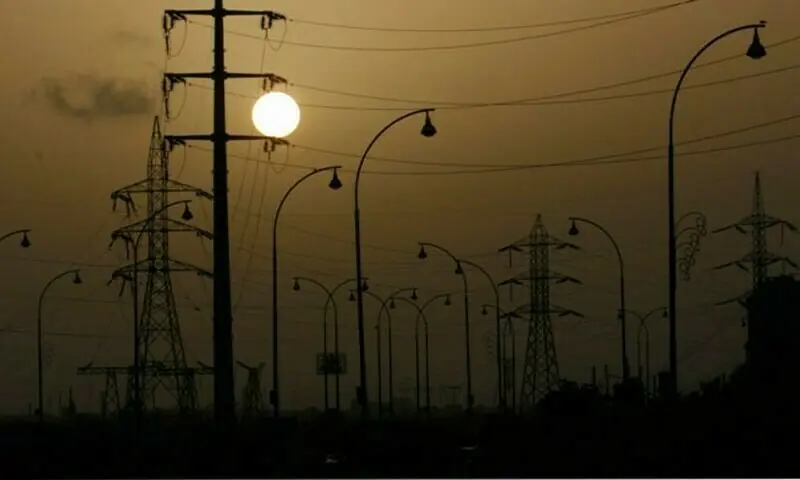
K-Electric (KE) said on Tuesday that following the National Electric Power Regulatory Authority’s (Nepra) recent decision on a set of review motions, its average tariff had reduced by Rs7.6/kWh, which would have “far-reaching consequences for its stakeholders, including consumers”.
According to KE, power regulatory authority’s decision has resulted in a reduction of its average tariff from the previously announced Rs39.97/kWh to Rs32.37/kWh.
However, the utility clarified that the recent announcement by the regulator does not apply to customers and, therefore, there would be no change or reduction in monthly bills for power consumers.
On May 27, Nepra had set KE’s base tariff at Rs39.97 per unit for the fiscal year 2023-24, which was almost 40pc higher than even the national average tariff of about Rs28 per unit in 2025-26 for the 10 public sector power distribution companies (Discos) in the country.
The delta between the Discos’ average and KE’s tariff was transferred to the taxpayers through the federal budget in the form of tariff differential subsidy. Subsequently, motions for leave for reviews were filed by multiple parties, on which Nepra’s decision was notified yesterday.
In a press release following the decision, KE noted that Nepra had issued its decision on the motions filed by various parties, concerning KE’s multi-year tariff (MYT) determinations for the control period of FY 2024-30.
“The decision covers several key areas, including the MYT determination for KE’s generation power plants, the MYT determination for KE’s transmission, distribution (network), and supply businesses for FY 2024 to FY 2030, the transmission and distribution investment plan and losses assessment for FY 2024 to FY 2030, and the write-off claims of KE for MYT 2017–2023.
“With respect to the write-off claims, Nepra has upheld its earlier decision. However, for the other matters, Nepra has significantly altered its prior determinations in a manner that, according to KE, is not sustainable for the company and will have far-reaching consequences for its stakeholders, including consumers,” KE said.
It added that it was currently “reviewing Nepra’s decisions in detail and will exercise all available remedies as permitted under the applicable laws and regulatory framework”.
Nepra’s decision
Nepra’s decision on the review petitions were detailed in a notification that was issued yesterday and is available with Dawn.com.
The notification said Nepra had decided to revise the fuel cost reference of the power purchase price for FY 2023-24, adding that it, however, “understands that with the revision of these fuel cost component references, already determined for the FY 2023-24, all monthly fuel cost adjustments, already determined and applied for the FY 2023-24, would be required to be re determined, and the additional impact would he passed on to the consumers of KE”.
“Considering the fact that FY 2023-24 has already lapsed and the actual power purchase cost of KE to the extent of variable operation and maintenance cost and capacity charges is also now available, the authority has decided to actualise such costs […] alongwith the transmission charges, as approved and have been made part of power purchase price references for the FY 2023-24.”
According to the notification, in light of discussions on the issue of reference fuel cost component, Nepra directed KE to file revised fuel cost adjustment claims for FY 2023-24 for consideration and approval. The notification said power purchase price references for FY 2024-25 and FY 2025-26 “would be determined once KE files its revised annual adjustment/ indexation request for these periods”.
Moreover, concerns were also raised before regarding the replacement of “long-standing price-cap tariff regime historically applied to KE” with a “revenue-cap approach” that allowed the “actualisation of units sent out without any associated performance benchmarks”.
On this issue, Nepra said it did “not see any rationale to change its earlier decision, and hence has decided to maintain its earlier decision in this matter”.
It also addressed the issue of operation and maintenance costs, regarding which KE contended that allowing reference operation and maintenance costs for next based on lower or allowed cost of the previous year would “disincentivise the utility to bring any efficiency and save costs” and “make operations unviable in period of low inflations”.
KE also argued that the sharing mechanism of 50:50 between KE and consumers in case actual operation and maintenance costs for the year turn out to be lower than the allowed was “unprecedented” as it was not included in tariffs for Discos, National Transmission and Dispatch Company and other transmission licensees.
Other parties also expressed reservations regarding the sharing mechanism, the notification said, adding they also pointed out that KE’s operation and maintenance cost for FY 2023-24 had been based on the utility’s “unaudited financial statements”
“Instead, the approved operation and maintenance cost for the last year of the previous MYT i.e. FY 2022-23, should have been used as a base reference,” they contended.
Nepra, however, maintained that it “does not see any rationale to change its earlier decision” on the matter and decided to uphold it, the notification said.
The notification added that Nepra also considered KE’s request to allow it the retention of the “entire amount” of late payment surcharge.
“The authority noted that KE has already been allowed working capital to meet its financial obligations. Further, to compensate KE for any delayed recoveries from consumers, KE has also been allowed retention of LPS (late payment surcharge) to the extent of supplemental charges, if any, which KE may incur owing to such delays, except supplemental charges billed by CPPA-G (Central Power Purchasing Agency), as KE has entered into an MCA (Master Collection Account) arrangement with it,” the notification said. It added that Nepra further highlighted that the existing methodology for late payment surcharge for KE was also in line with the one adopted for Discos.
Subsequently, Nepra decided to maintain its earlier decision on the matter.
It also rejected requests to shorten the seven-year tariff control period, stating that “no cogent reasons have been provided by the petitioners”.
Objections were also raised regarding the sharing mechanism of other income for KE, but Nepra decided to maintain its earlier decision in this matter as well, according to the notification.
It said Nepra further observed that “serious concerns” were raised on the upfront recovery loss allowed to KE. The contention here was that the permitted recovery loss allowance “effectively transfers the financial burden of KE’s inefficiencies onto the paying consumers or on the national exchequer through subsidies”.
“The financial burden […] owing to reduced recovery targets is estimated at Rs36 billion for FY 2023-24, that may exceed over Rs200bn during the MYT control period, which would be picked up by the federal government through fiscal space,” it read. Moreover, Nepra said it understood the the Power Division was “actively pursuing [the] privatisation of other Discos”, so its request for “not allowing any upfront recovery loss can be construed as a policy decision, meaning thereby that similar treatment will be offered to future privatised Discos”.
In light of these observations, the regulatory authority decided not to allow any upfront recovery loss to KE, in order to ensure that no financial burden was passed on to the federal government through subsidies, considering application of uniform tariff across the country.
It further stated that “KE’s tariff is being determined on the basis of 100 per cent recovery target. KE, however, will be allowed to claim write-offs, after fulfillment of the given criteria, as per the following limits, to be considered as maximum cap for the relevant year”.
According to the notification, the limit for FY 2023-24 and FY 2024-25 has been set at 3.50pc, for FY 2025-26 at 3pc, for FY 2026-27 at 2.50pc, for FY 2027-28 at 2pc, for FY 2028-29 at 1.50pc and for FY 2029-30 at 1pc.
On requests to revise the working capital, Nepra said while it was maintaining its earlier decision and not revising the capital itself, the authority had adjusted the number of days used for the purpose of calculation of current liabilities part of the working capital.
“Similarly, cash and bank balances requirement earlier allowed for 15 days, have been excluded from working capital calculations. The authority has also decided to adjust the double impact of net-meting cost, however, again rejects the inclusion of costs on account of lag in the recovery” of fuel adjustment costs, quarterly tariff adjustments, etc.
Nepra also rejected requests pertaining to K-Solar, a subsidiary of KE.
Addressing concerns regarding the adjustment of open access charges in revenue requirement, Nepra referred to a previous decision, according to which “any charges to be recovered by KE on account of open access, […], as per the applicable framework, would be adjusted in the allowed revenue requirement of KE”. However, the notification said, the Nepra had decided to “further clarify that any costs arising out on account of open access/ revenue recovered including use of system charges, cross subsidy, marginal price, open access costs or any other cost, shall be adjusted as per the applicable framework and in light of the relevant determinations of the Authority for such costs”.
Furthermore, Nepra maintained its earlier decision on KE’s request to allow fuel cost adjustments and quarterly adjustments during the year based on actual transmission and distribution losses, saying, “Since the matter primarily pertains to the assessment of T&D loss target of KE, therefore, any decision taken by the authority in the investment plan/ assessment of T&D losses decision of KE, would be accordingly considered while making monthly/ quarterly tariff adjustments”.