Lahore, Karachi among top 5 most polluted cities in world


Lahore and Karachi were among the top five most polluted cities in terms of air quality on Tuesday, according to monitoring platform IQAir.
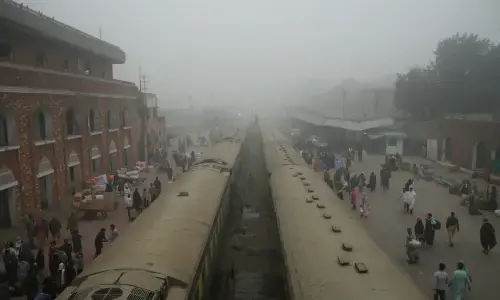
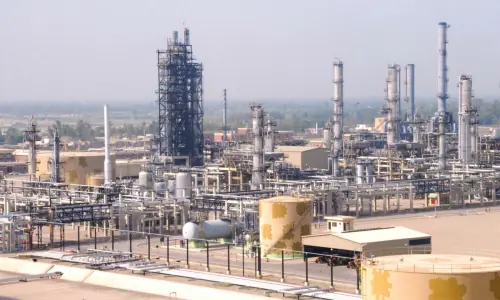
In past few years, air pollution has become one of the most pressing public health and environmental crises facing Pakistan. Various cities of the country, most notably Lahore, deal with smog especially in the winter months. The phenomenon is attributed mainly to industrial emissions, vehicular pollution, stubble burning and air movement.
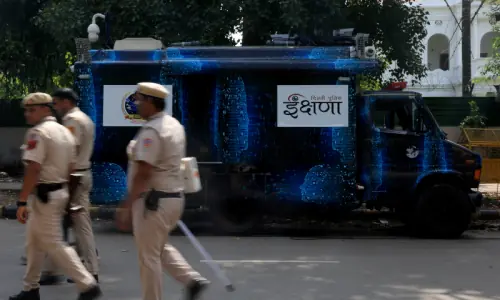
Ranked the world’s third most polluted city yesterday, Lahore rose to the second spot today with an air quality index (AQI) reading of 234 at 11am, categorised as “very unhealthy”. The provincial capital trailed just behind New Delhi, which had an “hazardous” AQI of 489.
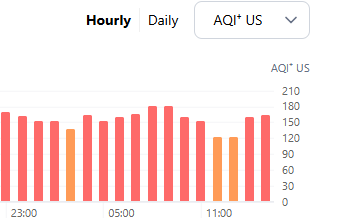
Karachi recorded an AQI of 182 at 11am, falling in the “unhealthy” range and just barely behind Kuwait’s capital at 183. India’s Mumbai came in at fifth with an AQI of 169.

By 4pm, the AQI for Lahore had dropped to 154, placing it sixth on the list, while Karachi was still the third-most polluted city with an AQI of 165.
IQAir’s AQI is a measure of the concentration of various pollutants in the air, such as fine particulate matter (PM2.5), coarse particulate matter (PM10) and nitrogen dioxide (NO2), and ozone (O3). An AQI between 151 and 200 is considered “unhealthy”, one ranging from 201 to 300 is categorised “very unhealthy”, and any figure above 301 is “hazardous”.
According to IQAir, the AQI readings for Lahore and Karachi were the highest recorded so far this month.
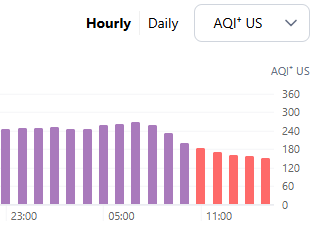
At 11am in Lahore, concentration of the pollutant PM2.5 — cancer-causing microparticles small enough to enter the bloodstream — was measured at 158.8 microgrammes per cubic metre of air (μg/m³), 31.8 times higher than the World Health Organisation’s (WHO) guidelines.
PM2.5 level in Karachi was recorded 100 µg/m³, 20 times the WHO’s annual guideline value.
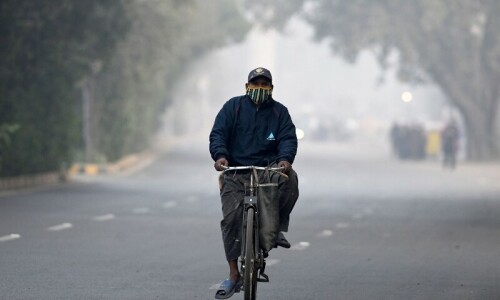
IQAir advised residents in Lahore and Karachi to avoid outdoor exercise, run air purifiers and prioritise wearing masks. It also recommended closing all windows to avoid dirty air from outdoors.
Smog is set to intensify across Lahore and other parts of Punjab due to a combination of local emissions and pollutants carried by low-speed winds from India, following Diwali celebrations, according to the provincial government.
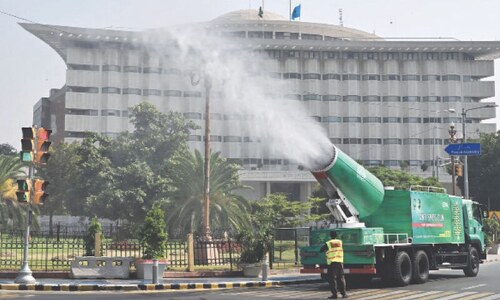
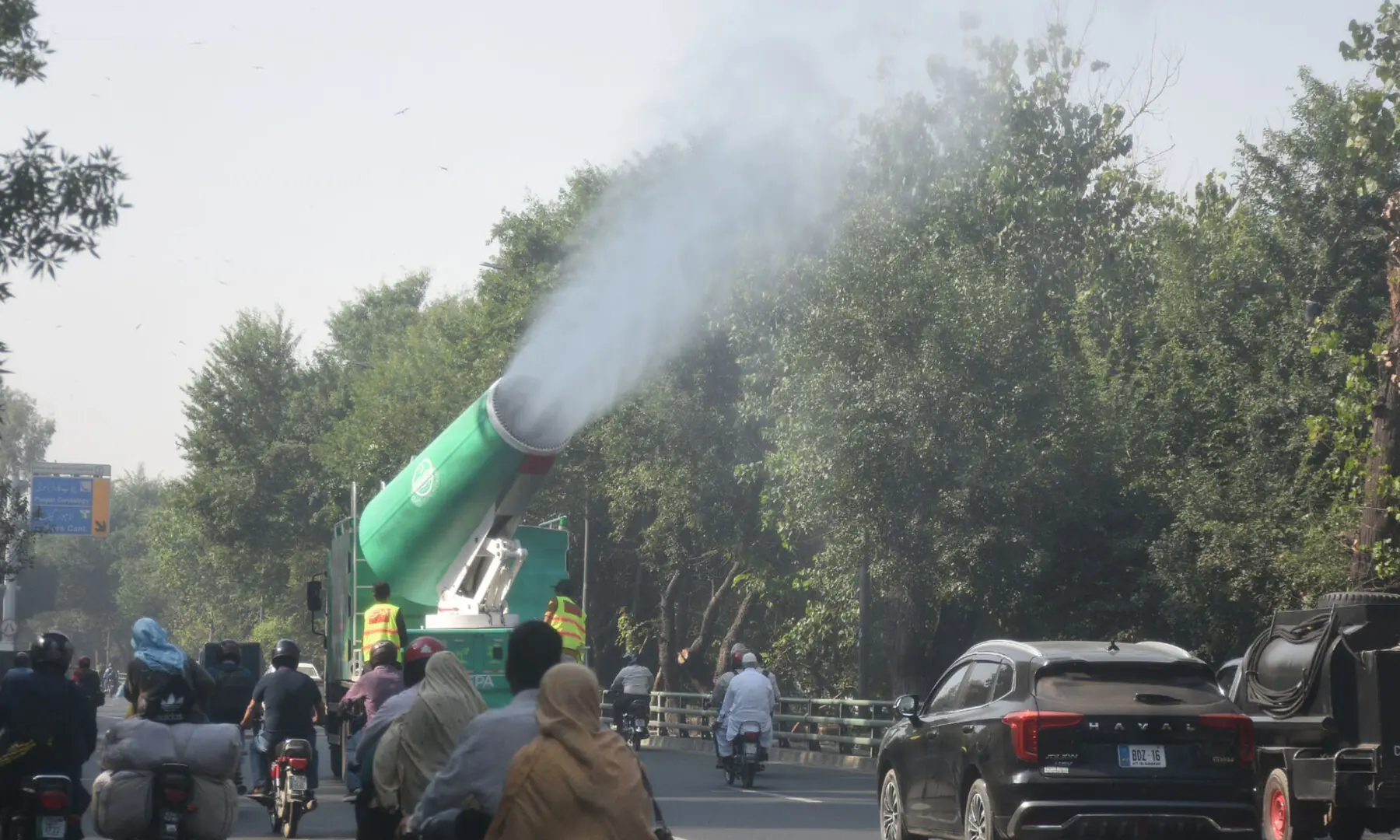
In a bid to combat smog, the Punjab government started water sprinkling operations from Sunday night and activated anti-smog guns in the most affected areas.
In Lahore, these measures were deployed across the city, including Karim Block, Allama Iqbal Town, Multan Road, Ravi Bridge, Shahdara Flyover, GT Road, Thokar Niaz Baig, and Upper Mall.
Besides local pollutants, winds blowing from India are also likely to play a role in worsening the situation over the week.
Separately, the Lahore police said yesterday it arrested 83 people and registered 77 cases as part of its ongoing anti-smog operation.
Air pollution poses a hazardous risk to people’s health, with respiratory issues witnessing a spike during winter when smog intensifies. According to WHO Representative in Pakistan Dr Dapeng Luo, 256,000 people died in Pakistan every year due to air pollution.