Human lust for eternal youth threatens some animal species


 0
0
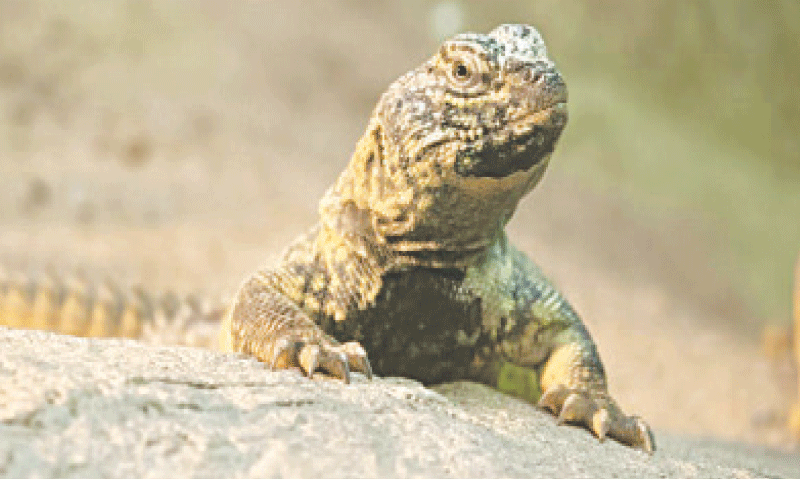
LAHORE: The use of aphrodisiacs and other “medicines” made from the body parts of certain animals is as old as human lust for eternal youth and despite the advancements in medical science, many still believe in such myths, without realising that it has become a threat to the existence of some wildlife species.
Rhinoceros’ horn, tiger bones, bile extracted from black bears, oil extracted from a particular lizard and so many other potions linked to some wild animals are believed to have aphrodisiac properties, without an scientific proof.
These are just a few examples of wild animals whose extracts are believed to boost libido, increase stamina, revive youth or can cure diseases.
For centuries, especially in South East Asia, practitioners of traditional medicines have been claiming that such potions can treat erectile dysfunction or enhance sexual pleasure. These myths are rooted in the tradition, folk lore and generational trust.
In some cultures, especially in mainland Southeast Asia, a potion made of rhino horn is believed to be the cure of almost every ailment, especially impotence. In fact, the Rhino horn is made of keratin, the same material as of human nails and there is no scientific evidence to prove its medicinal value. But the myth
associated with this animal is threatening its survival.
Similarly, tiger bones, believed to channel the animal’s strength, are used in tonics and wines, often sold under the table. But, experts say that such potions only act as placebo and increase the confidence of the user.
Some hakeems also prescribe soup of wild pigeon, especially to cure contraction of facial muscles.
Wildlife data shows that the desire to have a miraculous cure or attain infinite youth through animal-based aphrodisiacs and other medicines is fueling a multi-billion dollar illegal wildlife trade.
This black market has brought certain animal species on the verge of extinction, just like all the eight species of pangolin, the most trafficked wild animal in the world and the spiny tailed lizard, locally called sanda.
Poaching and trafficking of wildlife thrive on such myths that refuse to die. Sadly, wild animals and birds are being killed not for food, but for their body parts or extracts.There’s also a significant human cost of such myths as wildlife rangers have lost their lives while protecting these animals from ruthless poachers.
Wildlife officials told Dawn that the department is making efforts to check illegal hunting and poaching of some local species such as spiny tailed lizard, which is mostly found in the Cholistan desert.
Published in Dawn, October 20th, 2025