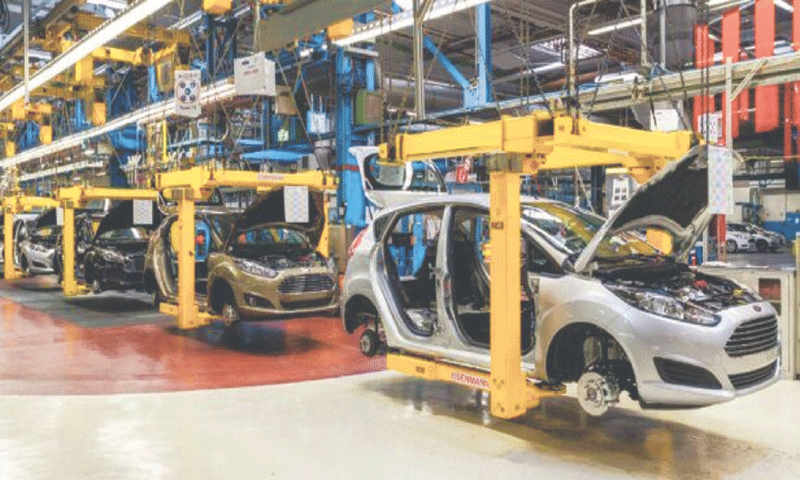
KARACHI: The Pakistan Association of Automotive Parts and Accessories Manufacturers (Paapam) has raised concerns over the IMF’s reported push for trade liberalisation, particularly proposals to reduce tariff protections and allow commercial imports of used vehicles.
In a statement on Thursday, Paapam Chairman Usman Aslam Malik warned that such measures could harm the domestic auto industry, lead to job losses, and weaken investor confidence. “Trade liberalisation must not come at the cost of de-industrialisation and fiscal leakage,” he said.
He cautioned that large-scale imports of used vehicles — often not meeting modern safety and emissions standards — could derail ongoing efforts to localise new energy vehicle (NEV) production in Pakistan. Malik also called for clarity on how these import policies align with national sustainability and industrial goals.
He questioned whether the liberalisation drive is being applied broadly across sectors or is selectively targeting the automotive industry. If limited to vehicles, he urged the government to explain the rationale and detail the safeguards in place to prevent market distortions.
Malik highlighted loopholes in current import schemes, especially cases where vehicles brought in under the names of overseas Pakistanis are sold locally, often bypassing tax and regulatory checks. He noted that informal remittance channels like hundi are being used to finance these purchases, leading to capital flight and compromising fiscal transparency.
“We cannot afford to expand mechanisms that enable tax evasion,” said Shehryar Qadir, senior vice chairman of Paapam.
He warned that reduced tariff revenues and pressure on domestic manufacturers could result in substantial job losses. Qadir called for a phased and well-structured reform plan, incorporating performance benchmarks and lessons from comparable economies.
Published in Dawn, October 3rd, 2025