Pakistan, China sign $4bn MoUs in agriculture

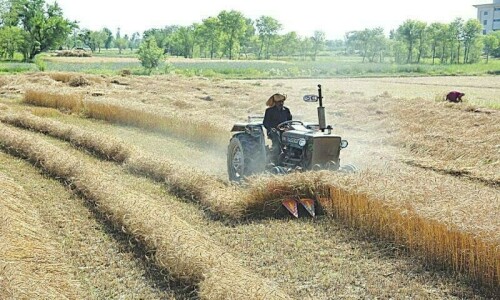
ISLAMABAD: Pakistan and China have inked more than two dozen memorandums of understanding (MoU) worth $4 billion in the agriculture sector, focusing on mechanisation, seed development, smart farming and precision agriculture for data-driven productivity gains.
The MoUs were signed on Saturday during the Pak-China Business-to-Business Conference in Beijing, witnessed by Minister for National Food Security and Research Rana Tanveer Hussain.
Speaking on the occasion, Mr Hussain emphasised that these areas are crucial for strengthening Pakistan’s food security while also opening new avenues for bilateral cooperation.
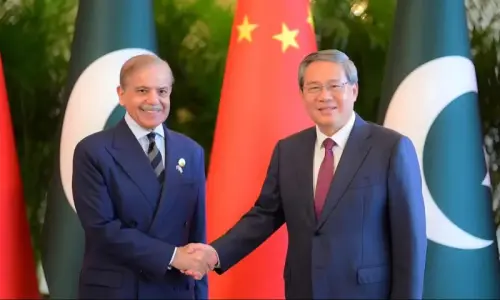
The one-day conference, held on the sidelines of Prime Minister Shehbaz Sharif’s visit to China, featured an opening and closing ceremony as well as multiple business-to-business sessions. The minister participated in a dozen meetings with leading Chinese and Pakistani agri-industry players.
These included Dayu working in irrigation sector, Jessica EV, PIESAT, and LOVOL in agricultural machinery sector, Sanyang Company Xinjiang, Jinghua Seed Industry Company Ltd, Guard Agricultural Research and Services (Pvt) Limited, and China State Engineering Construction Corporation GDSP, among others.
Chinese media reports said shares of PIESAT surged after the Chinese aerospace firm signed a $406.4m agreement with Pakistan — nearly double the company’s total revenue last year — to help build a satellite constellation for better communication and Earth data.
Under the agreement, PIESAT will assist Pakistan in constructing an integrated satellite system for global real-time communication and remote sensing. The first phase includes the launch and operation of 20 satellites, the construction of a satellite manufacturing facility, and the development of supporting software. PIESAT will also provide technical support to help Pakistan develop independent capabilities in satellite manufacturing, operations, and applications.
Highlighting China’s $215bn annual agricultural import market, the minister said that Pakistan can play a significant role in supplying tropical and temperate fruits, vegetables, and cereal crops. He stressed that Pakistan, as China’s closest neighbour and a “brotherly country,” offers geographical proximity and competitive pricing advantages compared to imports from Brazil and other Western countries.
He praised the initiatives of both Pakistani and Chinese agricultural companies under the leadership of PM Shehbaz, reaffirming Islamabad’s commitment to fostering long-term agri-sector partnerships with Beijing.
Published in Dawn, September 8th, 2025