

Unity for survival
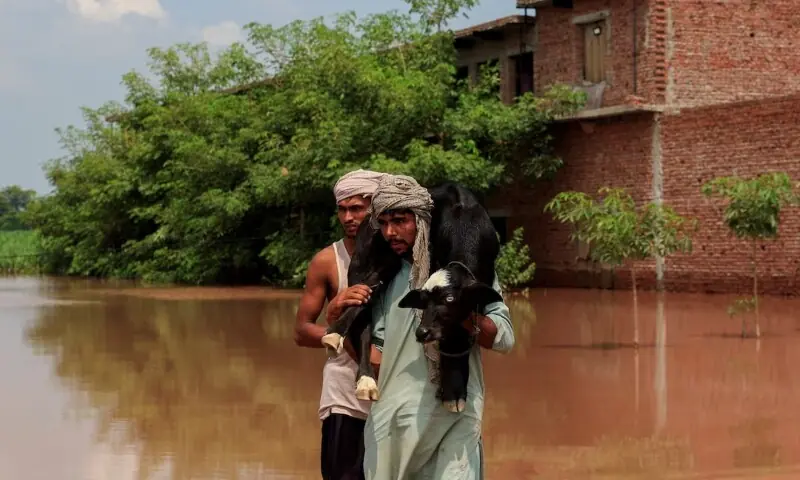

THEY say adversity makes strange bedfellows. In Pakistan, even calamitous events struggle to do so. Floods have swept through KP, drowned swathes of Punjab after water was released from across the border, and displaced thousands. The destruction is immense. Yet the country’s politicians, rather than rallying together, remain stuck in their habitual quarrels.
A fleeting glimpse of unity came at the opening of the National Assembly session on Monday, when members suspended routine business to focus on the unfolding disaster. The spirit evaporated almost instantly. On the orders of Imran Khan, PTI legislators boycotted a scheduled NDMA briefing. Their absence turned what should have been a vital forum into yet another stage for political one-upmanship.
The instinct to politicise calamity is not confined to one side. A couple of months ago, PTI lawmakers in Punjab tried to present the floods as proof of the provincial government’s failures, only to face worse devastation in KP.
And now, during the NA debate, ministers used up precious time to trumpet their own ‘effective’ responses or to cast blame on rivals and contractors. Defence Minister Khawaja Asif, while correctly pointing to encroachments and poor planning, also singled out a company in his home constituency, turning part of his speech into a political broadside. Even amid a shared tragedy, leaders reach for familiar tactics of point-scoring.
Nevertheless, the defence minister was right to call the situation a “man-made disaster”. Successive governments have allowed hotels to sprout on riverbeds, sanctioned housing societies on floodplains and neglected to enforce building codes. Big dams remain mired in politics; small reservoirs and local drainage schemes, which could be completed in a year or two, are ignored. Weather-monitoring is abysmal: Pakistan has 85 stations to cover nearly 800,000 sq km, when thousands would be needed to meet international standards.
No wonder the country lurches blindly from one storm to the next. There are precedents for doing better. During the 2010 floods, leaders did at least convene all-parties meetings and discussed creating an independent relief commission. The spirit was imperfect, but it showed some recognition that disaster could not be fought through mudslinging.
This year’s floods ought to provoke similar realism. Unity is now a matter of survival. Politicians must come together to debate the hard questions: how to complete existing dam projects, build smaller water-storage structures, empower local governments and invest in forecasting capacity. They must also strengthen disaster-resilient infrastructure, enforce zoning laws against construction on riverbeds, upgrade drainage in cities, and expand social protection for displaced families. Climate change is redrawing the map. Three major floods in three provinces this summer alone should be warning enough. The waters have shown no partisanship. Neither should the politicians.
Published in Dawn, September 3rd, 2025






























