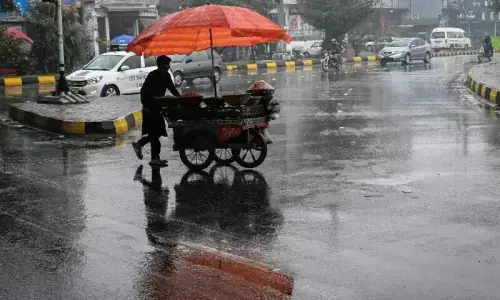
AS the raging floodwaters make their way through Punjab towards Sindh, the nation must confront the fact that other than heavy monsoon rainfall and climate change, India’s apparent weaponisation of water has also played a part in the devastation.
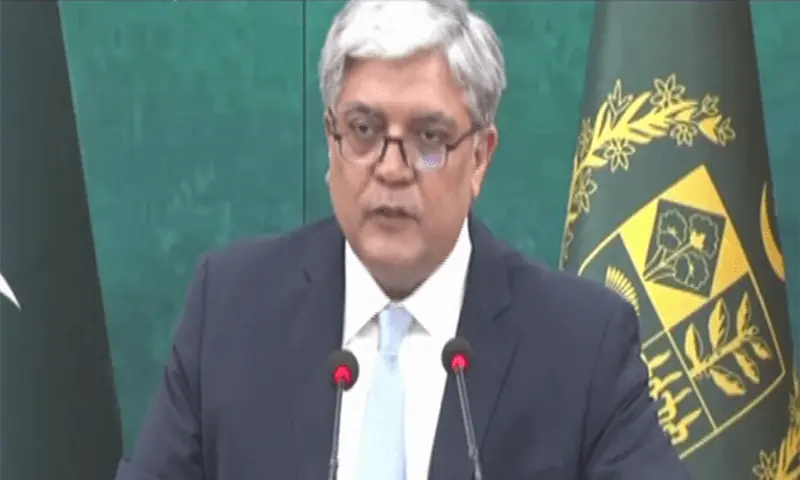
Planning Minister Ahsan Iqbal, whose constituency, Narowal, which borders India and has been flooded, said on Wednesday that India was playing politics with water. Referring to the Indus Waters Treaty, which India has held ‘in abeyance’ following the Pahalgam episode in April, Mr Iqbal said that New Delhi did not share timely information regarding the floodwaters headed for Pakistan.
While India did send a ‘high flood’ warning, this was a general statement delivered through its high commission in Islamabad, and not via the Permanent Indus Commission as mandated by the IWT.
There is mounting evidence that India is indeed politicising the water issue. This includes cutting flows, as it did in the Chenab earlier this year, causing shortages and unleashing huge volumes of water across the border, with little warning and scant details.
Observers add that India’s warnings were little more than theatre to show the international community that despite tensions with Pakistan, it sent advance notice out of ‘humanitarian concerns’.
If India was really motivated by empathy, it would immediately restore the IWT so that timely and precise data could be shared with Pakistan, and flood-related devastation be minimised. As the upper riparian, India has released water in past years, but after proper coordination with Pakistan.
Under the IWT, both states had shared precise information and minute details about river flows. This allowed the administration to better prepare for the incoming deluge. In the current circumstances, the details shared by New Delhi were overly vague, lacking the technical specifics that were exchanged when the IWT was still being honoured.
The result is that along with the natural intensity of the floods, human malfeasance from the Indian side has compounded the disaster for Pakistan. Sharing of data related to the floodwaters and river flows must be a structured process guided by mutually agreed SOPs.
Guesswork and general warnings cannot replace the specifics. Legally and morally, Pakistan stands on higher ground, as neutral arbiters, such as the Permanent Court of Arbitration at The Hague, have ruled that India cannot unilaterally hold the IWT in abeyance.
Whether it is holding back flows, or unleashing floodwater, cooperation on the question of transboundary rivers is essential, and India should not politicise this key issue. On its part, Pakistan should continue its diplomatic efforts bilaterally with India and at international forums to restore the treaty. Meanwhile, we need to improve our flood forecasting methods and preparedness to deal with the waters gushing in from across the border, in case India insists on obduracy.
Published in Dawn, August 29th, 2025