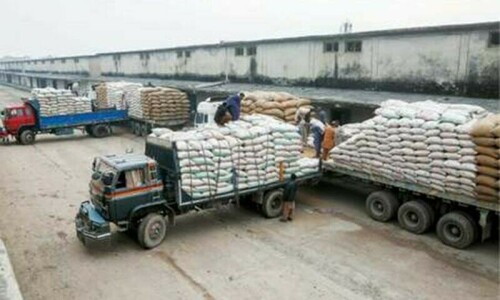
LAHORE: In an effort to curb the rising prices of wheat and flour in the open market, the Punjab government has decided to intervene by releasing its grain stocks and proposing a fixed price of Rs2,900 per 40kg for public-sector wheat.
A summary recommending the release price is being sent to Chief Minister Maryam Nawaz for approval, a spokesperson for the Commodities and Price Control Department (formerly Food Department) said on Tuesday.
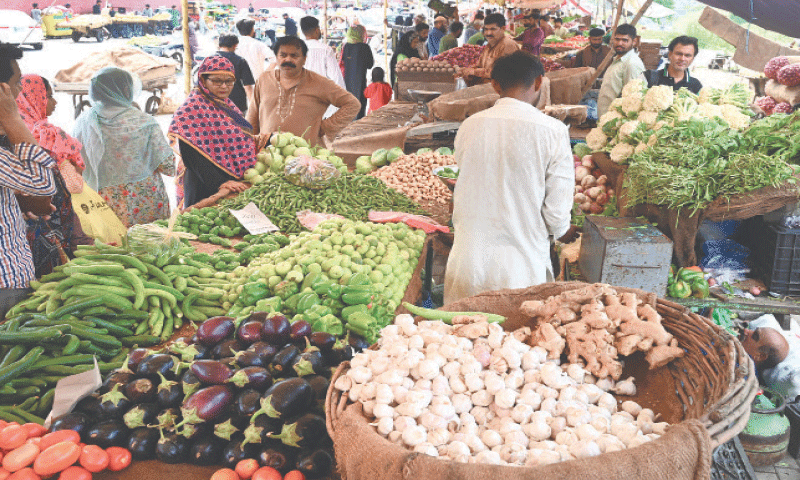
Currently, the department holds 0.89 million tonnes of carryover wheat stocks from last year’s procurement. Open market prices have surpassed Rs3,100 per 40kg, prompting concerns about affordability. Roti prices are also under pressure, with tandoor operators signalling a possible increase of Rs2 per bread (roti) due to the rising cost of flour. Currently, a roti costs Rs 14.
Pakistan harvested 28.98m tonnes of wheat during the 2024-25 season from 22.5m acres — significantly short of both the production target of 33.58m tonnes and last year’s output of 31.8m tonnes. With a population exceeding 250m and an annual per capita wheat consumption of 115kg (as per the Household Income and Expenditure Survey 2018–19), the current yield is insufficient to meet the country’s food needs. An additional 1.2m tonnes of wheat are also required for seed, while a portion of the harvest is used in livestock and poultry feed, often replacing maize as a cheaper alternative.
This season, in line with an agreement with international donors, both federal and provincial governments have withdrawn from wheat procurement and declined to set a minimum support price — marking a departure from decades of market regulation.
Chief Minister Maryam Nawaz has accused “mafias” of manipulating the wheat trade, alleging that investors buy grain from farmers at low prices and later offer it to the government at inflated rates, as witnessed last season when procurement prices reached Rs4,000 per 40kg.
Until recently, governments procured 5-7m tonnes of wheat annually — over 4m tonnes by Punjab alone — to maintain strategic reserves for food security, and to serve as a buffer stock. These stocks were traditionally released to flour mills in September or October, or earlier if needed to stabilise prices. The current move to intervene reflects mounting pressure on the government to manage food inflation, as direct procurement mechanisms are not yet in place.
Published in Dawn, August 28th, 2025