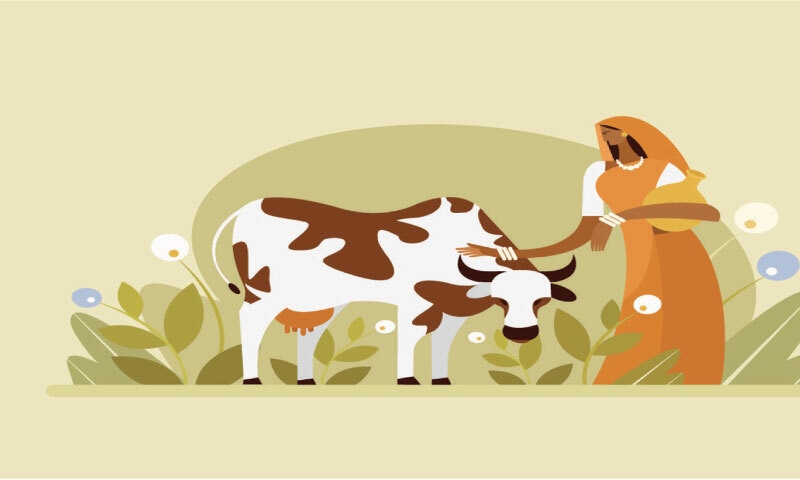

Livestock is the cornerstone of Balochistan’s economy, serving as one of the most historical and indigenous commercial activities in the region. Rooted in the province’s nomadic and semi-nomadic traditions, livestock rearing — sheep, goats, cattle, and camels — has provided livelihoods for generations.
It not only meets local dietary and agricultural needs but also contributes significantly to trade; wool, meat, hides, and dairy products form the key components of rural commerce. Despite limited infrastructure and harsh climatic conditions, livestock remains an integral part of the cultural and economic fabric of Balochistan, reflecting both resilience and traditional expertise.
Balochistan is still largely a pastoral economy, where crop farming is not sustainable due to water scarcity. Given the arid environment and vulnerability to climate shocks, especially the devastation of agricultural products brought by the persistent droughts of 1998 to 2022, experts suggest that reviving livestock as the primary commercial activity would be more beneficial for the sustainable development of the province.
With around 34 million goats and sheep and 6.5m bovines, Balochistan holds Pakistan’s largest small ruminant and fourth-largest bovine population — about 30 per cent of the national total. Livestock is vital to the province’s socioeconomic development, providing livelihoods, nutrition, and income, particularly for rural households.
Balochistan, with its natural endowment for producing high-quality organic meat, is well-positioned to contribute up to 70pc of national meat production if supported in key areas
Pakistan can possess a comparative advantage in the export of chilled, halal meat to Gulf countries, Europe, North America, and Australia. In 2023, the country’s meat exports generated approximately $456m, with bovine meat contributing $380m. Mutton exports, primarily from sheep and goats, accounted for 17pc of total meat exports, valued at around $76m.
These figures indicate substantial growth potential within Balochistan as the major contributor, which can be further realised by modernising the livestock sector to enhance climate resilience, productivity, and sustainability. Strategically, Balochistan is well-positioned to supply meat to national markets, especially Sindh and Punjab, with potential for value addition and international exports.
However, Balochistan currently lacks export-grade infrastructure such as certified slaughterhouses, cold chains, and packing units. The province, with its natural endowment for producing high-quality organic meat, is well-positioned to contribute up to 70pc of national meat production, supporting consistent international supply and driving economic growth through increased export earnings and GDP contribution.
The livestock sector is a key contributor to Pakistan’s economy, comprising 62.7pc of the agricultural output and 14.36pc of the national GDP in 2022–23 (Finance Division, 2023). The province produces 48pc of sheep, 22pc of goat, 8pc of cattle and 41pc of the camels in the country. Its gross value addition grew by 3.8pc, reaching Rs5.59 trillion. The sector also contributes approximately 2.1pc to the country’s total export earnings.
As previously highlighted, the prolonged drought has severely impacted both the agriculture and livestock sectors in the region. The once-thriving rangelands and natural meadows significantly diminished, leading to a sharp decline in organic animal production. Additionally, the war on terror in Afghanistan brought about a major shift in regional and commercial dynamics. The construction of border fences along the Pak-Afghan and Pak-Iran borders disrupted the centuries-old migratory routes of nomadic tribes.
These nomads, who traditionally moved seasonally across borders with their flocks, were an essential component of the animal production and livestock economy. Their movement across wide rangelands would ensure the natural rearing of animals, resulting in high-quality meat production. The situation further worsened as the fencing drained an already drought-affected sector, shrinking traditional pastoral livelihoods and the sustainable production of organic livestock and its related dairy production.
In conclusion, Balochistan offers a natural environment that has supported livestock production for generations, but the absence of an organised export system — dedicated export houses, meat processing units and halal meat packaging — remains a critical gap. Branding and patents are other policy requirements to be considered for promoting the industry. Support for geographic indication and halal certifications should be prioritised.
Moreover, a functional value chain aimed at trade and export development is currently lacking. Addressing these deficiencies by establishing infrastructure and efficient systems can unlock the province’s potential, enabling the development of a productive meat industry, particularly in the halal segment.
In this regard, the government of Balochistan should prioritise the livestock sector with the integration of climate-resilient techniques. The farmers should be supported with interest-free loans to establish farmhouses and fodder production. There is also a need for easy access to veterinary services, fodder systems, and business development support. A multi-sectoral approach is required to preserve and develop rangelands for the nomads to move around for continuing with organic meat production.
Moreover, private sector presence for inter-provincial trade and export to the international markets can be developed through better small and medium enterprise strategies and ease of business.n
The writer is a provincial civil servant and public policy analyst based in Quetta (views expressed in this article are the writer’s own and do not reflect any organisation).
Published in Dawn, The Business and Finance Weekly, August 18th, 2025