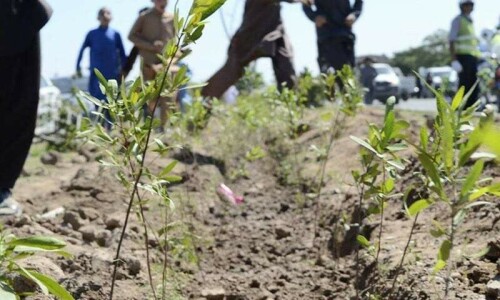
ISLAMABAD: President Asif Ali Zardari has said that over 41 million saplings will be planted during this plantation season and urged all citizens to contribute to this noble cause to offset the adverse effects of climate change.
“From cities to villages, and from schools to government institutions, this campaign will reshape our landscapes, strengthen resilience against climate disasters and kindle hope for a greener tomorrow,” President Zardari said on the occasion of the Monsoon Tree Plantation Campaign being launched on Monday (today).
Mr Zardari said August 18 marked the launch of a nationwide tree plantation drive at a time when Pakistan faces the harsh realities of climate change.
The well-being and progress of any nation, he said, are rooted in the preservation of its forests and natural environment. Deforestation, rising temperatures and frequent floods are challenges affecting millions of lives, he added.
“With insufficient forest cover leaving our land vulnerable to disasters that endanger our economy, agriculture, and well-being, this campaign is not symbolic; it is an important step to safeguard Pakistan’s future,” he stressed.
Explaining the importance of trees, he said they are the lifeline of the environment and one of the strongest defences against climate change. “They clean the air we breathe, enrich the soil that feeds us, regulate our climate, conserve our precious water resources and provide shelter to countless species of life. Trees lower extreme temperatures, absorb rainwater, and reduce floods and landslides. Every tree planted is a shield against disaster and a source of life for generations,” he noted.
He added that the success of the campaign depends on collective responsibility.
“Youth must lead as ambassadors of change, the media should inspire households, and farmers can protect both crops and the environment through plantation. Civil society, community leaders, and religious scholars must also motivate and encourage people to plant trees as a national duty.”
The president also referred to recent floods, saying that in this critical time, when climate change has already brought destruction to Khyber Pakhtunkhwa and other parts of the country through floods and cloudbursts, decisive action is needed to plant more trees.
He urged citizens to strengthen the Green Pakistan Programme, a national initiative to expand forest cover, rehabilitate degraded lands, restore ecological balance and promote nature-based solutions.
“This is not simply about planting trees; it is about creating healthier communities, protecting livelihoods, and ensuring a climate-resilient future for generations to come,” he said.
Meanwhile, Speaker National Assembly Sardar Ayaz Sadiq also underscored the urgent need to adopt tree plantation as a national obligation to combat the growing threats of environmental pollution and climate change.
He noted that unchecked deforestation has led to increasingly severe consequences, including torrential rains, soil erosion, floods, air pollution, and unpredictable weather patterns.
These challenges, he stressed, demand immediate and coordinated action to ensure a cleaner, safer environment for future generations.
Highlighting the multifaceted benefits of trees, Mr Sadiq said they not only supply oxygen but also serve as a cornerstone of ecological stability. They play a critical role in mitigating the adverse effects of climate change and preserving the natural beauty of the planet.
He urged that tree plantation be transformed into a continuous and collective movement, stressing the need for every citizen to contribute actively.
“A green and thriving Pakistan requires joint efforts from both the government and the public,” he said. “We must launch large-scale plantation drives across schools, colleges, villages, and urban areas to move toward environmental self-sufficiency.”
Mr Sadiq further emphasised that planting saplings is only the first step; ensuring their survival through regular care and monitoring is equally important.
“Sustainable development and a healthy society are achievable only when individuals acknowledge tree plantation as a shared responsibility and actively participate in preserving the environment,” he noted.
Similarly, Deputy Speaker of the National Assembly Syed Ghulam Mustafa Shah said tree plantation is not merely an environmental necessity but also an integral part of religious teachings and cultural values.
He stressed the importance of raising public awareness about greening both urban and rural landscapes, saying that environmental consciousness is essential in today’s world.
Published in Dawn, August 18th, 2025