0
0
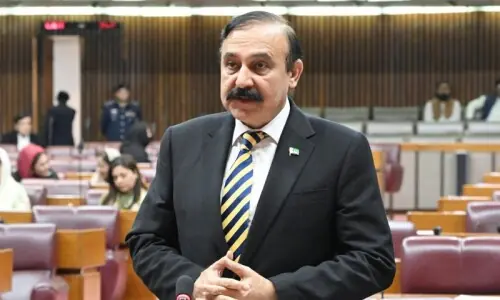
KARACHI: Federal Minister for Water Resources Muhammad Moeen Wattoo on Thursday criticised India for seeking to “run away” from the Indus Waters Treaty (IWT).
India had unilaterally held the IWT in abeyance following the attack in occupied Kashmir’s Pahalgam that claimed 26 lives. New Delhi blamed Islamabad for the attack, without any evidence.
The minister was reacting to the Indian foreign ministry’s statement, which rejected a Hague court ruling to follow the accord in designing new hydroelectric projects on rivers flowing to Pakistan.
Questioned about the matter in his weekly press briefing, Indian Ministry of External Affairs spokesperson Randhir Jaiswal said: “India has never accepted the legality, legitimacy, or competence of the so-called Court of Arbitration. Its pronouncements are therefore without jurisdiction, devoid of legal standing, and have no bearing on India’s rights of utilisation of waters.”
He said India stood by its decision to hold the treaty in abeyance.
Responding to the MEA spokesperson’s stance, water minister Wattoo said: “India wants to run away from this agreement. Under any article of the agreement, India or Pakistan cannot terminate this agreement.”
He said India’s claim was “baseless and wrong”, adding that Pakistan rejected it.
“The court has already said that it has the power to decide. India had made this claim before, which the court has rejected.”
He said a letter by India earlier in the year seeking modification in the treaty had no legal cover and the country could not unilaterally take a decision regarding the IWT.
In 2023, Pakistan brought a case to the Permanent Court of Arbitration in The Hague over the design of Indian hydropower projects on rivers that were awarded to Pakistan under the treaty.
A supplemental award in June held that India could not unilaterally hold the treaty in abeyance. India, in response, said it did not recognise the court or its decisions.
The court, in a ruling that was posted on its website earlier this week, said it had jurisdiction over the dispute and ruled the treaty “does not permit India to generate hydro-electric power on the Western Rivers based on what might be the ideal or best practices approach for engineering” of these projects.
Published in Dawn, August 15th, 2025