IN MEMORIAM: LESSONS IN INK AND LOVE
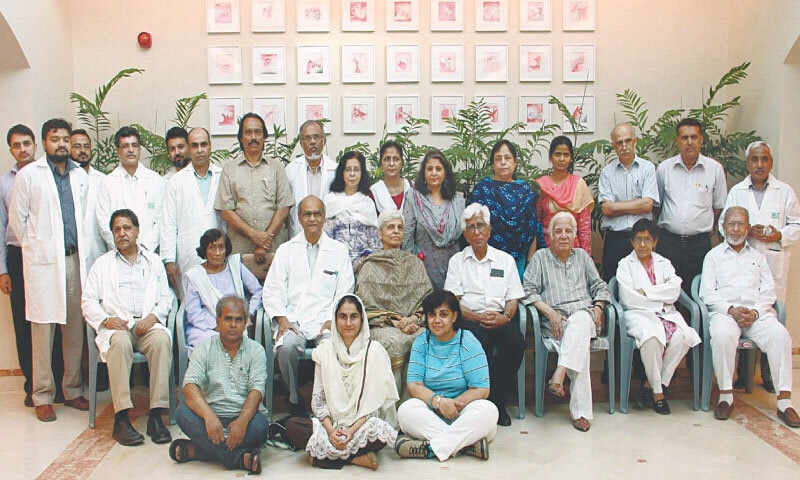
Trying to come to terms with losing my mentor Mrs Zubeida Mustafa at her funeral on July 11, I could see many others there as numb as me. I was overwhelmed by wave after wave of memories. I recalled meeting her for the first time in 2001 when she visited the offices of Young World — Dawn’s children’s magazine, where I worked — with an essay written by the son of a senior administrative assistant at Dawn. She wanted it published.
“The kid will feel encouraged to see his writing in print,” she had said. But neither my boss nor I could make head or tail of the piece. It was so wordy, I wanted to discard it. “You don’t know Mrs Mustafa,” my boss warned me. “She follows up on things.”
She sure did. When we explained the problem, she told us she could arrange for the writer to come over and explain what he was trying to say. The young man came and explained, and the reconfigured piece was published in the magazine. The encouragement he got from that publication went a long way. Today, he is a senior reporter in Dawn.
In that sense, Mrs Mustafa carried the Midas touch. Whoever she worked with would go on to do something worthwhile in life. I also remembered the day she came to our room to inquire about a ‘Shazia’ who had been penning big stories and interviews in Dawn’s various magazines. Funnily enough, in spite of seeing me around, she did not yet know me by name.
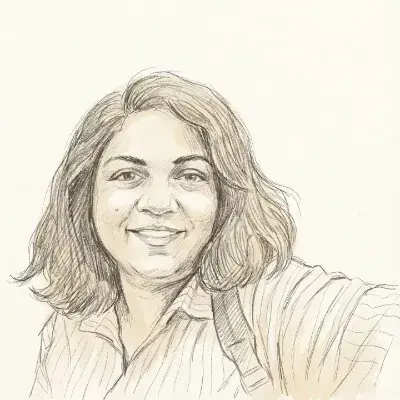
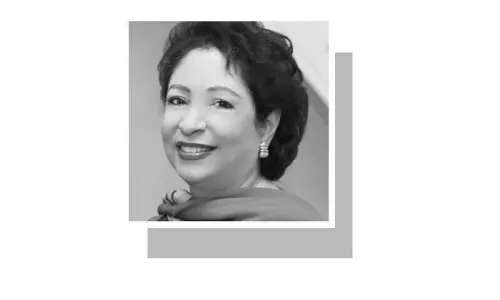
Zubeida Mustafa, who passed away on July 9, was not just an excellent editor at Dawn. She was also a role model and a wonderful mentor to many she took under her wings
At that time, she wanted me to contribute an article or two for a major editorial supplement she was working on. This was followed by another supplement, on the topic of health, for which she asked me to contribute three interviews of well-known personalities, who were leading busy lives despite suffering from serious health conditions.
Now that I think about it, I realise Mrs Mustafa would herself have been an equally good choice for an interview in that supplement. Grateful for whatever she had and never taking life for granted, Mrs Mustafa was born with a condition that required her to wear special shoes — she also had hearing and eyesight issues in the latter half of her life — but never did she allow these disabilities to stop her or dim her enthusiasm.
Being a workaholic, the supplements were additional responsibilities that she often took on, other than her regular work of penning daily editorials, writing weekly columns and bringing out Dawn’s weekly literary magazine, Books&Authors. In addition, she was also in charge of Dawn’s big reference library.
It wasn’t long before I was transferred to Books&Authors because Mrs Mustafa liked my work. “By the time, I’m done with you,” she’d tell me, “you’ll be fighting for causes just like me. You’ll be holding up banners and placards and attending protests.” I’d laugh it off.
Working with Mrs Mustafa was quite an experience. It was not just a boss and subordinate relationship. I had lost my mother years ago and the mothering resumed in the office whether I needed it or not. Just so her own daughters, Seemi and Huma, wouldn’t get jealous, I used to call her my “Office Maa.” My Office Maa also brought me close to her own daughters. I remember Mrs Mustafa calling me on my home landline one day, because my mobile phone was continuously busy, to vent about something Huma had done. I couldn’t tell her then that my cell phone was engaged by none other than Huma, who needed a shoulder to cry on.
Like she was my mentor and friend, she also had her own mentors, especially the one she often spoke of. It was Ahmad Ali Khan, the editor who had hired her. He had seen her present a paper at the Pakistan Institute of International Affairs (PIIA), she would tell me later. She had also worked there as a researcher but was on a break after having her second child. The year was 1975. Khan Sahib’s daughter, Dr Naveed Ahmad Tahir, was a researcher with PIIA and he asked her to arrange a meeting with Mrs Mustafa.
The break necessitated by Huma’s birth ended with Mrs Mustafa joining Dawn as an assistant editor, the first woman to be hired at such a high position in Dawn. But when Huma started school, Mrs Mustafa thought of switching to part-time. Khan Sahib advised her against it, as it would have deprived her of certain job benefits. Instead, he asked her to just attend the morning meetings and write her column before leaving. This way, she was able to pick up her children from school, feed them, let them nap etc. She always praised Khan Sahib for being such an understanding boss.
Soon, many other women joined Dawn as sub-editors, reporters, artists etc. And everyone looked up to Mrs Mustafa. Of course, I was not the first person she had mentored. There was a long line before me and several after me as well, for whom she remained available till the end.
While she would tell me about causes that she held dear, I would fill her in on what was happening in the world of sports, which she would make an effort to understand. She also often reminded me about her failing eyesight; I was to pay attention to what she had to teach me because she would not be able to carry on working after losing her sight, she said.
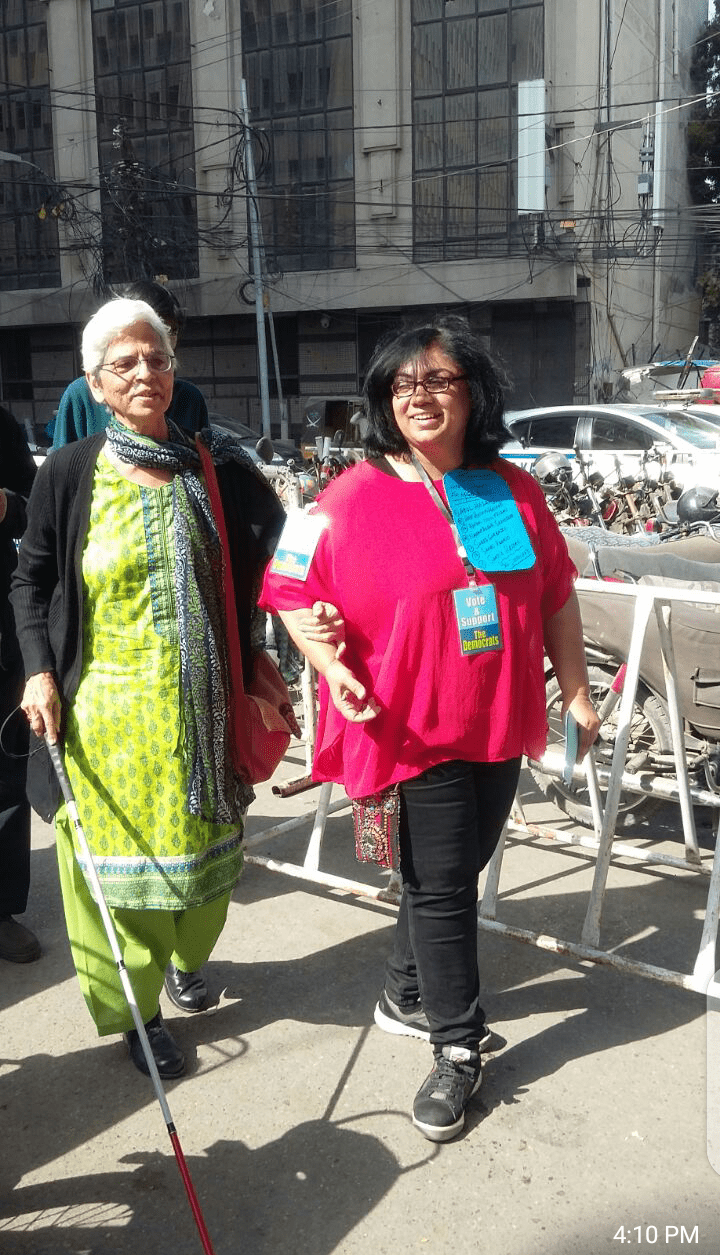
Once, when Mrs Mustafa had some business at Shaheen Complex, which is right across from Dawn offices, I decided to accompany her so that she would not have to cross the road on her own. Holding her hand by the roadside, I would pull her back again and again, unnerved by the traffic. Finally, Mrs Mustafa tightened her grip around my hand and swiftly took me across. “Tum tau khud road cross nahi kar sakti [How can you help me cross the road when you can’t do it yourself],” she laughed as I hung my head in shame.
After two years of mentoring, Mrs Mustafa handed over the Books&Authors section to me. I was initially unsure about it but she encouraged me and pointed out that she would still be around if I needed her for anything.
Though she kept writing her weekly columns, in which she raised serious issues about health, education, the environment and human rights, Mrs Mustafa finally left Dawn in 2009, when her eyesight deteriorated further. The Op-Ed section, which she was heading at the time, she passed on to one of her very capable young women assistant editors. I had also moved on from Books&Authors by then myself to turn to daily reporting for the newspaper, something which Mrs Mustafa was very proud of. I also surprised myself by taking up various causes and covering human rights issues in my reports.
When I was running for the Karachi Press Club elections for the first time in December 2017, Mrs Mustafa came to support me despite her visual impairment. She remained involved in each election I ran in, and cheered and celebrated the results just like she did when she got my first book published or when I would win any writing awards. I felt equally proud of her countless national and international honours and awards.
The books she wrote or edited and her weekly columns, which she meticulously archived on her website www.zubeida-mustafa.com remain to provide guidance while giving us a glimpse of her beautiful mind.
At her funeral, all of her past and present mentees — were present. And we were not there looking for closure. The values, ethics, principles and the joy of working hard that she passed on to us will always remain with us.
The writer is a member of staff.
X: @HasanShazia
Published in Dawn, EOS, July 20th, 2025