Pakistan, Uzbekistan, Afghanistan ink deal on railway project
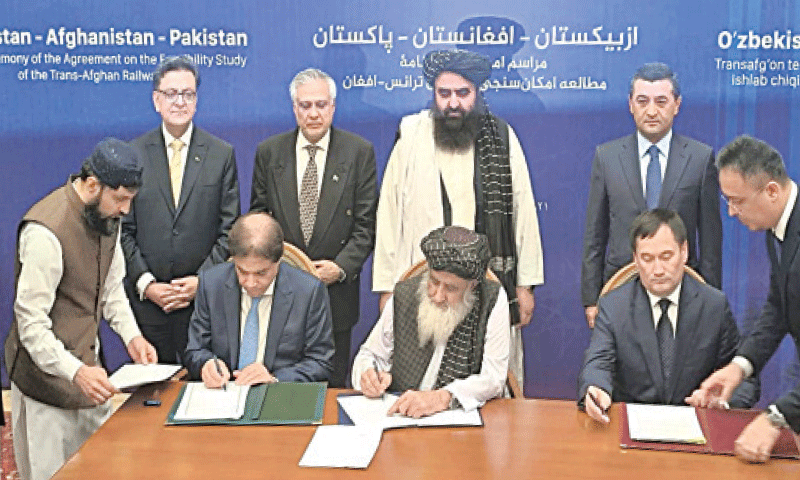


KABUL: Pakistan, Uzbekistan and Afghanistan signed an agreement on Thursday for a joint study on a major railway project intended to connect Central Asia with Pakistani seaports via Afghanistan, a move officials say will boost regional trade and connectivity, Dawn.com reported
Deputy Prime Minister and Foreign Minister Ishaq Dar made the announcement in a post on X from Kabul, where he arrived earlier today on a day-long visit for the signing.
“I congratulate the people and governments of Pakistan, Afghanistan, and Uzbekistan on the signing of the Framework Agreement on the Joint Feasibility Study for the Naibabad–Kharlachi rail link under the UAP Railway Corridor.
“I also thank the foreign ministers of Uzbekistan and Afghanistan for their support and commitment for timely signing of the agreement. We remained closely engaged throughout the negotiation process to finalise the details.”
Scheme intends to boost regional trade and connectivity
The railway is designed to be a “major milestone in advancing regional connectivity and economic integration,” Mr Dar said, by giving Central Asian countries access to Pakistan’s seaports.
The proposed rail line will pass through Termiz in Uzbekistan, Mazar-i-Sharif and Logar in Afghanistan, and enter Pakistan via the Kharlachi border crossing in Khyber Pakhtunkhwa.
The project aims to facilitate regional and bilateral trade with both passenger and freight services.
The agreement builds on a decision made by the three countries in 2023 to pursue the project.
During his day-long visit to the Afghan capital, Mr Dar met with the acting Afghan foreign minister, Amir Khan Muttaqi. Mr Dar’s delegation included Pakistan’s Railways Minister Hanif Abbasi and other senior officials.
According to a statement from Pakistan’s Foreign Office, both sides called for maintaining “the momentum in bilateral relations” and expanding cooperation in trade, transit and security.
“They agreed to remain engaged to achieve the full potential of regional economic development, including through [the] realisation of trans-regional connectivity projects,” the Foreign Office said.
Mr Dar credited the agreement to the leadership of Prime Minister Shehbaz Sharif, who had tasked him as finance minister in the previous government to lead the effort. “We collectively laid the foundation for this transformational project,” Mr Dar said.
According to the Foreign Office, during the visit, the deputy prime minister was expected to meet with the Afghan acting foreign minister.
The plan also included him calling on the acting prime minister of Afghanistan to discuss bilateral matters and exchange views on regional and international developments.
Published in Dawn, July 18th, 2025