0
0

ISLAMABAD: After losing everything to drought that ravaged his hometown, young Ahmed Khan had no idea how to get back on his feet.
“Before our eyes, the once lush and green orchards turned into barren wastelands. Within days, everything changed. The groundwater level dropped, and our apricot and apple orchards dried up”, said Khan while recalling perhaps the most difficult time of his life.
The six-year drought spell from 1997 to 2003 devastated his Balochistan province, forcing families like his to flee and rebuild their lives from scratch.
Ahmed Khan, now a respected elder and a pioneer of Quetta cafes in the twin cities, vividly remembers selling tea on Karachi’s streets before establishing his first cafe in Rawalpindi.
Another cafe owner, Mohammad Akram, who hails from Qilla Abdullah district of Balochistan, runs a cafe in Aabpara Market.
“During the 2003 famine, my father and grandfather used to sell rams. We sold our cattle in bulk by carload because the animals were so weak, and prices were too low,” he said while reflecting on past hardships.
The reports from Provincial Disaster Management Authority (PDMA) suggest that the severe drought in Balochistan led to the deaths of over 1.76 million cattle, and nearly 80 per cent of apple trees and orchards were destroyed by 2003.
Several Quetta cafe owners revealed that most of them had not been involved in tea selling until about two decades ago; they were previously farmers, shepherds, or orchard owners.
“Our people were forced to migrate, and we did whatever small jobs we could get. I moved to Karachi and opened a tea stall to make ends meet,” Akram said.
Ahmed Khan proudly says that his café at Rawalpindi’s Commercial Market was the first Quetta cafe in the twin cities that he established in 2007 after moving from Karachi.
In addition to running tea shop, Mr Khan is also the chairman of the union formed by the owners of Quetta cafes in Islamabad and Rawalpindi.
According to him, there are roughly 1,200 Quetta cafes in the twin cities and employing about 10,000 workers.
“Anyone can own a Quetta cafe; it doesn’t matter where you come from. However, those who make tea must be from Balochistan,” Ahmed Khan said, emphasising the importance of maintaining quality due to the Quetta brand’s reputation for tea and parathas.
“We don’t use local tea brands; our tea is imported from Kenya. We also insist on using pure milk, even though it’s expensive,” Akram Khan said, dismissing reports about Quetta cafes using additives.
“Our Chai is proof of honesty, which is why it’s rich.”
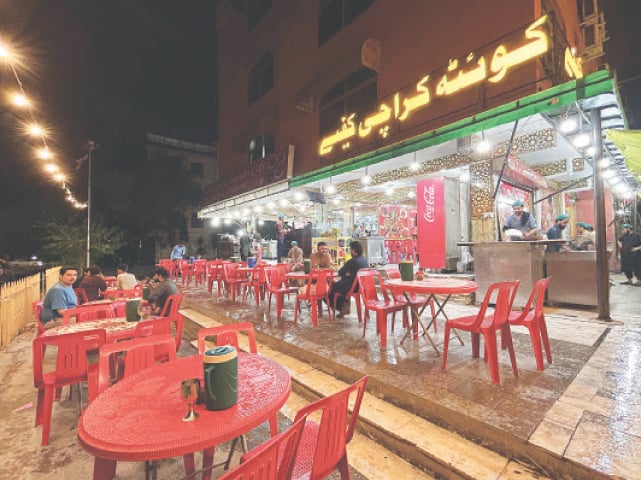
Quetta cafes have earned reputation as good tea spots in Islamabad. Quetta cafes often set up chairs in open spaces outside their shops, providing people relaxed environment.
Another cafe owner, Wali Muhammad, runs an outlet at posh Jinnah Super Market.
When asked whether his cafe is the most expensive in Islamabad, he nods with a smile, admitting it might just be.
He explains that steep rent in the sector costs him over Rs500,000 a month, apart from high electricity prices.
“Other restaurants in the same sector charge Rs250-300 for a cup of tea that’s barely worth sipping, and I feel our prices are pretty fair in comparison. We offer a cup of tea for just Rs150,” he added.
A customer, Babar Ali Palli, shares that Quetta cafes have a unique ‘vibe’ depending on where they are located. In posh sectors like F-6 and F-10 Markaz, the atmosphere feels more family-friendly, inclusive, and open to everyone. You will find special seating areas for women in almost every cafe, making sure a comfortable and safe spot for all genders.
Quetta cafes offer normal Chai, special Chai, and green tea, commonly known as Kehwa. Moreover, the menu extends to parathas, where laccha paratha, cheese paratha, and, for adventurous customers, chocolate parathas are presented.
An interesting entrepreneurial aspect of Quetta Cafe is its unique business approach. The workers at the cafe, many of whom hail from Balochistan, refuse to work for other local restaurant owners unless they have a stake in the business. Most Quetta cafes are run by members of a single extended family, keeping a tight-knit community.
Most of the owners expressed that they prioritise hiring workers from Balochistan because those workers tend to stay with them long-term, reducing concerns about staff shortages.
Quetta cafes are more than mere businesses but a lifeline for many, employing thousands of workers with a focus on affordability and community-centeredness.
These cafes represent the spirit of the Pakhtoon tradition and rich culture of tea in the country. Whether it’s day or night for 24/7, they offer a comforting cup of tea to their customers.
Published in Dawn, June 29th, 2025