THE political leadership has lately been indicating that Pakistan is ready for dialogue with India in the interests of regional peace. Considering the dangerous escalation provoked by India’s aggression against Pakistan last month, this is a wise course to pursue. The role of the US as a possible interlocutor between the two South Asian nuclear powers has been mentioned, though it remains to be seen how willing America would be to wade into Indo-Pak bilateral disputes.
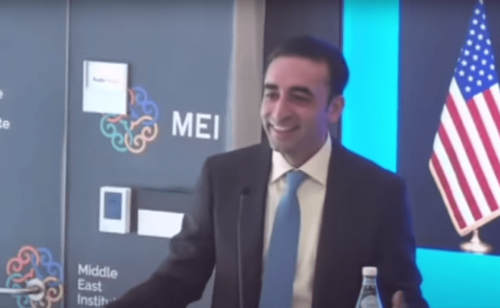
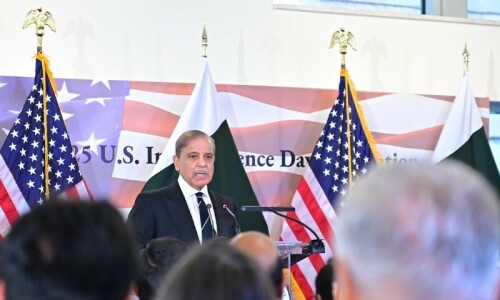
Speaking at the US embassy in Islamabad, Prime Minister Shehbaz Sharif hailed Donald Trump as a “man for peace” for the US president’s role in defusing last month’s hostilities. Similarly, PPP head Bilawal Bhutto-Zardari, who is currently leading a multiparty delegation in the US, said it was “reasonable to expect” America to facilitate a “comprehensive dialogue” between Pakistan and India. Foreign Minister Ishaq Dar has also observed that whenever India is ready for talks, “they will find us ready”, though adding that Pakistan was not “desperate”.
Whether dialogue begins with US mediation or the involvement of some other third party, the goal should be for Islamabad and New Delhi to resolve their disputes at the negotiating table, and prevent another armed clash.
Sadly, while Pakistan’s political leadership is acting maturely on this count, similar statesmanship has not been witnessed in New Delhi. Much bellicosity and jingoism continue to be exhibited across the eastern border, including by those in responsible positions. Such rhetoric must go for there to be an atmosphere conducive to regional peace. Indian officials say that if there are talks, they must only be about ‘terrorism’. Limiting the scope of dialogue may doom the talks even before they begin. Negotiations should cover all the irritants that stand in the way of better ties. And if India is adamant that only terrorism be discussed, then it should be prepared to hear about the role malign actors connected to New Delhi have played in destabilising Pakistan, including through acts of terrorism.
To create a favourable atmosphere for talks, CBMs are needed from both sides. From Pakistan’s perspective, the biggest CBM India can take at this point is to fully honour the Indus Waters Treaty. For decades this treaty has survived wars and mutual hostility. But if India continues to hold the IWT in ‘abeyance’ or plans to torpedo it, it would set both states on a collision course, as Pakistan cannot give up its water rights.
True, emotions are still high in the aftermath of hostilities. But responsible states are not guided by emotions, and both capitals need to look to the future and restart dialogue. If mistrust continues to build up and ties remain frozen, the next conflict may only be a matter of time.
Published in Dawn, June 6th, 2025