0
0

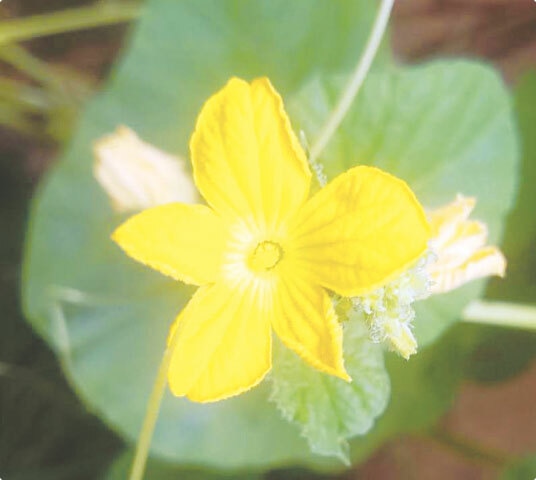
As the kakrri or Armenian cucumber’s vine begins to spread with augmented speed, the gardener starts hoping for the buds to appear. The buds typically begin to appear after around four to five weeks after germination. After another week or so, these buds start turning into the typical yellow flowers, which are typical of most other gourds in the family.
One of the best aspects of the Armenian cucumber vine, which makes it an instant choice among kitchen gardeners, is that it typically has both male and female flowers on the same vine. This phenomenon aids the plant’s pollination prospects, which will be discussed later.
The flowers that appear initially are usually male flowers. Soon enough, female flowers also start appearing on the vine. The flowers are usually vibrant and bright yellow with five petals. Like any other plant, the appearance of flowers on the vine adds much-needed colour to the otherwise green vine.
It is also important to recognise and differentiate between male and female flowers. The male flowers typically bloom early and, comparatively, wither away quickly too. The male flowers are usually attached to the vine with a simple connecting stalk. There is a strong belief among gardeners that the role of the male flower is also to attract pollinators to the vine before the female flowers start to appear.
When your Armenian cucumber vine is all bachelor flowers and no fruit, it’s time for some tough love
On the other hand, the female flowers usually bloom late and have a small developing Armenian cucumber fruit at their base, resembling a swelling or protrusion. The female flower seeks pollination from the pollen of a male flower. After success in pollination, this swelling at the base of the female flower turns into a crispy kakrri fruit.
As the Armenian cucumber vine enters the flowering stage, the fertiliser requirements of the plant change significantly as well. The focus shifts from the leaves and the spread of the vine to growing healthy buds and flowers.
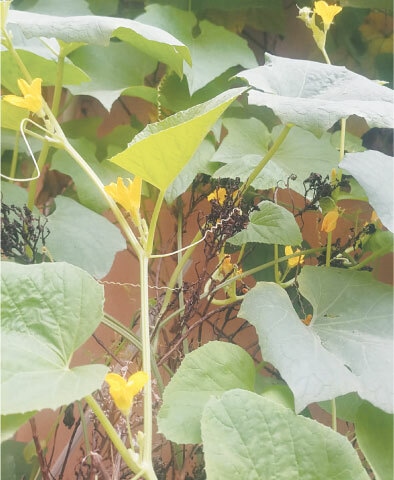
It now requires a switch in the fertiliser, with the nitrogen-based and balanced fertilisers now replaced with a potassium-based fertiliser. One option is to crush dried banana peels and spread them on to the surface of the soil as an organic alternative to a potassium-based fertiliser. The crushed, powdered form of dried banana peels can also be mixed with water to form a solution. This solution can be watered to provide instant, soluble potassium to the plant. For those opting for a chemical alternative, choose a high potassium-based fertiliser option.
Soon enough, as both the male and female flowers start appearing on the plant together, the chances of pollination increase manifold. For those having pollinators such as butterflies, bees and honeybees visiting their vicinity, chances of natural pollination are extremely high. These pollinators are likely to catch the pollen from the male flowers and deposit it on to the female flowers.
A problem arises when natural pollinators are not available, especially in metropolitan areas. In such cases, the phenomenon of hand pollination is a viable alternative. Gardeners have to pluck male flowers and rub their central part gently on to the central part of the female flower. This ensures the transfer of pollen and, if done successfully, the pollination of the flower.
Sometimes, to the chagrin of gardeners, the cucumber vine does not produce any female flowers at all. In such cases, the main stem is pruned and pinched at the tip. This results in more side branches cropping out.

In the rare instance of even the side branches failing to produce any female flowers, seasoned gardeners resort to a technique that is colloquially known as 2G and 3G cutting. There is a greater possibility of female flowers appearing after applying this technique, but it is not guaranteed.
We will discuss 2G and 3G cutting in future columns, along with threat of pest attacks once the flowering phase ends, before moving on to the fruiting phase and the harvesting of the eventual fruit.
Please send your queries and emails to doctree101@hotmail.com. The writer is a physician and a host for the YouTube channel ‘DocTree Gardening’ promoting organic kitchen gardening
Published in Dawn, EOS, June 6th, 2025