Inflation drains Eid spirit in twin cities
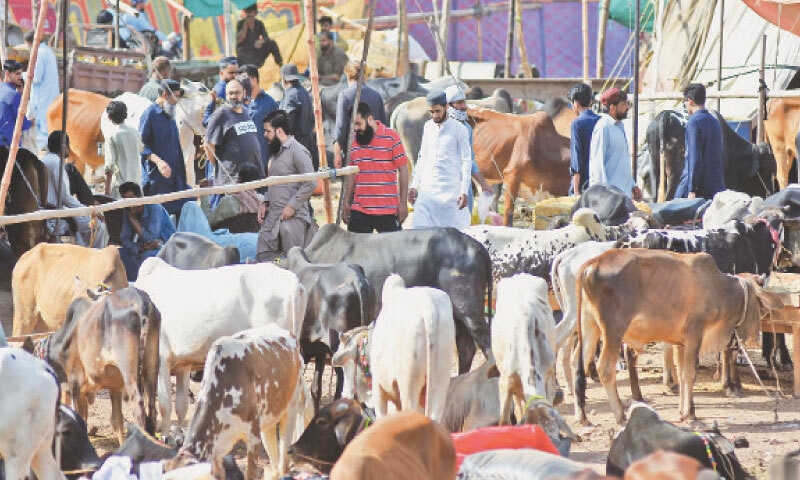

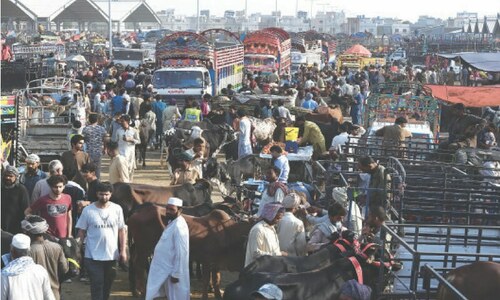
RAWALPINDI: Ahead of Eidul Azha, the streets of Rawalpindi and Islamabad are usually alive with the sounds of bleating goats, the chatter of excited children, and the odour of fodder, in addition to makeshift cattle markets. But this year, the festive hum feels quieter.
The rising tide of inflation has reached the heart of one of the most cherished Islamic traditions: the act of sacrifice. Many families are being forced to reconsider, reduce, or even completely forgo the ritual of Qurbani.
“We’ve decided to contribute to a charity this year,” says Aamir, a schoolteacher from Rawalpindi. “In the past, we brought home a goat at least a few days before Eid. The children would name it, feed it, and bond with it. But this year, buying one seems out of reach.”
Aamir’s experience is not unique. Conversations across livestock markets in the twin cities reflect a similar trend: fewer buyers, more hesitant conversations, and rising costs.
Many families forced to forgo sacrificial ritual due to higher costs; some opt for charities
Livestock traders are also feeling the pinch. Many have travelled from remote regions of Punjab, Sindh, and Khyber Pakhtunkhwa, bearing high transportation costs, increased fodder prices, and unpredictable weather conditions, only to find an underwhelming response.
“Prices of feed, transport, and even mandi space have shot up,” says Ghulam Rasool, a trader who brings animals from Chakwal every year. “But despite that, people are bargaining harder than before. Most walk away after hearing the price.”
Traders like Rasool have to strike a difficult balance. They cannot afford to sell at a loss, yet they face a market where many buyers are no longer able to meet even the previous year’s prices. A medium-sized goat now easily costs Rs80,000 or more—well beyond what a middle-income family can manage.
“We might have to skip this year,” says Wasif Mehmood, a father of three who visited several markets in Islamabad. In many households, especially in urban areas, the focus has shifted from individual sacrifice to collective arrangements and charity-run Qurbani programmes. These initiatives, often run by mosques, NGOs, or online platforms, offer fixed-price shares in cows or camels, while the meat is later distributed among those in need.
“They’re more affordable, and you don’t have to worry about handling the animal or arranging a butcher,” says Rabia Asif, a resident of Rawalpindi’s Satellite Town. “But something is missing. My kids used to count the days until the animal arrived. Now we just told them we won’t be doing Qurbani at home this year.”
The emotional cost is harder to quantify. Children who once joyfully named and played with the animals now look on quietly. The communal experience — the buzz of families in the market, the shared anticipation, and the morning of sacrifice followed by rounds of meat-sharing — is slowly eroding under financial strain.
Eid not only impacts those buying animals, but it also supports a vast informal economy. Butchers, fodder sellers, transporters, and even street vendors rely heavily on the seasonal spike in demand. This year, their incomes too are suffering.
Butchers, who usually start taking advance bookings weeks before Eid, report that the demand has sharply gone down. Some have even slashed their service fees just to stay competitive.
Religious scholars have stepped forward to reassure the faithful. “God does not place hardship upon His believers,” says Muhammad Inam, a cleric from Rawalpindi. “If someone truly cannot afford a sacrifice, there is no blame upon them. What matters is the intention.”
For many, this message is comforting, yet it doesn’t fully soothe the quiet ache that accompanies the absence of a beloved tradition.
“There’s an unspoken sadness this year,” Rabia admits. “You feel it in the air. We used to distribute meat, visit relatives, and cook special meals. Now, everything feels scaled down.”
Despite the gloom, communities are finding ways to preserve the spirit of Eid. In some neighbourhoods, families are pooling money for a single shared sacrifice. Mosque committees are organising free meat distributions. Social media platforms are promoting small local vendors and connecting donors to families in need.
Online Qurbani services, too, have surged in popularity—allowing people to participate in the ritual without the logistical or emotional burden of handling livestock. In a season defined by scarcity, altruism may well be the most meaningful sacrifice of all. — The writer is a freelance journalist
Published in Dawn, June 4th, 2025