CM Murad notes faint tremors ‘good thing’ as seismic activity continues in Karachi



Sindh Chief Minister Murad Ali Shah on Tuesday said low-intensity tremors helped prevent major earthquakes as he attempted to allay panic caused by the recent seismic activity that continued for the third day in Karachi.
The metropolis continued to witness faint tremors today, taking the tally since Sunday to 20, according to data provided by the Pakistan Meteorological Department (PMD). Experts have previously pointed out that such minor seismic activities “preempt” high-intensity earthquakes by constantly releasing accumulated energy within the tectonic plates.
“I have also studied engineering […] these (low-scale tremors) are a good thing. The earth is releasing its energy,” CM Shah said, responding to reporters’ queries about yesterday’s jail break incident in Karachi.
He explained that if the earth released its seismic energy altogether, it could result in a major earthquake. “But if it releases in bits, then it is better — nothing is actually better — but saves us from a big tragedy,” Murad added.
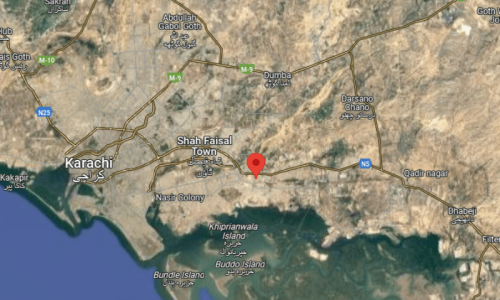
The most recent tremor occurred at 11:52am and measured 2.0 on the Richter scale, with its epicentre located 23 kilometres east of Malir, according to the PMD’s data.
Since Sunday — when the series of minor quakes began — the total of tremors recorded near Malir is nine, five near the Defence Housing Authority, three near Quaidabad, along with one each near Gadap Town, Korangi and DHA City on the outskirts of Karachi.
The 3.6-magnitude jolt from Sunday evening was the most significant, while the lowest measured was of 2.0 magnitude from today morning.
Karachi Chief Meteorologist Amir Hyder Laghari pointed out yesterday that there was a historical fault line which has become activated, causing frequent earthquakes in the city.
He said the fault is releasing its seismic energy, and when it’s spent, the tremors’ magnitude will reduce. Laghari added he expected the small-scale jolts to end within a week.
Murad’s remarks today echoed opinions voiced by Laghari and other experts, who have said that the chances of a major quake in Karachi are low.
Pakistan falls on three major tectonic plates — the Arabian, Eurasian and Indian — according to geological engineer Muhammad Rehan, creating five seismic zones within the country.
Dr Imran Ahmed Khan of Karachi University’s Department of Geography said an imbalance between the Indian, Eurasian and Arabian plates may be causing the tremors in the city. He added that the quakes will likely stop when a balance between the plates has been achieved.
Dr Adnan Khan, associate professor at the KU’s Department of Geology, noted that a huge earthquake was unlikely in Karachi as the city was situated far from active plate boundaries.
“Karachi lies on what’s called a ‘passive margin’, so the chances of a big earthquake happening there are low. Small earthquakes do happen sometimes, usually between 3 and 4 on the Richter scale, but they are not dangerous,” he added.
Dr Imran explained that the Indian tectonic plate is moving upward by about 4 to 5 centimetres every year in the Himalayan region.
At the same time, the Eurasian plate is pushing against it. As these two plates press against each other, they build up pressure, and when the pressure becomes too much, it rebounds and is released as energy, causing earthquakes.
The country had witnessed around 20 low-intensity earthquakes in the first half of February — an average of more than one tremor each day.
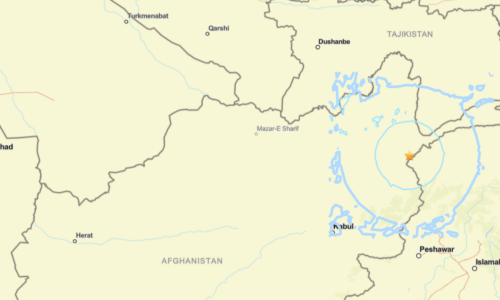
In April, jolts were felt in parts of Khyber Pakhtunkhwa and Punjab — including Peshawar, Islamabad, Rawalpindi and Lahore — twice that month.