• Earthquake of magnitude 5 or 6 can cause widespread destruction, says former VC of NED University
• City weatherman says tremors will stop in a day or two; maintains chances of major quake are slim
KARACHI: Although the seismic experts have said that the recent earthquakes in the city are largely harmless and that the magnitude will reduce in a day or two when the “active” fault fully releases its energy, they expressed concern over the city’s vulnerability to earthquake damage.
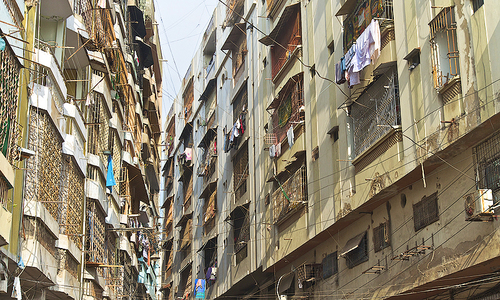
They warned that while the metropolis may not experience any major earthquake, its weak infrastructure cannot withstand a big jolt.
During the past two days, multiple low-intensity earthquakes have occurred in the city’s Quaidabad area, Gadap Town, Malir and DHA with the highest being recorded at 3.6-magnitude.
Karachi Chief Meteorologist Amir Hyder Laghari said that there is a historical fault which has become activated and is causing frequent earthquakes in the city. He said the fault is releasing its energy and when it’s spent, its magnitude will reduce and the tremors will stop in a day or two as it is of low magnitude.
He also said that the chances of a major earthquake are low in Karachi as, historically, there has never been a big earthquake.
Dr Imran Ahmed Khan of Karachi University’s Department of Geography said imbalance between the Indian, Eurasian and Arabian plates may be causing the tremors in the city. And the frequent tremors are most likely due to the fact that the plates are trying to maintain balance. When that balance is achieved, the earthquakes will likely stop.
Talking to Dawn, Dr Adnan Khan, associate professor at the KU’s Department of Geology, explained that the Indian tectonic plate is moving upward by about 4 to 5 centimeters every year in the Himalayan region. At the same time, the Eurasian plate is pushing against it. As these two plates press against each other, they build up pressure and when the pressure becomes too much, it rebounds and is released as energy, which causes earthquakes.
Most often, that pressure is released through what he called the “fault planes,” from where it can easily escape. However, he said there is a low chance of any major earthquake taking place in Karachi as the city is far from these active plate boundaries.
“Karachi lies on what’s called a ‘passive margin’, so the chances of a big earthquake happening there are low. Small earthquakes do happen sometimes, usually between 3 and 4 on the Richter scale, but they are not dangerous,” he added.
Former vice chancellor of the NED University of Engineering and Technology, Prof Dr Sarosh Hashmat Lodi said that Karachi has no history of major earthquakes. “But if, God forbid, a strong earthquake was to take place, the city’s infrastructure would not be able to sustain it. If an earthquake of magnitude 5 or 6 struck, it could cause massive destruction,” he said.
Explaining the reasons behind this, he said that much of the city’s infrastructure is weak. “Many buildings are made with low-quality construction materials, and there is little quality control,” he said, adding that the safety standards of most buildings are questionable, and there is also “a lot of corruption in the construction industry,” which means cheap materials are often used for raising buildings.
He also said that earthquake-resistant iron rods, which are made from billet, are not produced in Pakistan because there is no factory for them. Moreover, he added, “the building code, which is supposed to ensure safety, is not being followed in the country. I can say that for sure because I’m the head of the Building Code of Pakistan.”
He said that due to all these reasons, the damage in the city could be “catastrophic” if a big earthquake takes place.
Published in Dawn, June 3rd, 2025