0
0

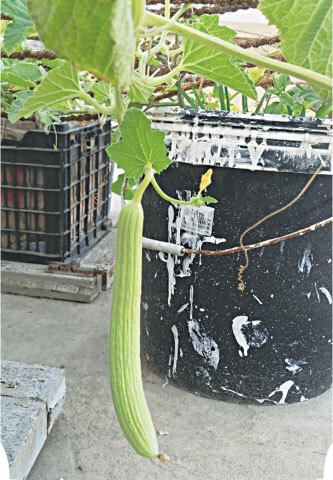
The growth of five to six true leaves and the sprouting of the first tendril — which occurs around three weeks after the seed germinates — mark the end of the seedling stage and it is time to shift the young Armenian cucumber plant, locally known as kakrri, to its new, permanent location. This location should have a nearby stick or trellis option, which would help the vine to quickly grow and spread.
The quicker and easier way to segregate and pick out a seedling to shift from the number of seedlings growing in the seedling pot is to simply spoon each one out. This is the preferred method among experienced gardeners. However, there is a high possibility that the roots of the seedlings might get damaged in this process.
For novices, the safest method is to tap the pot on the surface and to invert the pot while ensuring that the seedlings aren’t disturbed. The content of the pot will slide down, sometimes in the exact shape of the pot. This content is then carefully put in a bucket of water. As the soil settles in the water, the seedlings become easily separable. In this manner, the roots also remain intact. Finally, if the seeds are sown in a seedling tray, they can be individually spooned out from the tray. These segregated seedlings are now ready to be transplanted.
The new, permanent location should preferably have exposure of six to eight hours of direct sunlight. The Armenian cucumber is one of the gourds that can thrive well in limited space. Its yield can be voluminous, even when it is grown in a container that varies between eight to twelve inches. Therefore, the container options for the vine of Armenian cucumber may range from the likes of clay pots to plastic fruit baskets and paint buckets to wooden crates. The Armenian cucumber can be grown in open ground and even around other plants in the same bigger-sized container.
The Armenian cucumber produces a voluminous yield and can easily be grown vertically when the plant is cramped for space
Although the vine is very humble in terms of the ground space it requires to grow, a smaller-sized container would require comparatively frequent fertiliser supplementation. At this stage, the ideal option of fertiliser is fully decomposed cow manure, which is easily available at most plant nurseries. A handful of this fully decomposed cow manure is thoroughly mixed in the soil of the space where the Armenian cucumber seedling is to be shifted.
Additionally, crushed eggshells and dried banana peels can also be used to further boost the growth of the newly shifted seedling. While I always recommend organic fertilisers, if you are opting for chemical boosting, then a balanced fertiliser can be used, in line with the instructions provided by the commercial sellers on their packs.
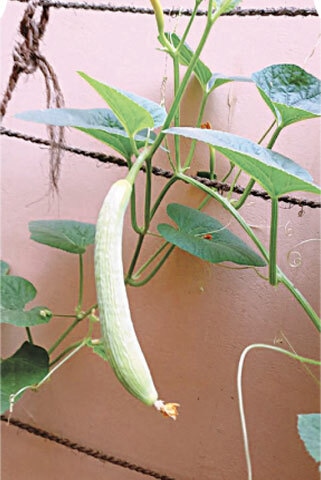
The seedlings have to be meticulously transplanted to the new location. The surrounding soil surface has to be carefully tapped and pressed evenly in a manner to secure and support the seedling. If there is excessive and extra ground space available, then the vine can be spread horizontally, parallel to the ground. If the ground space is limited or marked for other plants, then the vine can be grown vertically as well.

For vertical gardening, the best option is to erect a trellis nearby or a stick can be inserted as well. The newly growing tendrils will cling and coil around the trellis and start to move and spread vertically. It is better if the trellis or rod is not made of metal, as metal gets hot during extreme summers and can burn the vine clinging on to it. The trellis, while supporting vertical growth, not only saves ground space but also helps the vine with proper aeration. In the process, it also limits the chances of any pest attacks.
Soon enough, as the vine spreads, the number of branches, the tendrils and even the size of the leaves will increase manifold. In no time, buds, flowers and fruits will be found on this flourishing vine.
Please send your queries and emails to doctree101@hotmail.com. The writer is a physician and a host for the YouTube channel ‘DocTree Gardening’ promoting organic kitchen gardening
Published in Dawn, EOS, June 1st, 2025