0
0

LAHORE: Federal Minister for Water Resources Muhammad Moeen Wattoo has warned India that holding the Indus Water Treaty (IWC) in abeyance unilaterally is “absolutely unlawful and an act of war”.
He further said that the treaty still exists despite New Delhi holding it in abeyance “unilaterally and illegally”.
“The words ‘holding in abeyance’ used by India doesn’t exist anywhere in the law. Therefore, the Indus Water Treaty exist as it is, as these words cannot abolish it,” Mr Wattoo said while speaking at a seminar on Saturday.
“Holding the treaty in abeyance is absolutely illegal immoral. It is a violation of all international agreements,” the minister added.
Ex-Indus water commissioner warns China and other upstream countries may block flow of water to India
Talking about the background of the issue, the federal minister said the correspondence between the two countries were underway since 2024.
India wrote a letter to Pakistan, seeking some modification in the treaty under the Article 12 (3) of the treaty. Under the treaty, the minor issues related to water can be discussed and resolved on the level of commissioner of Indus waters representing Pakistan and India under Articles 8 to 11. But if the issues are more important, these can be discussed and resolved by both the parties, Pakistan and India.
“In its April 8 letter, they [India] sought us to tell the place where parties can sit and discuss the issue [related to modification]. In the letter, they also asked us to respond till May 8. But on April 24, India unilaterally suspended it,” he revealed, adding that holding treaty in abeyance doesn’t have any legal cover.
“The treaty cannot be held in abeyance or suspended unilaterally by anyone. It cannot be changed, modified, amended or cancelled by anyone. The treaty still exists.”
Mr Wattoo said Pakistan also wrote in response to India’s letter, stating to sit and discuss.
“We told them for holding negotiations on this, saying to reach results if we reach mutual understandings. But the aggression India did by taking action unilaterally is equal to act of war. The water is our lifeline and on this issue, we can neither compromise nor show any flexibility,” the minister warned.
“Currently, Pakistan is receiving normal flow of water from Indian side,” he said.
Talking about the canals issue in the country, Mr Wattoo said he wrote to all provinces to come forward and devise an action plan in this regard. “We have told the provinces to constitute a committee of independent experts and take a final decision mutually. In this way, the misunderstandings on the part of provinces would also be no more,” he maintained.
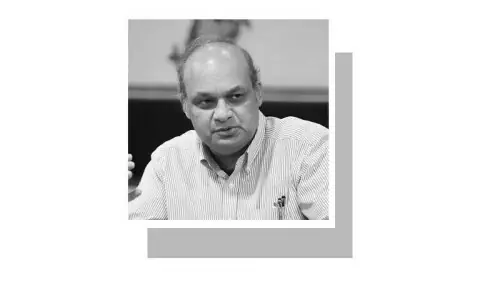
Former Indus water commissioner Asif Baig said that India had transboundary agreements on water with China, Nepal, Bangladesh and other neighbours. “Because China is sitting on upstream level from where water flows down to Indian located at downstream position. Similarly, in Pakistan case, India is on upstream location which is being bragged by Indian government. If India dubbing its upstream status as authority to stop water follow to Pakistan transgressing treaty, then what will happen if China and other upstream country block flow of water to India,” he said.
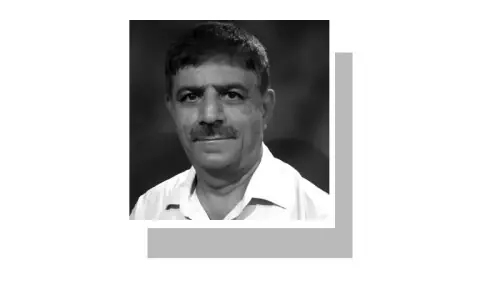
Speaking on the occasion, former Indus Water commissioner, Sheraz Memon said that even if India tried to block water flow toward Pakistan, it would be an exercise in futility due to the country’s insufficient capacity to water maneuverability.
“IWT survived in Pak-India two wars and barrage of terrorism allegations,” he said and suggested that sagacity demanded that treaty should go unaffected in all worst scenarios.
Former Punjab irrigation minister Mohsin Laghari categorically ruled out any one-sided suspension of IWT. He said if India was given liberty to do so, none of international treaties would stand exist and will lose their holistic merits.
“If India remains hell-bent on [stopping the flow of water coming to Pakistan], it will cost billions of dollars to build the infrastructure on rivers,” he added.
Published in Dawn, May 25th, 2025