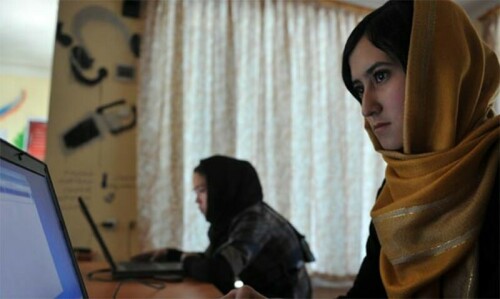
ISLAMABAD: The country recorded a significant rise in mobile internet usage among women in 2024, as the gender gap in mobile internet adoption narrowed from 38 per cent to 25pc, according to the GSMA Mobile Gender Gap Report 2025 released on Wednesday.
This means that women in Pakistan are now 25pc less likely than men to use mobile internet — an improvement from previous years.
In contrast, the gender gap across South Asia remained largely unchanged at 32pc, with an estimated 330 million women in the region still not using mobile internet.
Pakistan also outperformed neighbouring countries in women’s mobile internet adoption, with 45pc of women using mobile internet, compared to 39pc in India and 26pc in Bangladesh. This marks a notable increase from 33pc in 2023 — a 12-percentage point rise — primarily driven by adoption among rural women, the report noted.
Pakistan leads South Asia in women’s mobile internet growth
Mobile internet usage among men also rose by seven percentage points during the same period.
The report highlighted that Pakistan leads South Asia in mobile ownership among men, with 93pc of men owning a mobile phone, compared to 71pc in India and 68pc in Bangladesh.
The GSMA praised the efforts of Pakistan’s telecom sector and regulator, noting that the Pakistan Telecommunication Authority (PTA) had launched a Digital Gender Inclusion Strategy 2020, aimed at bridging the digital divide by creating inclusive digital access for women.
The report lauded Jazz, Telenor and Ufone for striving to increase the proportion of women in their mobile internet customer base as part of the GSMA Connected Women Commitment Initiative.
Industry stakeholders welcomed the new data, noting that around eight million women came online in Pakistan in 2024.
Jazz CEO Aamir Ibrahim said that opportunities were increasingly digital in the current world, and a smartphone in a woman’s hand is the biggest equaliser.
“However, the challenges exist in rural and low-income areas, where entrenched social norms and affordability remain major barriers,” Mr Ibrahim said, adding that smartphone ownership was still seen as a threat for women in many communities.
“This mindset will not change unless we engage not just women, but also fathers, brothers and decision-makers in the household,” he said.
The telcos in Pakistan have been calling for tailor-made solutions, such as instalment-based smartphone purchase plans and localised digital literacy programmes to tackle the issues together.
The GSMA report added that awareness of mobile internet was extremely high among both men and women in Pakistan, with little gender difference of 89pc and 86pc, respectively.
The GSMA suggested that awareness was essential for more women to adopt mobile internet and use it safely and autonomously.
Published in Dawn, May 15th, 2025