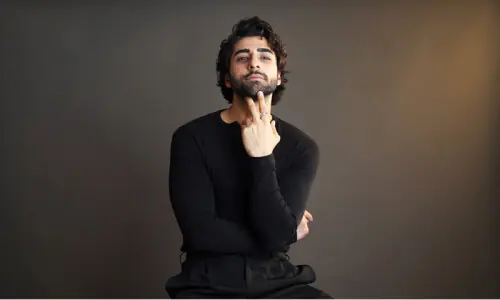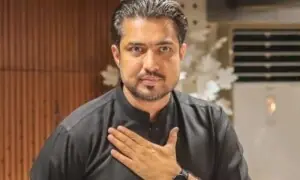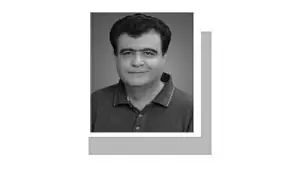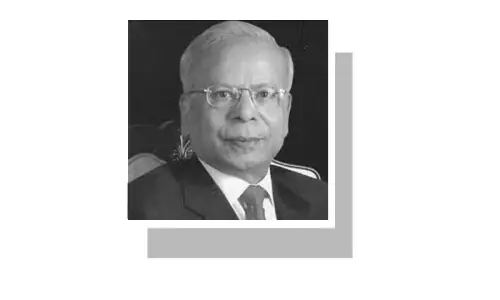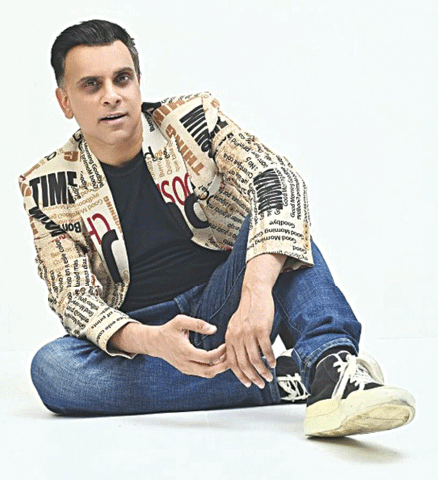
Shah Yasir is not your everyday Pakistani drama scriptwriter. He works from where he permanently resides, in Washington DC in the US, where he is a Doctor of Public Health. Screenwriting is a life-long passion that he pursues on the side, and one that has paid off with successive hit dramas. On his recent visit to Karachi, Icon sat him down for a chat...
Q. How was it writing 7 Days in Coney Island? What was your inspiration behind the script?
Shah Yasir: The project 7 Days in Coney Island was a great learning curve for me. The director Mehreen Jabbar and I wanted to highlight the Coney Island neighbourhood in Brooklyn because, unlike Jackson Heights in Queens, this area is inhabited by the desi expat diaspora, and Pakistanis primarily.
While writing the script, I took a trip to New York and walked around Coney Island, which includes a colourful street called Muhammad Ali Jinnah Way. The locals walking around inspired many stories for me that are yet to be told, stories that stretch beyond just melancholic tales of immigrant struggles and include interracial dating, unrealistic academic expectations among the desi community, as well as mental health struggles and survivor’s guilt. The script of 7 Days In Coney Island went through at least seven revisions.
The filming and shooting process was a story in itself, complete with its own twists and turns. Both Mehreen and I jokingly referred to it as the “jinxed project”, because everything that could go wrong, literally did. There were Covid-19 limitations on set and also an extensive pause in production. Then there was lost footage, which led to some scenes having to be rewritten and re-shot and there were also a few notable lifestyle changes in our cast’s lives, from changed hairstyles to pregnancies and even a missing cast member. Luckily, we managed to pull it all through and deliver a product that was still favourably received.
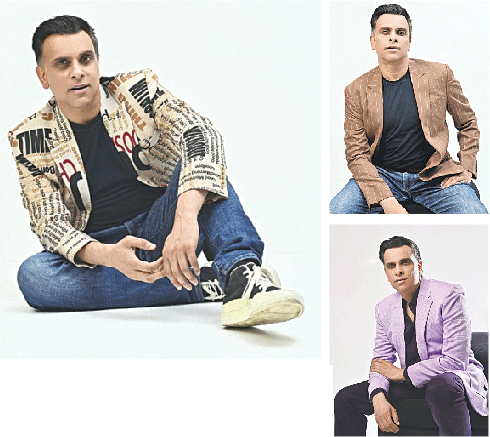
Drama script writer Shah Yasir has some intriguing stories to tell and he is telling them in his own unique manner and style
Q. From expats struggles to the fight for women’s rights, you have covered a wide range of issues. How do you work these ideas into your scripts?
SY: I have always loved storytelling that is both entertaining and meaningful at the same time. I strongly believe in representation and inclusion, not just in the characters we show but also the issues we highlight. Stories of resilience and hope have always held a special place in my heart because, although a tale about falling down is important, the subsequent story of how one gets back up and marches forward is that much more important.
In my 2023 drama Jurm that went on air from Geo TV, I really wanted to touch upon the practice of irresponsible social media journalism in a world hungry for sensationalism. On the other hand, Ab Meri Bari (2023) was a wonderful project with Misbah Khalid, where we wanted to use the art form of storytelling to educate women on actual laws and the legal recourse in Pakistan around issues of inheritance, the nikahnama [marriage contract], workplace sexual harassment, and even cyber crime.
Q. Have you always had a penchant for making up stories, visualising characters and penning scripts. Do you come from a family of writers?
SY: Although my dada [paternal grandfather] had a huge passion for Urdu poetry and introduced me to poets such as Faiz Ahmed Faiz and Jaun Elia at a young age, I don’t have a lineage of literary figures or published writers. What really led me to create stories was a combination of boredom and not fitting in with the norms of the world around me. So I decided to create worlds of my own as a way to pass time. For a while, I only wrote fictional short stories, because screenwriting was an art form I was always intimidated by. Now, I don’t think I can do any other kind of writing but screenwriting.
Q. Who has had a major influence on you in your journey as a writer?
SY: The late Hasina Moin for sure. She wrote some of the strongest female leads we have ever seen on Pakistani television. I love the works of Saadat Hassan Manto, Ismat Chughtai, Toni Morrison, Zadie Smith and Armistead Maupin. From the fraternity of TV writers specifically, there are many I gain inspiration from. I love the way Umera Ahmed knits her stories and the unique characters Fasih Bari Khan manages to create. I also adore the storytelling craft of Mustafa Afridi, Hashim Nadeem, Zafar Mairaj, Bee Gul and Amna Mufti.
Q. Ever thought about veering towards cinema and giving film scripts a go?
SY: I absolutely love cinema and I’m a huge film buff but I am also extremely intimidated by the thought of writing for the big screen at the moment. For now, I want to continue polishing my craft with writing for television before I can confidently sell myself to a potential film investor. The stakes are exceedingly high when it comes to films, and I don’t want to get ahead of myself just yet.
Q. Being an expatriate, how do you view the challenges faced by others like you in your community?
SY: The world is constantly changing and hence the struggles and challenges faced by communities are forever evolving as well. The expat community today looks very different than what we saw in film and media several years ago. Social media has exposed both worlds to each other in a limitless way. Mindsets are changing and viewpoints are evolving. However, that also means that there is a whole new set of struggles and challenges. One thing I can say for sure is that the issue of “belonging” remains prevalent even today, albeit in a different way.
Q. Murder-mystery, thrillers, dramedy or love stories — given a choice what would you choose?
SY: I’m a huge fan of thrillers and murder mystery, so I definitely tend to lean towards those genres. But writing thrillers is no easy feat. No matter how detail-oriented you try to be in your writing process, some minor gaffes will always be unearthed in the final product. Dramedy would be another favourite genre. Romance and comedy are very difficult to write because with those you could either hit the nail on the head and do an amazing job, or it could go the other way where you don’t just miss the nail but end up smashing a pandora’s box of cringe. So hats off to our industry’s writers who manage to do love stories and comedies so well.
Q. Writing for web platforms can be challenging but also gratifying in terms of freedom of expression. Do you agree?
SY: I absolutely love writing for web platforms since it allows us to explore themes and concepts that are not tied down to the demands of profits, ratings and marketability. Many creatives have found a home for their work at web platforms, such as Meem Kahani, Kabaar Khana and See Prime after the scripts were rejected by mainstream television. Unfortunately, many of these platforms are currently self-funded by the owners of the platforms and thus operate on a shoestring budget. Still, it is encouraging to see so many artists, writers, directors and actors rally together and create art, driven only by their passion to do something unique.
Q. Describe the experience of working with Mehreen Jabbar. You have done most of your work with her?
SY: I have been extremely lucky that I got a chance to work with Mehreen Jabbar so early in my screenwriting career. I have been a huge fan of her work since the ‘90s, when I discovered her telefilm Faraar on TV. After that I followed her work for about 30 years and this was before I ever thought I would try my hand at screenwriting. When I was attending college in the US, I would literally watch VHS tapes of her dramas in my dorm, which was mostly inhabited by football players. Imagine, a bunch of American jocks binge-watching Dhoop Mein Saawan and they all got pretty engrossed in it!
Then, the first time I ever met Mehreen was years later, when we were pitching a project together to a foreign network in New York. Imagine the pressure. Although that particular pitch fell through, we ended up working on several projects, which included short films, branded series, web series and TV shows. She is exactly how I had imagined her to be. Extremely professional and very strong on ethics, and expects the same work etiquette from her team as well. We have grown quite close as friends over the years but the fan/idol dynamic still rings true, if you haven’t noticed by my response.
Q. What advice would you impart to young drama script writer hopefuls? Is it a tough career to break into?
SY: Don’t just focus on writing an amazing script. Focus also on writing a produce-able script. I too was guilty of writing unrealistic screenplays with Hollywood budgets as my first few scripts. And, to be honest, it probably is a tough career to break into because I feel like I’m still forever trying to break into it myself. But it is definitely not impossible.
One aspect we need to acknowledge and appreciate is the level of respect our TV industry gives to our screenwriters. In most other parts of the world, a writer’s name is hidden deep in the credits and buried among a list of many other writers. In Pakistan, we always see writers get a sizeable credit on posters and promotions. That recognition in itself has encouraged so many other writers to want to try their hand at screenwriting in Pakistan. We not only see younger writers now but also actors who have also tried their hand at screenwriting, and succeeded. More and more diverse writers from every demographic of Pakistan have begun to step up and show an interest in being a part of this exciting world that continues to grow so much.
Published in Dawn, ICON, May 11th, 2025