Asian scam centre crime gangs expanding worldwide: UN


 0
0
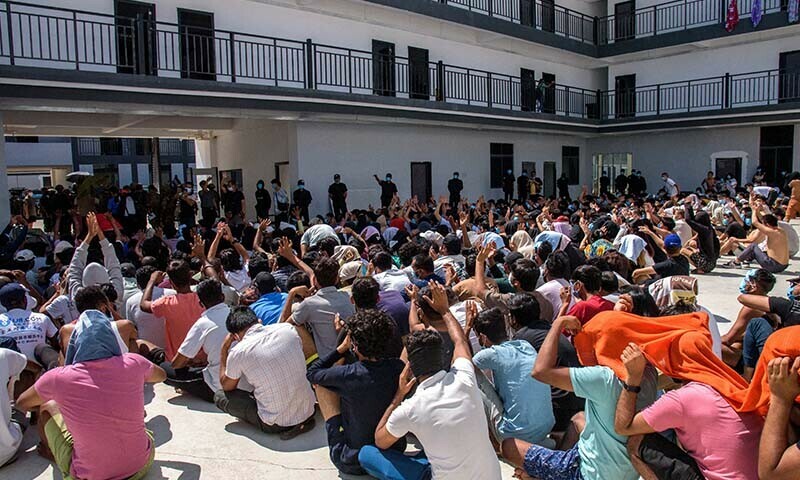

Asian crime networks running multi-billion-dollar cyber scam centres are expanding their operations across the world as they seek new victims and new ways to launder money, the UN said on Monday.
Chinese and Southeast Asian gangs are raking in tens of billions of dollars a year targeting victims through investment, cryptocurrency, romance and other scams — using an army of workers often trafficked and forced to toil in squalid compounds.
The activity has largely been focused in Myanmar’s lawless border areas and dubious “special economic zones” set up in Cambodia and Laos.
But a new report from the UN Office on Drugs and Crime (UNODC) warned that the networks are building up operations in South America, Africa, the Middle East, Europe and some Pacific islands.
“We are seeing a global expansion of East and Southeast Asian organised crime groups,” said Benedikt Hofmann, UNODC Acting Regional Representative for Southeast Asia and the Pacific.
“This reflects both a natural expansion as the industry grows and seeks new ways and places to do business, but also a hedging against future risks should disruption continue and intensify in Southeast Asia.”
Countries in east and southeast Asia lost an estimated $37 billion to cyber fraud in 2023, the UNODC report said, adding that “much larger estimated losses” were reported around the world.
The syndicates have expanded in Africa, notably in Zambia, Angola and Namibia, as well as Pacific islands such as Fiji, Palau, Tonga and Vanuatu.
Laundering through crypto
Besides seeking new bases and new victims, the criminal gangs are broadening their horizons to help launder their illicit income, the report said, pointing to team-ups with “South American drug cartels, the Italian mafia, and Irish mob, among many others”.
Illicit cryptocurrency mining — unregulated and anonymous — has become a “powerful tool” for the networks to launder money, the report said.
In June 2023, a sophisticated crypto mining operation in a militia-controlled territory in Libya, equipped with high-powered computers and high-voltage cooling units, was raided and 50 Chinese nationals were arrested.
The global spread of the syndicates’ operations has been driven in part by pressure from authorities in Southeast Asia.
A major crackdown on scam centres in Myanmar this year, pushed by Beijing, led to around 7,000 workers from at least two dozen countries being freed.
But the UN report warns that while such efforts disrupt the scam gangs’ immediate activities, they have shown themselves able to adapt and relocate swiftly.
“It spreads like a cancer,” UNODC’s Hoffman said. “Authorities treat it in one area, but the roots never disappear; they simply migrate.”
Alongside the scam centres, staffed by a workforce estimated by the UN to be in the hundreds of thousands, the industry is further enabled by new technological developments.
Operators have developed their own online ecosystems with payment applications, encrypted messaging platforms and cryptocurrencies, to get around mainstream platforms that might be targeted by law enforcement.