Release of classified JFK files may lift lid from intel tactics
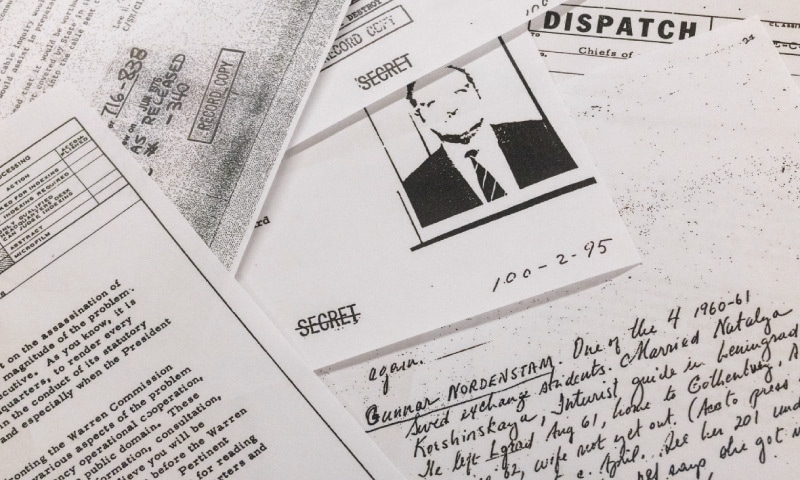


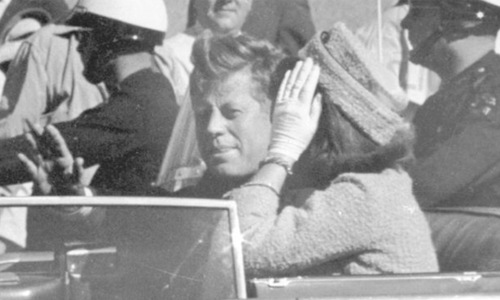
TWO sets of documents related to the assassination of US president John F. Kennedy have been released by the Trump administration, giving historians, amateurs and conspiracy theorists another shot at uncovering revelations about the killing that still fascinates America, more than six decades later.
The two batches of documents made public on Tuesday came to about 63,400 pages, according to the National Archives, though it was unclear how many of those files were actually new, or had previously been released in part or in whole, or if there still could be more released later in the week, the New York Times reported.
Officials have said that nearly all government records relating — sometimes very tangentially — to the Kennedy assassination were already public. NYT estimates this might be one of the last releases of the Kennedy papers, considering that only about 1 per cent of the six million pages in the government’s possession remains undisclosed.
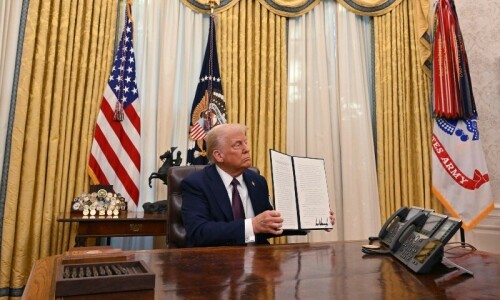
The latest records were released through an executive order signed by President Donald Trump in January. That order also directed the nation’s security agencies to disclose any remaining documents related to the assassinations of Senator Robert F. Kennedy and Dr Martin Luther King Jr in 1968.
One newly un-redacted memo details how CIA operatives were posted abroad as ‘State Dept employees’
The new documents are not published in any organised fashion, and clicking each file on the National Archive’s website can feel like opening a box of messy, unrelated papers, wrote NYT’s Talya Minsberg.
Some files are one page and fairly straightforward. Others are almost 700 pages and stuffed with handwritten notes, diplomatic cables and images, while some documents are completely illegible.
Some may turn out to be full versions of documents previously available with only light redactions, adding a name or two to the record. Others, scholars say, are likely to be duplicates or variants of memos and reports that have long been available from other sources.
Although experts don’t really expect to find any bombshells, that doesn’t mean there won’t be interesting details, particularly for scholars of the workings of intelligence agencies.
For example, as NYT’s Isabelle Taft noted, it’s no secret that the CIA has long placed agents undercover as State Department officials.
But a newly unredacted portion of a 1961 memo to President Kennedy describes how the agency had placed about 1,500 agents overseas as State Department employees.
The aide who authored the memo, Arthur Schlesinger, Jr., wrote that the practice, which was originally meant to be temporary and limited, was threatening the State Department’s control of foreign policy.
“In the Paris Embassy today, there are 128 CIA people,” Schlesinger wrote to Kennedy. “CIA occupies the top floor of the Paris Embassy, a fact well known locally; and on the night of the Generals’ revolt in Algeria, passers-by noted with amusement that the top floor was ablaze with lights.”
Daniel Alcorn, president of the Assassination Archives and Research Center — the largest private collection of material related to the Kennedy assassination – speculated that the newly released portion of Schlesinger’s memo to Kennedy about the practice had long been redacted because it confirmed the CIA’s cover arrangements.
“I guess they consider that a matter of secrecy,” he said. “They really just didn’t want the embarrassment or the negative attention.”
The release, so far, appears to contain little new information about the JFK assassination, and significantly less about the killing of Dr Martin Luther King Jr.
Only a few dozen PDFs of the 1,123 initially released refer to King. Some describe investigations into his murder, which happened at a Memphis hotel on April 4, 1968.
The details, several of which appear to have been previously disclosed, mention that sources in Mexico City and Nigeria believed they had seen someone who resembled King’s assassin, James Earl Ray.
The documents also describe two American citizens who were detained in Panama City in connection with the murder but ultimately were not charged.
A Berkeley physician also came under suspicion, having been “a chronic letter writer to the CIA criticizing them and the government,” according to one memo in the tranche.
The documents reflect both the FBI’s and the CIA’s known fixation on Dr King and his association with left-wing activists, which came at a time when J. Edgar Hoover, the director of the FBI, was trying to undermine the civil rights movement.
Published in Dawn, March 20th, 2025