On-campus activities at University of Balochistan suspended indefinitely, classes moved online

On-campus activities at the University of Balochistan have been suspended for an indefinite period with classes moving online, according to a notification issued by its registrar on Tuesday.
The notification, a copy of which is available with Dawn.com does not cite a reason for the decision.
“Following thorough deliberation, it has been resolved that the University of Balochistan, including all campuses, will switch their academic activities from in-person to virtual learning with immediate effect and until further orders,” the notification said.
It added that deans and directors were directed to submit weekly performance reports to the Registrar’s Office and university staff are instructed to report to their offices as usual.
University of Balochistan Vice Chancellor Zahoor Ahmad Bazai told Dawn.com that news on social media about the institue’s closure was “baseless”.
He said the university opened this month and classes were also being held, however, due to the closure of national highways, students from the province’s remote areas were unable to reach the campuses, because of which the administration decided to begin online classes.
“Because we are trying to ensure that there is no injustice against the students and they can complete their education,” he said.
He said that this virtual classes experiment was first carried out at the Balochistan University of Information Technology, Engineering and Management Sciences and the Sardar Bahadur Khan Women’s University, adding that the teaching process in both institutes was proceeding smoothly.
“Keeping that in mind, the administration of the University of Balochistan also decided to move to online classes.”
Bazai said that students from areas where there was a problem with internet access would be provided concessions during the semester, while the decision on online classes would be taken by Eidul Fitr. “As soon as the issue of sit-ins and closure on national highways is resolved, the University of Balochistan will resume its work in normal conditions. We will do it because our aim is to provide education to children,” the vice chancellor said.
He added that even if students from remote areas reached their classes, not only would they be stranded in Quetta, but their parents would also face problems due to the closure of national highways.
On the other hand, Academic Staff Association President Kaleemullah Barich told Dawn.com that the university’s closure and switching to online classes would cause students to lose a semester because the university was supposed to open in March and the first semester exams were supposed to be held by June.
“The decision to start classes online at the University of Balochistan, BUTUMS University and Women’s University will be extremely harmful for students because this was tried in 2019 due to the coronavirus, which caused a year of loss for students. Now, this decision is being taken again,” Barich said.
He said that internet services were “non-existent” in remote areas of Balochistan, including Quetta, and if online classes were declared necessary for students, many students did not have the means to use or access laptops and modern cellphones, while obtaining internet services would also be a separate expense which would be difficult to arrange.
There are frequent internet outages in Balochistan due to prevailing security or infrastructure issues.
He said that all university professors would remain present and ensure their attendance. In such an environment, he said the administration should withdraw the decision.
While the security situation in Balochistan was not cited by the university for the suspension of classes, militants in the province, previously engaged in a low-level insurgency, have recently intensified their attacks. The outlawed Balochistan Liberation Army, in particular, has adopted new tactics to cause higher casualties and directly target Pakistani security forces.
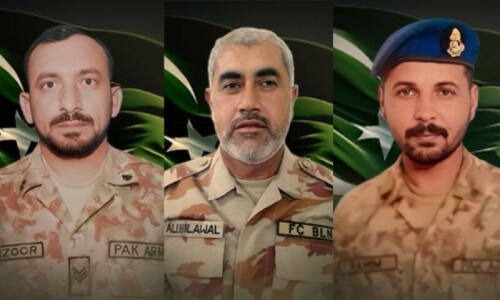
On Sunday a vehicle-borne suicide bomber attacked a security forces convoy in Balochistan’s Noskhi district, leaving three security personnel and two civilians martyred, in the latest attack by militants in the province.
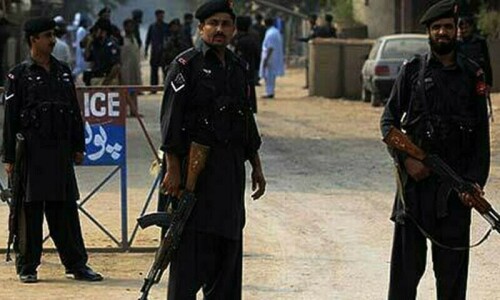
Sunday’s incident came after a cop was martyred last night while six others were wounded in a blast near a vehicle of Balochistan’s Anti-Terrorist Force (ATF) in Quetta.
It also follows the recent Jaffar Express train hijacking near Balochistan’s Sibi area, in which 26 hostages, including 18 security personnel, lost their lives. Five more security personnel were martyred during the operation.
Following the attack, the military vowed to take decisive action against terrorists operating in Balochistan, along with their abettors and facilitators, both inside and outside the country.