Israel’s halt to food, aid deliveries worsens conditions in Gaza


 0
0


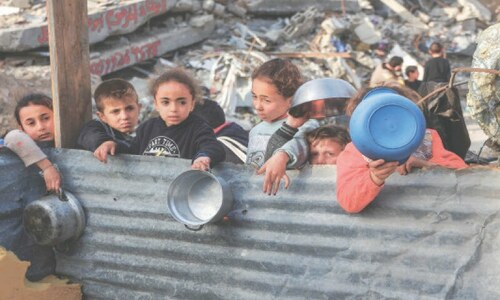
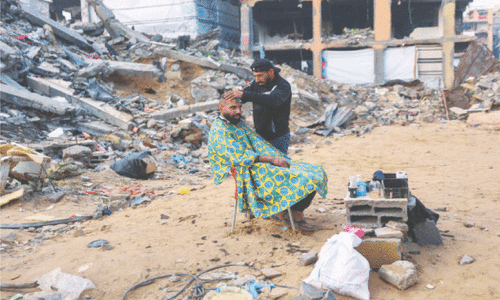
CAIRO: Israel’s suspension of goods entering Gaza is taking a toll on the Palestinian enclave, with some bakeries closing and food prices rising, while a cut in the electricity supply could deprive people of clean water, Palestinian officials said.
The suspension, which Israel said was aimed at pressuring Hamas in ceasefire talks, applies to food, medicine and fuel imports.
The UN Palestinian refugees agency UNRWA said the decision to halt humanitarian aid threatens the lives of civilians exhausted by 17 months of “brutal” war. Most of Gaza’s 2.3 million people were dependent on aid, it said.
Hamas describes the measure as “collective punishment” and insisted it will not be pushed into making concessions at the discussions.
Abdel-Nasser Al-Ajrami, head of the Gaza bakers’ union, told Reuters that six out of the 22 bakeries still able to operate in the enclave had already shut after they ran out of cooking gas.
“The remaining bakeries may close down in a week or so should they run out of diesel or flour, unless the crossing is reopened to allow the goods to flow,” he said.
“The 22 bakeries were not enough to meet the needs of the people, with six of them shutting down now, that would increase the demand for bread and worsen the condition,” he added.
Israel already cut power supply to Gaza at the war’s start but this move would affect a wastewater treatment plant presently supplied with power, according to the Israeli electricity company.
The Palestinian Water Authority said the decision suspended operations at a water desalination plant that produced 18,000 cubic meters of water per day for the population in central and southern areas of Gaza Strip.
Mohammad Thabet, the spokesperson of the Gaza power distribution plant, told Reuters that the decision will deprive people in those areas of clean and healthy water.
“The decision is catastrophic, municipalities now will be obliged to let sewage water stream into the sea, which may result in environmental and health risks that go beyond the boundaries of Gaza,” Thabet said.
He said there was not enough fuel to operate stand-by generators in desalination and sewage plants.
Published in Dawn, March 11th, 2025