Trump says he wrote to Iran urging nuclear talks



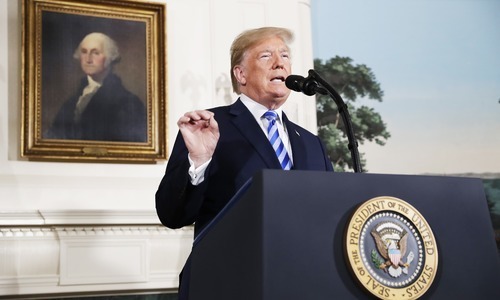
US President Donald Trump said he has written to Iran, pressing it to open talks on preventing the development of nuclear weapons or face possible military action.
“I’ve written them a letter, saying I hope you’re going to negotiate because if we have to go in militarily, it’s going to be a terrible thing for them,” Trump told Fox Business in a clip broadcast on Friday.
“I think they want to get that letter. The other alternative is we have to do something, because you can’t let another nuclear weapon.”
There was no immediate response from the foreign ministry in Iran, where it is currently the weekend, to a request for comment on Trump’s remarks. Iran’s Nour News, affiliated with the country’s top security body, dismissed Trump’s letter as a “repetitive show” by Washington.
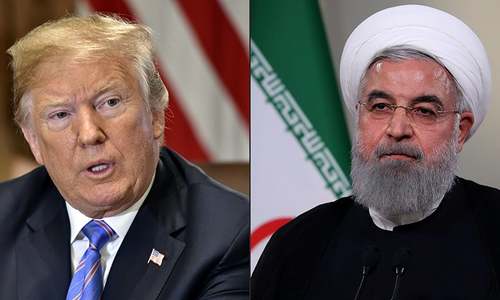
Asked whether he had sent the letter to Ayatollah Ali Khamenei, Iran’s fiercely anti-Western Supreme Leader, Trump said, “Yes.”
“There are two ways Iran can be handled: militarily, or you make a deal,” Trump said. “I would prefer to make a deal, because I’m not looking to hurt Iran. They’re great people.”
A landmark 2015 deal — known as the Joint Comprehensive Plan of Action (JCPOA) — imposed curbs on Iran’s nuclear programme in return for sanctions relief.
It fell apart after Trump withdrew the United States from the agreement in 2018 in his first presidential term.
Tehran adhered to the deal until a year after Washington pulled out but then began rolling back its commitments.
Trump, who returned to the White House in January, reinstated his “maximum pressure” policy of sanctions against Iran over allegations that the country is seeking nuclear weapons capability.
Tehran has consistently denied the claims and repeatedly expressed a willingness to revive the accord, but efforts to that end have faltered.
Trump said in February he would like to make a deal with Iran that prevents that country from developing a nuclear weapon.
Russia has offered to mediate between the United States and Iran, a source briefed on discussions told Reuters on Tuesday, as the Kremlin vowed to do everything possible to facilitate a peaceful solution to tensions over Tehran’s nuclear programme.
Russian Deputy Foreign Minister Sergei Ryabkov discussed international efforts to resolve the situation around Iran’s nuclear programme with Iranian ambassador Kazem Jalali, the Russian Foreign Ministry said today.
Last month, United Nations atomic agency chief Rafael Grossi said Iran was “enriching [uranium] at 60 per cent, so almost weapon level” and that the 2015 deal was an “empty shell” that was “no longer fit for purpose”.
No talks with US under ‘maximum pressure’ policy: Iran
Meanwhile, Iranian Foreign Minister Abbas Araghchi told AFP today the country would not resume negotiations with the US on its nuclear programme while Trump applies his “maximum pressure” policy.
“We will not enter any direct negotiations with the US so long as they continue their maximum pressure policy and their threats,” he said on the sidelines of an Organisation of Islamic Cooperation meeting in Jeddah.
He added that Iran’s nuclear programme could not be destroyed in a military attack, following a threat by Israel.
“Iran’s nuclear programme cannot be destroyed through military operations … this is a technology that we have achieved, and the technology is in the brains and cannot be bombed,” he told AFP.
Araghchi warned that an Israeli attack would trigger a wider conflagration in the region. “I believe that if an attack on Iran were to take place, this attack could turn into a widespread fire in the region — not that we will do that.”