0
0

India and China have agreed to work on resolving differences over trade and economic issues, New Delhi has said, as relations continue to thaw after a deadly 2020 border clash.
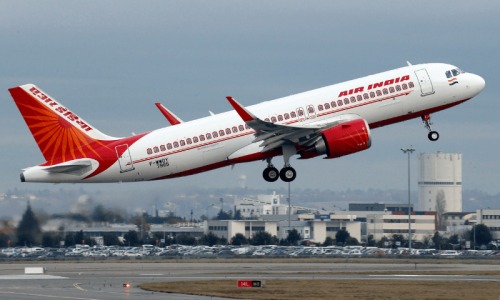
Following a meeting on Monday in Beijing between India’s top diplomat Vikram Misri and China’s Foreign Minister Wang Yi, India’s foreign ministry also said that both sides would negotiate a framework on the resumption of flights after five years at an “early date”.
China’s foreign ministry confirmed today that flights would resume, and said Wang had told Misri that China and India should commit to “mutual support and mutual achievement” rather than “suspicion” and “alienation”.
“Specific concerns in the economic and trade areas were discussed with a view to resolving these issues and promoting long-term policy transparency and predictability,” the Indian statement said without going into detail.
Analysts say sluggish economies and trade threats from US President Donald Trump are encouraging China and India to work more closely together.
Trump has warned he will impose tariffs on China and India is a large market for China, while New Delhi wants Chinese expertise, components and machinery to fuel exports and the economy, which is coming off recent highs.
“Economic headwinds are being faced by both India and China and both have an interest in ensuring the economic relationship continues to be managed in a [mutually beneficial] way,” said Harsh Pant, foreign policy head at the Observer Research Foundation think tank in New Delhi.
“If the threat from Trump increases for China’s economy, then China would want a relationship with India that is economically robust and strategically relatively sound compared to 2020.”
China said a separate meeting on Monday between officials at the vice-ministerial level had agreed to facilitate the exchange of journalists between the two countries.
Bilateral trade between India and China rose four per cent to $118.4 billion in the last fiscal year ended March 2024, much of it Indian imports from China.
New irritants
Tensions soured between India and China in the wake of the 2020 clash between troops along their border in the Himalayas, which killed at least 20 Indian soldiers and four Chinese.
Afterwards, India made it difficult for Chinese companies to invest in the country, banned hundreds of popular apps and cut passenger routes, although direct cargo flights continued to operate between the countries.
Relations have improved since an agreement in October to ease a military standoff on the mountainous border, the same month that President Xi Jinping and Indian Prime Minister Narendra Modi held talks in Russia.
Several high-level meetings have also taken place, but China’s approval in December of a hydropower dam in Tibet, in the lower reaches of the Yarlung Zangbo River, raised eyebrows in India.
The dam, the largest of its kind in the world, with an estimated capacity of 300bn kilowatt-hours of electricity annually, will be located on the river that flows into India as the Brahmaputra, a key water resource for millions.
Chinese officials said that hydropower projects in Tibet would not have a major impact on the environment or downstream water supplies.
In Monday’s talks, China said both sides had agreed to continue cooperation on “cross-border rivers” and work towards a new round of meetings on the matter.
The countries also agreed to push for the resumption of pilgrimages by Indians to Tibet’s sacred mountains and lakes in 2025.
Still, analysts said mutual distrust will remain.
“The thaw between the two sides is much welcome, even though I do not think that in the long term, structurally speaking, the two sides can be peaceful neighbours and collaborating and cooperating with each other,” said Happymon Jacob, who teaches foreign policy at New Delhi’s Jawaharlal Nehru University.