0
0

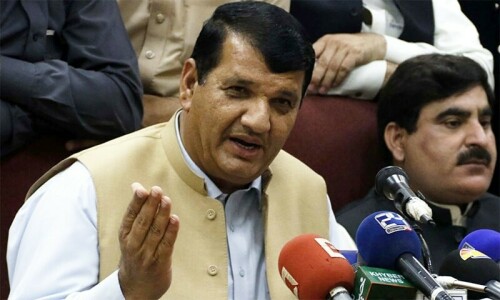
Federal Minister for Gilgit Baltistan and Kashmir Affairs and States and Frontier Regions, Amir Muqam, on Friday strongly criticised PTI founder Imran Khan, stating that he “prioritises self-defence over the country’s interests”, questioning his commitment to the nation’s well-being.
Since Imran’s incarceration last year in several cases, PTI’s relations with the government and the establishment have deteriorated sharply, marked by protests that frequently escalated into violence amid state repression.
Following the turmoil, Imran established a five-member committee to hold talks with “anyone,” signalling a shift in PTI lawmakers’ stance in parliament. In response, Prime Minister Shehbaz Sharif also formed a committee with ruling coalition members.
The first meeting between the two sides took place on December 23, while the second one occurred yesterday (Jan 2). So far, the two sides have not made significant headway, as the PTI leadership sought frequent meetings with Imran to finalise their list of demands. The government and the opposition will meet again, possibly next week.
In an exclusive interview with a private news channel, Muqam urged the PTI to engage in dialogue with the government to address pressing economic issues and work towards the country’s betterment, rather than “pursuing self-centred politics”.
The PTI has been quite vocal about its key demands — a judicial commission to probe the May 9 and November 26 violence and the release of political prisoners, including Imran.
While responding to a query, Muqam clarified that the government’s negotiation committee does not have the authority to decide on Imran’s release.
He added that the decision will be made by the courts, emphasising the importance of upholding the rule of law and allowing the judicial process to run its course.
Muqam encouraged PTI to take the legal route, allowing the courts to determine Imran’s fate.
He also urged PTI to seize the negotiation opportunity and make the roundtable discussion a success, saying, “This approach can only lead to a mutually beneficial outcome, where both parties find common ground and work together to address pressing issues.”