0
0

 DESPITE flawed policies of successive governments, the agriculture still constitutes 23 per cent of the GDP and engages 44 per cent of the total labour force.
The GDP growth rate was 8.4 per cent last year and its target was originally fixed at seven per cent for the present fiscal. It was revised to 6.5 per cent subsequently and even this may not be achieved due to substantial reduction in agricultural production during this year.
As a result the targeted agricultural growth rate of 4.8 per cent will also fall sharply. The main reasons are lower crop production, mismanagement, and defective marketing system. Fixing higher crop production targets and then not achieving these has become a routine of the policy makers.
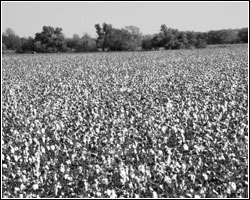
Cotton production this year was about 12.5 million bales against the 15 million bales target. Of various reasons, spurious pesticides, high cost of urea, DAP, lack of quality seed, poor weed control, partly unfavourable growing season during flowering and boll formation stages, flood damage and earlier planting in most areas encouraged the attack of American boll worm.
The textile industry may face problems as it requires about 14 million bales to meet its requirements. This may not only increase import of lint cotton but also import of edible oil due to reduction in cottonseed production which contributes nearly 70 per cent domestic edible oil production.
It may further increase the trade deficit which was already at $5.5 billion during the first eight months of the present fiscal year and is estimated to increase to an stipulated 9-10 $10 billion by the end of the year.
Similarly, sugarcane serves as major source for the production of white sugar and gur. Its production of 53.4 million tons in 2003-04 declined to 47 million tons in 2004-05 and further to nearly 41 million tons this year as reported in the national press against the government fixed target of 45.88 million tons.
The minister has stated recently that the production of sugarcane was 44.23 million tons this year as against the target of 48 million tons. Even if this statement is accepted, it shows continued declining production.
This scribe has already written about technical limitations of low yield and production of sugarcane and how to increase it. Again, policy makers were warned that due to deliberate late starting of cane crushing, late payments to growers, under weighing, poor support pricing etc., may force the growers to shift to other crops.
Besides shifting to gur and brown sugar (Shakkar) making by the cane growers instead of selling to mills, and smuggling of these to Afghanistan at much higher profit will further complicate the situation but no action was taken. As a result the price of one kg of sugar has increased from Rs21 in December 2004 to Rs42-45 and even higher in some areas during March–April 2006.
Hoarding was another factor for compounding the problems. For instance 17 sugar mills owned by ministers and parliamentarians of the present government released only 14 to 17 per cent of their production and hoarded the rest to sell at higher prices.
Both, President and the Prime Minister directed the ministry of finance and other concerned agencies to ascertain facts before taking action against these mill owners. The National Accountability Bureau (NAB) was asked to inquire into the scandal and take action against those creating sugar problems. However, due to political influence and power, the NAB closed investigations of these influential people. This reflects that the law of land is different for the politically-powerful and the common man.
Nevertheless, the government is planning to import 1,50,000 tons of sugar through the Trading Corporation of Pakistan, while the private sector has opened letters of credit for import of 4,00,000 tons of sugar since January this year. Out of which 2,50,000 tons has already arrived and 1,50,000 tons is expected to reach by the middle of April this year.
Wheat is the leading food grain crop. Its target was fixed at 22 million tons due to the expectations of a bumper crop. However, this target may fall short by 1.5 million tons due to late sowing of wheat in the rice and cotton belts of Punjab and late cane crushing further delayed the sowing of the following wheat crop.
The rising cost of inputs and grabbing big part of agricultural loans by the powerful feudal landlords and influential politicians may further affect wheat production of small, subsistent and below subsistent level farmers cultivating nearly 50 per cent of the total area. This 20.5 million ton of wheat production and nearly three million tons of stock lying with the food department and Passco should be more than enough to meet domestic requirements. It is not understandable that when the country had sufficient stock and was expecting a bumper crop then why one million tons of wheat was imported.
Delayed purchase of wheat by the food department and the unavailability of gunny bags to farmers not only facilitated the private sector and flour mill to get bags from the corrupt officials but also purchase wheat from the farmers at Rs940 against the government fixed price of Rs1,037 per bag. Thus, common growers were the major sufferers.
Hoarding by private dealers and influential flour mill owners could create wheat flour problems for common man as was done by hoarding sugar by the mill owners. Again, smuggling wheat and wheat flour by the politically influential people across our porous western borders to earn huge profits could compound the situation.
The Prime Minister has announced that the government will not allow wheat prices to fall. Such claims appear only for public consumption as despite all this, the prices of sugar, pulses, food grains, vegetables, fruits, edible oil, petrol, diesel, gas, electricity, cement etc., are increasing and the common man is the ultimate sufferer.
Rice is a high value cash crop and a major export item. It accounts for 5.7 per cent of the total value added and 1.3 per cent to the GDP. But its export declined to around 1.7 million tons by 2004-05 as the targets could not be achieved due to poor planning.
The paddy prices have gown down both in Punjab and Sindh due to delayed announcement by the government. Rice farmers were the major sufferers as exporters and traders deliberately delayed purchase of paddy, especially Irri-6 mostly grown in Sindh. As a result most farmers were forced to sell their paddy at lower price than its cost of production as they had to prevent late planting of the following wheat crop which would have seriously reduced it production thus causing further loss to farmers.
It is interesting to note that due to better marketing and trade policies of India, the price of fine basmati rice of India is much higher in the international market than that of the Pakistani.
The aforementioned review portrays the dismal policies of the government which is more interested in the development of manufacturing and industrial sector at the expense of agriculture sector. This view is supported by the statement of President made at the latest opening ceremony of a steel mill that the government will now pay greater attention towards the development of industrial sector than the development of agricultural sector as the former will be more profitable due to increase in export of its products.
The government should realize that the increase in export of industrial products will be greatly nullified due to the increased import of food items due to uncontrolled population increase and the neglect of agriculture sector. For example, earlier the country was generally self-sufficient in most of the food items and agriculture contributed 53 per cent of the GDP. Subsequently, with the development of manufacturing and industrial sector, the share of agriculture to the GDP declined now to 23 per cent.
Despite increase in the export of products and bye-products of industrial and manufacturing sector, the trade deficit is increasing due to greater import of food items. The policy makers should seriously consider developing both these sectors on sound economic parameters rather than on political basis.