KARACHI: The province of Sindh has been declared “maternal and neonatal tetanus-free” by international experts.
A debriefing session held on Monday at a local hotel was chaired by Sindh Health Secretary Rehan Iqbal Baloch and attended by officials from the federal directorate of Immunisation, EPI-Sindh, Unicef, World Health Organisation (WHO) and others.
During the meeting, the validation mission led by Dr Nasir Yusuf of the WHO shared relevant data of the sampling districts of Sindh and confirmed the elimination of maternal and neonatal tetanus through rigorous evaluations supported by Unicef, WHO, and provincial health teams.
“The WHO official described the vaccination coverage [against tetanus] for pregnant women and newborns, antenatal care and the linkages between the community workers and healthcare facilities as satisfactory in low performing districts of Thatta and Tharparkar,” a spokesperson of Sindh EPI told Dawn.
Health secretary says 75pc of country’s population covered after Sindh joins Punjab
He further explained that to successfully eliminate maternal and neonatal tetanus, the government must certify that “there is less than one death from neonatal tetanus per 1,000 babies born” in the relevant region.
“Unicef consultant Francois Gassee and WHO technical advisor Dr Nasir Yusuf lauded the collaborative efforts that led to this achievement,” he said.
In his remarks, the health secretary said: “Through collaborative efforts, Sindh has joined Punjab in eliminating maternal, neonatal tetanus, now covering 75 per cent of Pakistan’s population. This success inspires us to make more gains,” he said.
EPI Project Director Dr Muhammad Naeem emphasised the need for continuing with innovations including enhanced vaccination drives, monitoring systems and outreach programmes to sustain immunisation efforts.
The attendees included Dr Farhana Memon representing the Lady Health Workers’ Programme, Dr Syed Kamal of Unicef, Dr Sara Salman of WHO, Dr Nouman Khan, Dr Amjad Ansari, Dr Ahsan Bhurgri and Dr Waqar Soomro.
The Maternal and Neonatal Tetanus Elimination (MNTE) initiative was launched in Pakistan by the government in collaboration with Unicef in 2022.
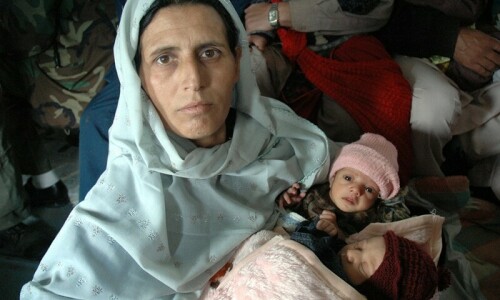
According to the WHO, maternal and neonatal tetanus has been among the most common life-threatening consequences of unclean deliveries and umbilical cord care practices, and are indicators of inequity in access to immunisation and other maternal, newborn, and child health services.
Tetanus cannot be eradicated since the bacteria clostridium tetani that causes the disease is commonly found in soil. However, it is easily preventable through vaccination.
Published in Dawn, December 3rd, 2024