ISLAMABAD: A new report from the Asian Development Bank has stressed the need for adapting schools to the impacts of climate change since extreme weather is significantly increasing school closures and affecting learning outcomes and household incomes over the long-term.
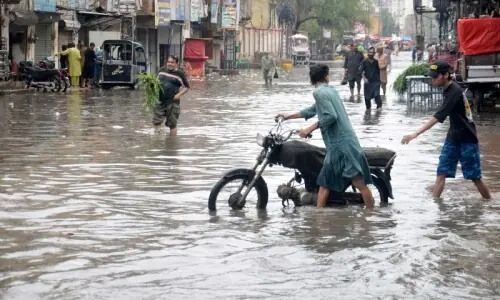
The report, ‘Climate Change and Education Playbook’, referred the 2022 floods in Pakistan which damaged some 17,000 schools, disrupting education of 2.6 million children.
Climate change poses a significant threat to continuous education delivery and learning outcomes. Each school faces unique climate risks that need to be identified, assessed, and addressed through adaptation measures, making schools climate resilient.
Adaptation measures help reduce the impacts of climate risk and allow schools to continue functioning with minimum disruption, and create a culture of safety and resilience, the report says.
Climate change poses threat to education delivery, says report
Governments in Asia and the Pacific must invest in education and training to comprehensively develop climate literacy and green skills needed for low-carbon economies, emphasised the report.
It aligns with the ‘Baku Initiative on Human Development for Climate Resilience’ launched at a COP29 high-level meeting and makes several calls for action to build climate resilience through education, such as enabling transformative climate literacy for children and youth; building green skills for the current and future workforce; incorporating the human dimension into upcoming NDCs and support the education and training of women, disadvantaged youth and the marginalised to pursue climate-resilient pathways.
Schools can contribute to national climate targets, in line with NDC building sector measures by implementing energy-efficient building designs, resource-efficient operations and school management, and renewable energy solutions.
These measures not only reduce the environmental impact of school operations but also provide economic and educational benefits, such as reduced operational costs and improved student well-being.
Potential measures include the installation of on-site renewable energy generation to improve electricity stability needed to reliably run digital education and green building certification for newly constructed facilities.
Energy audits are critical to identify resource-efficiency and climate mitigation opportunities in schools. Sustainable school facilities can be leveraged as living learning labs that empower students to engage in climate action initiatives outside the classroom.
With more resilient infrastructure in place, governments must introduce green skills into occupational qualifications. This will ensure that the hundreds of thousands who graduate from high school, technical and vocational education and training, have the right skills to meet rising labour market demand in specific transition-related industries.
Published in Dawn, November 20th, 2024